
The Call for Accountability
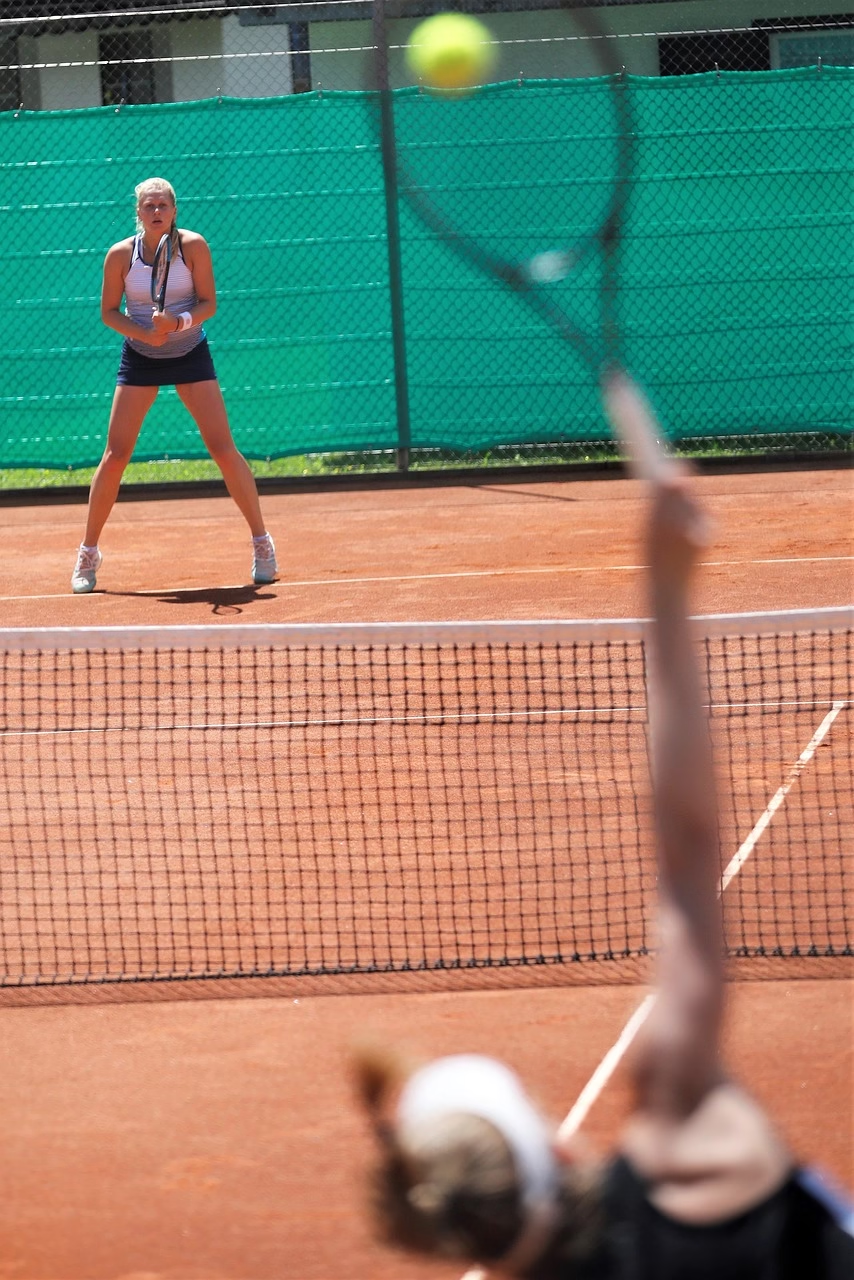
Ukrainian tennis player Oleksandra Oliynykova has publicly demanded that Russian athletes take a definitive stand against the ongoing war in Ukraine following her recent match against a Russian opponent. Speaking to the press this week, the 23-year-old athlete emphasized that she can no longer remain silent while competing alongside players representing a nation currently engaged in a full-scale invasion of her homeland.
The Context of Neutrality
Since the invasion began in February 2022, international sports governing bodies have struggled to balance the principle of individual athletic participation with the geopolitical realities of the conflict. While most organizations initially implemented bans on Russian and Belarusian athletes, many have since transitioned to allowing them to compete under neutral flags.
This policy of neutrality has become a significant point of friction within the professional tennis circuit. Players like Oliynykova argue that the presence of Russian competitors without a clear, public denunciation of the war creates an untenable environment for Ukrainian athletes, who frequently have family members directly affected by the hostilities.
Tensions on the Court
The issue of on-court etiquette—specifically the refusal of some players to shake hands at the conclusion of matches—has become a visible manifestation of these underlying tensions. Oliynykova’s recent comments highlight a growing frustration among Ukrainian professionals who feel that the “neutral” label acts as a shield for those unwilling to voice opposition to their government’s actions.
“It is not about the individual player’s nationality, but about their moral responsibility,” Oliynykova stated during her post-match briefing. She argues that in a global arena, silence is perceived as complicity, particularly when the sport relies on the platform of international visibility.
Expert Perspectives and Industry Data
Sports psychologists and industry analysts note that the pressure on athletes to act as political conduits is unprecedented in modern tennis. Dr. Marcus Thorne, a sports sociologist, suggests that the “neutral athlete” model is failing to address the emotional toll on competitors from conflict zones.
According to recent surveys conducted by the Global Athletes Association, over 65% of professional tennis players believe that governing bodies have failed to establish clear guidelines regarding political expression. This lack of policy has left individual athletes to navigate high-pressure situations without institutional support, leading to increased animosity on the court.
Future Implications
The tennis community now faces a critical juncture regarding how it manages geopolitical friction. With major tournaments approaching, organizers are under pressure to reconsider whether “neutrality” is a sufficient framework for maintaining the integrity of the game.
Observers should watch for potential policy shifts within the Grand Slam boards, as they may soon be forced to implement more stringent requirements for participation. The ongoing discourse sparked by Oliynykova and her peers suggests that the era of sports being viewed as entirely separate from international politics is effectively over.