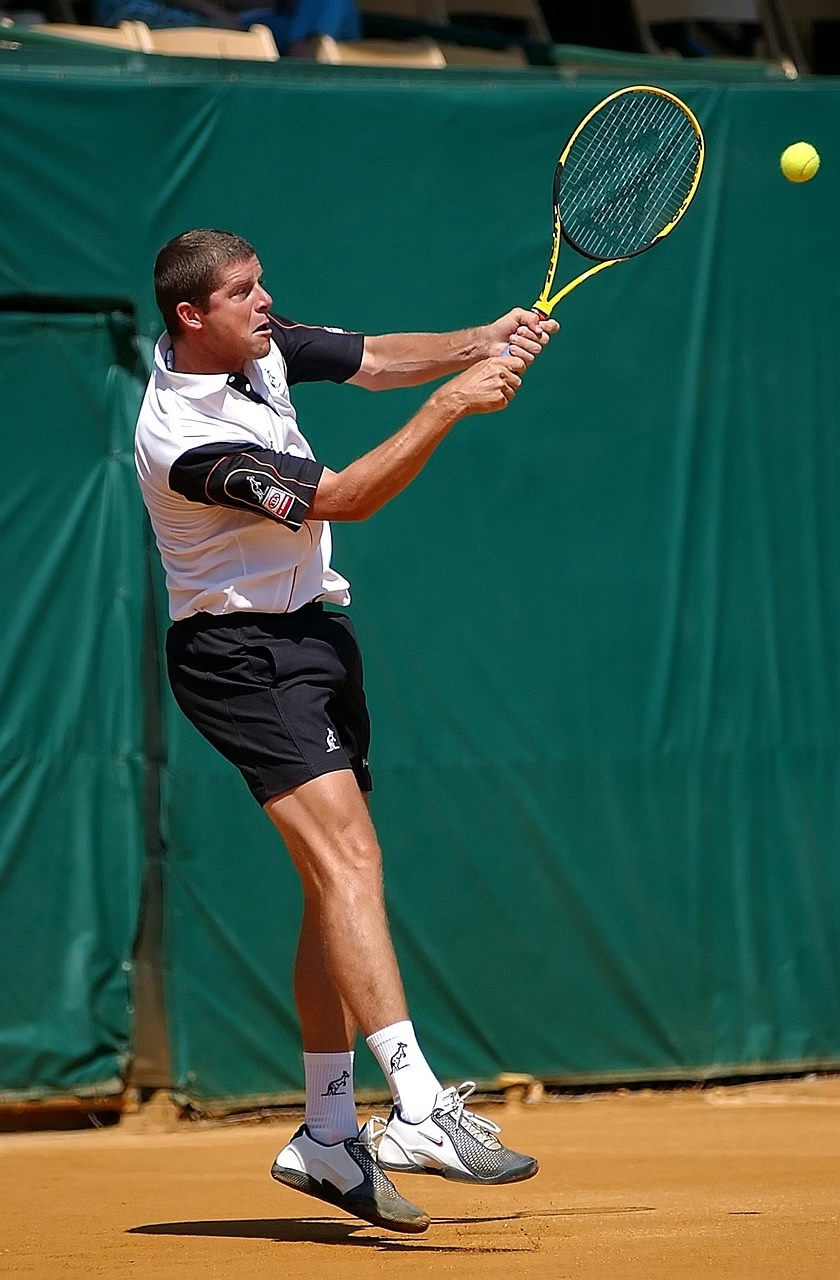






A Final Bow on Parisian Clay
French tennis icon Gael Monfils concluded his final appearance at Roland-Garros this week, marking the end of a storied career at his home Grand Slam. The 37-year-old veteran, known for his acrobatic style and charismatic court presence, exited the tournament after a career defined by high-intensity matches and deep runs at the Porte d’Auteuil. His departure signals the closing of a chapter for French tennis, leaving behind a legacy that transcends his individual results.
The Legacy of a Parisian Favorite
Monfils first captured the public imagination at Roland-Garros in 2008, when he reached the semi-finals, igniting hope for a home-grown champion. Over the subsequent decade, he solidified his status as a fan favorite by reaching the quarter-finals on three additional occasions. His game, characterized by immense athleticism and unpredictable shot-making, made him one of the most watchable players on the ATP Tour.
Beyond the Baseline: A Mission for Representation
Reflecting on his career following his exit, Monfils emphasized that his primary motivation shifted beyond trophies in his later years. He expressed a deep-seated desire to inspire young Black children to pick up tennis rackets and pursue the sport professionally. By maintaining a high profile on the world stage, he sought to dismantle barriers and provide visibility for underrepresented communities within a traditionally exclusive sport.
The Evolution of French Tennis
The retirement of players like Monfils comes at a pivotal time for French tennis, which is currently grappling with a transition between generations. Data from the French Tennis Federation (FFT) indicates a recent decline in domestic participation, making the role of high-profile ambassadors like Monfils critical. Experts note that while the “Musketeers” of the past set the standard, the next generation faces increased competition from global players and evolving training methodologies.
Expert Perspectives on Impact
Sports analysts suggest that Monfils’ influence extends far beyond his ranking points. “Gael brought a unique brand of entertainment to the clay,” says tennis journalist Marc Dubois. “His ability to connect with the crowd is a rare commodity. By openly discussing his desire to mentor the next generation, he has provided a roadmap for how athletes can leverage their platform for social change.”
Industry Implications and Future Outlook
For the tennis industry, the departure of veteran stars like Monfils forces a reckoning with how the sport markets its future icons. Organizers are now tasked with maintaining the momentum generated by legacy players while cultivating new, diverse talent. Observers should keep a close watch on the French Tennis Federation’s grassroots initiatives, as the success of these programs will determine whether the sport can sustain the visibility that Monfils fought to establish. The focus now shifts to whether the next wave of French players can match his commitment to both professional excellence and social advocacy.