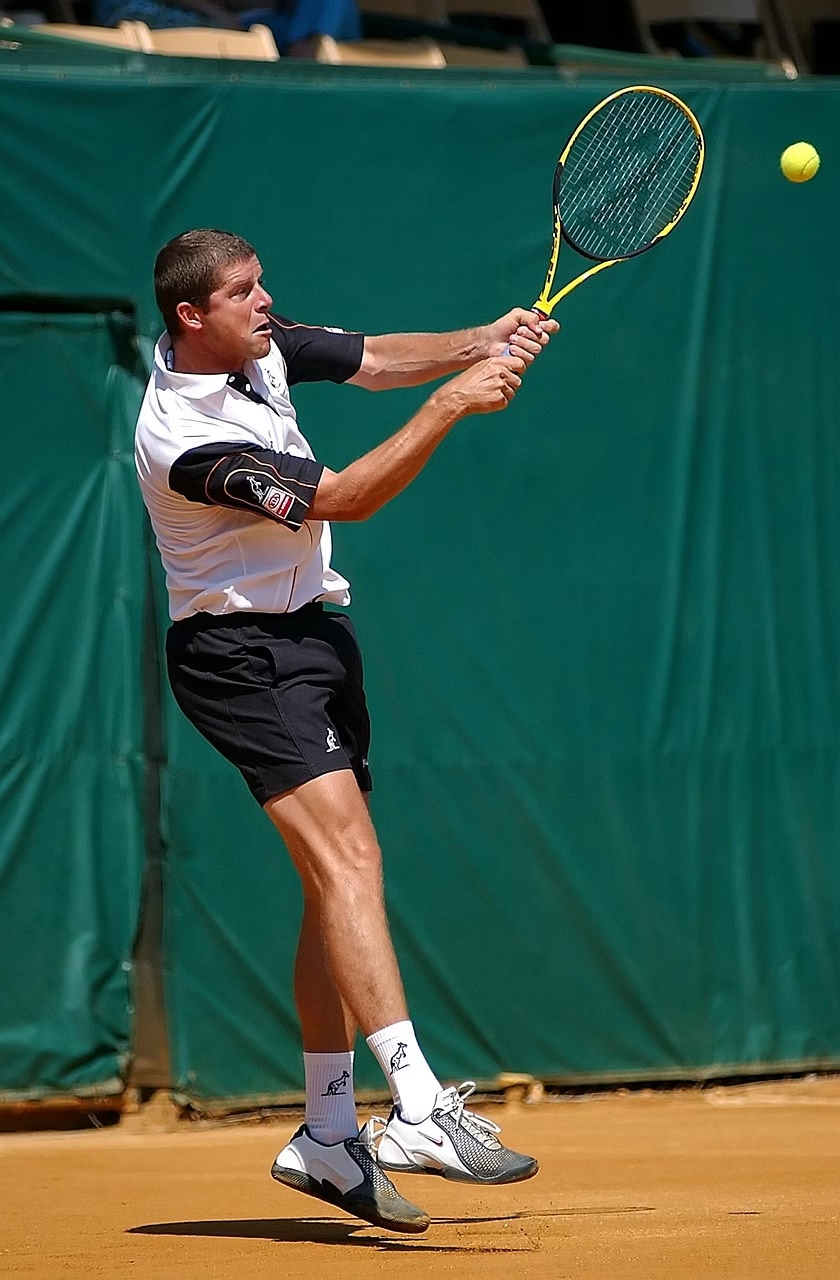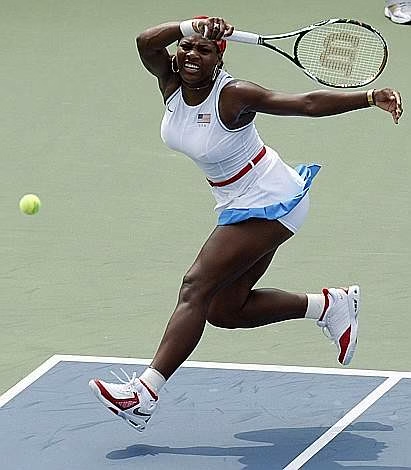






Aryna Sabalenka and Naomi Osaka delivered a high-octane spectacle during their 87-minute clash at the French Open this week, reigniting the debate over gender parity in prime-time tennis scheduling. The rare appearance of a women’s match in the Roland Garros night session highlighted the immense commercial and entertainment potential of top-tier female talent under the lights.
The Context of Prime-Time Parity
For years, Grand Slam tournaments have faced criticism regarding the lopsided distribution of night-session matches. Historically, these marquee slots, which command the highest viewership and advertising rates, have been disproportionately awarded to men’s matches.
Roland Garros only introduced night sessions in 2021, and until recently, the scheduling has leaned heavily toward established male stars. Critics have long argued that this practice perpetuates a cycle where women are denied the platform necessary to build the same level of prime-time global viewership.
The Sabalenka-Osaka Impact
The intensity of the Sabalenka-Osaka matchup provided empirical evidence that women’s tennis can anchor a night session effectively. Both players, known for their aggressive playstyles and massive fan followings, brought an energy that translated perfectly to the evening format.
The match functioned as a litmus test for tournament organizers. By placing two of the sport’s most recognizable figures in the late slot, the French Open tested whether the demand for women’s tennis can rival the traditional dominance of the men’s game during peak television hours.
Data and Expert Perspectives
Market research from the Women’s Tennis Association (WTA) suggests that fan engagement for women’s matches has surged significantly over the past three years. Industry analysts point out that digital engagement metrics often show higher social media interaction during high-profile women’s matches than in comparable men’s contests.
“The data is clear: when the stakes are high and the scheduling is equitable, the audience shows up,” says sports marketing consultant Elena Rossi. “The night session is no longer just a men’s domain; it is a premium product that benefits from the star power currently defining the women’s tour.”
Shifting Industry Implications
For tournament organizers, the implications are primarily commercial. As broadcasters seek to maximize ratings, the success of the Sabalenka-Osaka match provides a template for future programming. Expect to see a more balanced distribution of night slots in upcoming tournaments as organizers realize that excluding women from prime time leaves significant revenue on the table.
For fans, this shift signifies a move toward more equitable tennis viewing experiences. If the current trajectory continues, the “rare” occurrence of a women’s night-session match could soon become the industry standard rather than a noteworthy exception.
Looking Ahead
The industry will now watch closely to see if the French Open organizers repeat this scheduling strategy for the remainder of the tournament. The focus will shift to whether tournament directors at Wimbledon and the US Open follow suit, potentially codifying a new era where women’s tennis is consistently positioned as a central pillar of prime-time sports broadcasting.