




The Tampa Bay Rays, currently boasting the most successful record in Major League Baseball, find themselves at a critical juncture in St. Petersburg, Florida, as they negotiate a final proposal to secure a permanent stadium home. After nearly two decades of failed site plans and public disputes, team ownership and local government officials are now attempting to finalize a deal that would replace the aging Tropicana Field before the team’s current lease expires in 2027.
The Long Road to a Permanent Home
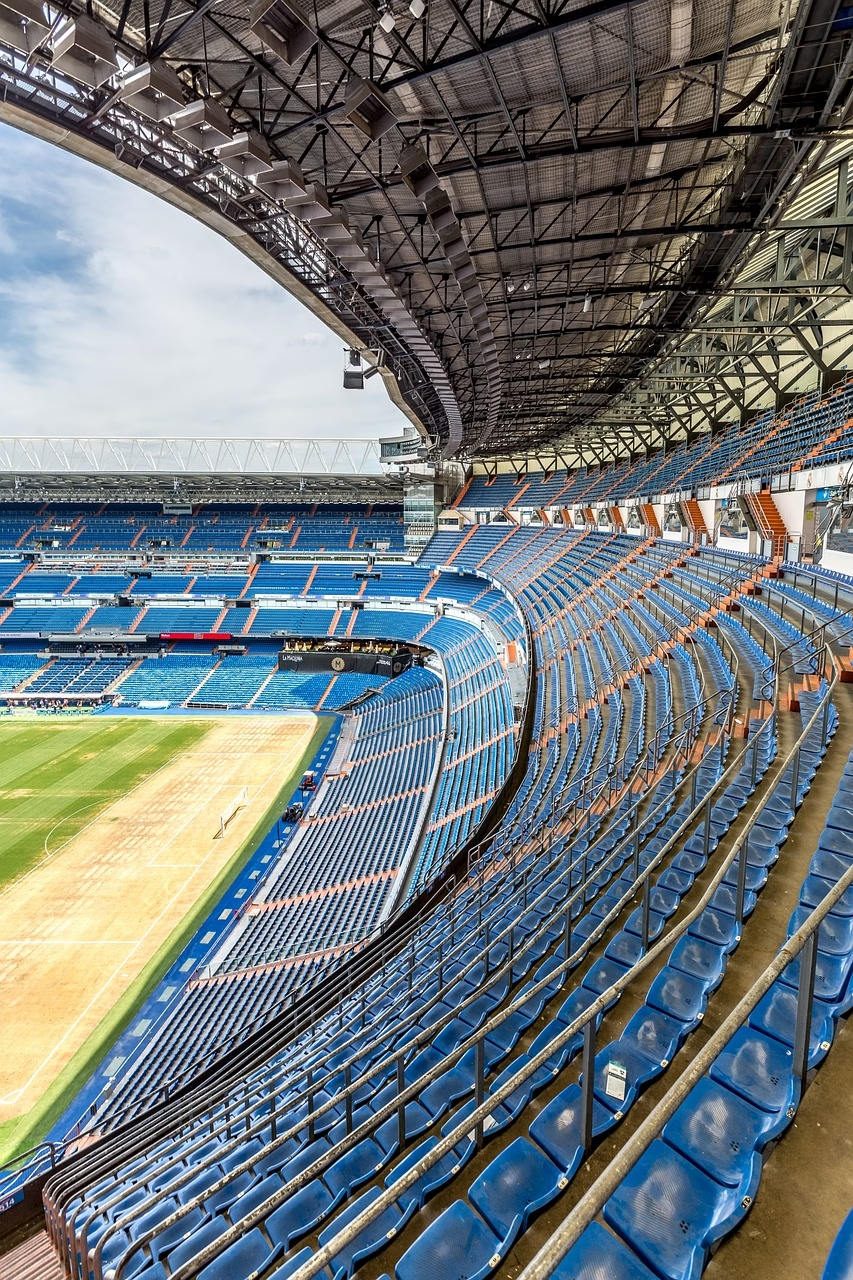
For twenty years, the Rays have struggled with stadium instability, consistently ranking near the bottom of the league in attendance despite their on-field dominance. Tropicana Field, opened in 1990, has long been criticized for its outdated amenities and inconvenient location for the majority of the region’s population.
Previous efforts to relocate the franchise to neighboring Tampa or build a new facility in St. Petersburg have collapsed under the weight of financing disagreements and political opposition. The team’s inability to secure a stable, modern venue has fueled persistent speculation regarding a potential relocation to another market entirely.
The Current Proposal and Economic Stakes
The latest plan, centered on the redevelopment of the historic Gas Plant District in St. Petersburg, represents a massive $1.3 billion project. The proposal includes a new 30,000-seat ballpark surrounded by a sprawling mixed-use development featuring housing, retail, and office spaces.
City and county officials are weighing the economic impact of the project, which proponents argue will catalyze long-term growth in the downtown area. However, critics remain wary of the public funding components, citing the historical difficulty of justifying taxpayer subsidies for professional sports facilities.
Expert Analysis on Stadium Economics
Sports economists remain divided on the long-term viability of these massive infrastructure investments. While the Rays argue that a new park is essential for maintaining the team’s competitiveness, data from the Brookings Institution suggests that stadium projects rarely generate the projected economic returns for local municipalities.
“The primary value of a stadium in the modern era is intangible, often functioning as a branding tool for a city rather than a direct revenue generator,” noted one industry analyst. Despite this, the Rays point to the success of modern, urban-integrated stadiums in cities like San Diego and Atlanta as a blueprint for their own potential success.
Implications for the Franchise and the League
For the Rays, failure to reach an agreement could trigger an immediate search for relocation options, potentially ending the franchise’s tenure in the Tampa Bay area. Major League Baseball Commissioner Rob Manfred has previously stated that the league prefers to keep the team in its current market, provided a viable facility solution is found.
For the fans and the local economy, the coming months are pivotal. The decision will determine whether the team remains a cornerstone of the Tampa Bay sports scene or becomes the latest franchise to depart for a more lucrative market.
Moving forward, observers should monitor the upcoming St. Petersburg City Council votes, which will serve as the final hurdle for the project’s financing approval. Should the deal collapse, the timeline for potential relocation will accelerate rapidly, forcing the league to consider alternative expansion or relocation sites for the 2028 season.