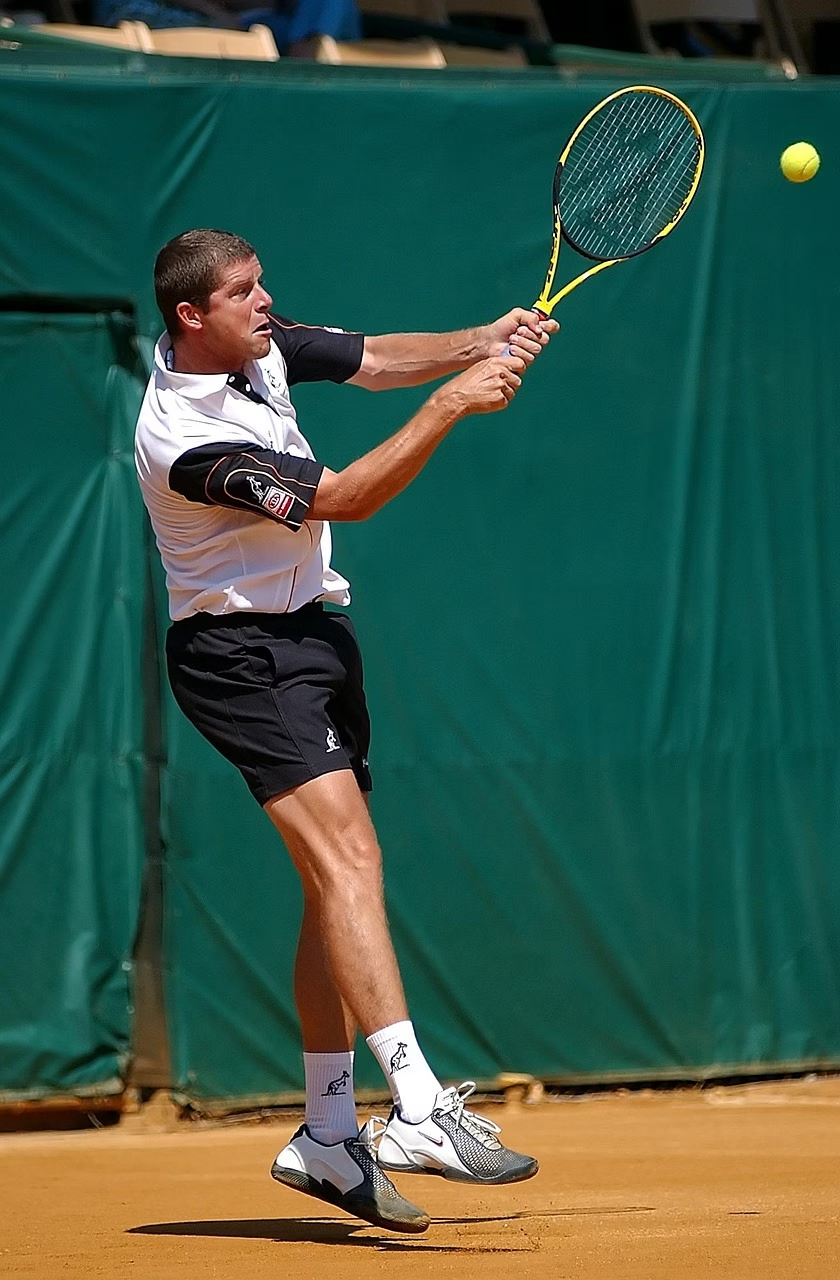






A Final Bow at Roland Garros
French tennis icon Gael Monfils concluded his final appearance at the French Open this week, marking the end of a storied chapter at his home Grand Slam in Paris. The 37-year-old veteran, known for his acrobatic style and charismatic presence, exited the tournament after a career defined by high-intensity matches and deep runs on the red clay of Roland Garros.
Reflecting on his departure, Monfils spoke candidly about his legacy beyond the court. He emphasized a primary objective that has driven his latter years: inspiring a new generation of Black youth to pick up a racket and pursue tennis at the professional level.
The Context of a Career
Monfils has long been a fixture of the ATP Tour, turning professional in 2004. His history at Roland Garros is particularly significant, highlighted by a breakthrough semi-final appearance in 2008 and three additional quarter-final finishes.
Over two decades, Monfils evolved from a promising junior talent into a global ambassador for the sport. His style—often characterized by defensive brilliance and unpredictable shot-making—made him a fan favorite, though he frequently battled injuries that interrupted his pursuit of a maiden Grand Slam title.
Reflecting on Representation
For Monfils, the significance of his career transcends match statistics and trophy counts. In recent post-match interviews, he addressed the importance of visibility, noting that seeing players of color succeed remains a critical factor in diversifying the sport’s demographic reach.
Data from the International Tennis Federation (ITF) suggests that while tennis participation has grown globally, barriers to entry—including coaching costs and facility accessibility—remain persistent challenges. Monfils’ platform serves as a bridge, aiming to normalize the presence of Black athletes in tennis and encourage grassroots investment in underserved communities.
Industry Implications and Future Impact
The retirement of a player of Monfils’ stature leaves a void in the French tennis landscape. His departure forces the French Tennis Federation (FFT) to consider how to sustain the momentum he built, particularly regarding youth engagement programs.
For the broader tennis industry, the focus now shifts toward retention and development. Stakeholders are increasingly looking to establish mentorship programs that connect established players with youth academies. This shift represents a move toward institutionalizing the inspiration Monfils provided through his individual efforts.
What to Watch Next
Observers are now looking toward how Monfils will transition into his post-playing career. Industry analysts suggest he may move into a formal mentorship or academy-based role, where he can directly influence the development of young talent. Furthermore, the upcoming tournament cycles will reveal whether his advocacy has catalyzed measurable shifts in youth participation rates, serving as a benchmark for the long-term impact of his legacy.