




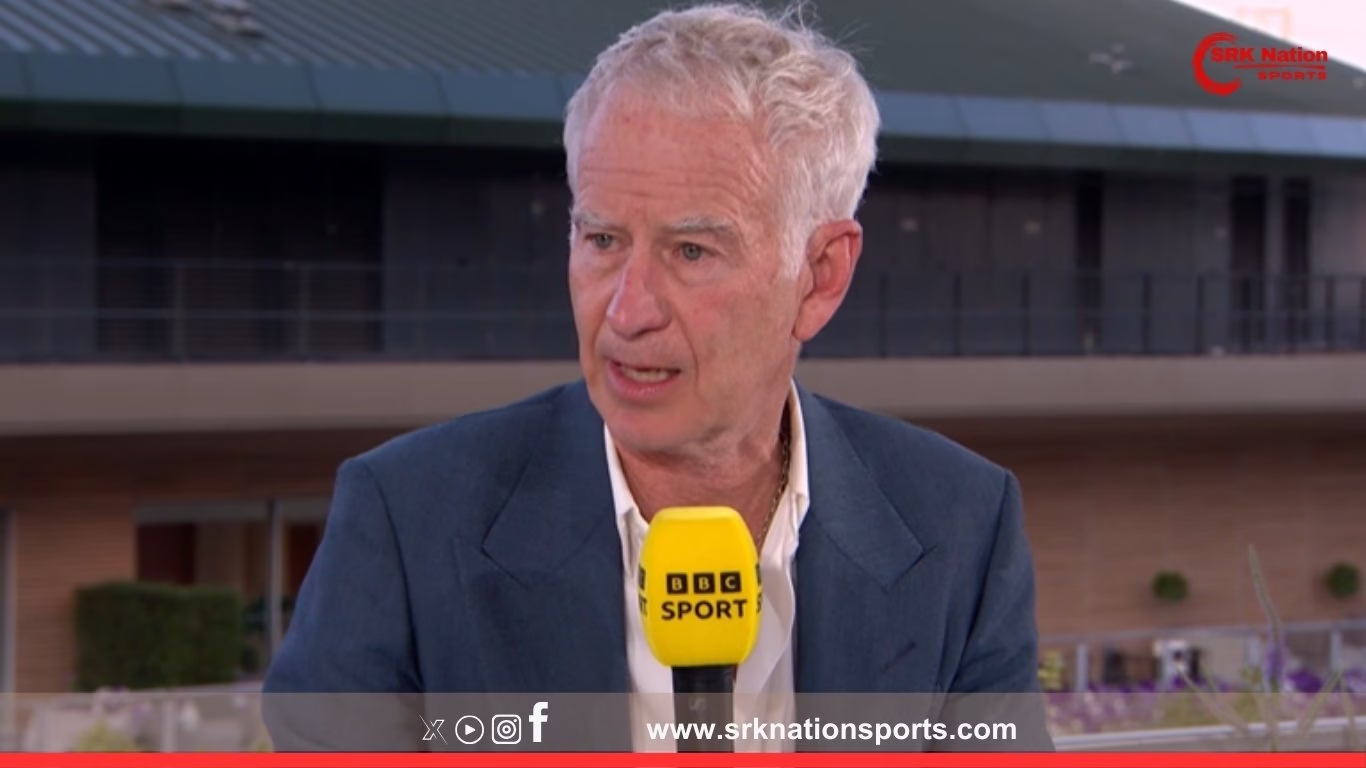
In a significant and controversial statement, legendary American tennis player John McEnroe has called upon the All England Lawn Tennis and Croquet Club (AELTC) to impose a new ban on Wimbledon finalists, igniting widespread debate in the global tennis community. The seven-time Grand Slam champion, known for his blunt views, stated during his recent appearance as a commentator that players who refuse post-match media interactions should be banned from entering future Wimbledon finals.
What Did McEnroe Say?
During his commentary for the men’s singles final at Wimbledon 2025, McEnroe criticised certain top players for avoiding mandatory media conferences after major matches. He argued:
“If a player reaches the final and refuses to fulfil their media obligations, they should be banned from future Wimbledon finals. It’s part of the job. Fans deserve to hear from champions and runners-up.”
His comments came in the context of recent instances where finalists skipped post-match interviews citing mental health or personal reasons, leading to partial fines but no significant deterrents.
Reasons Behind McEnroe’s Suggestion
- Upholding Tournament Prestige
McEnroe believes Wimbledon, as the most prestigious Grand Slam, should enforce stricter conduct rules to maintain its traditional standards of discipline and public engagement. - Fans’ Right To Hear From Players
The former World No.1 emphasised that spectators, who invest time and money to follow the tournament, deserve reflections from finalists as part of their experience. - Media Contractual Obligations
According to him, broadcasters and media partners pay millions for coverage rights, and avoiding press conferences undermines value creation for the sport.
Mixed Reactions Across Tennis Fraternity
Supporters Of McEnroe’s Stance
- Martina Navratilova partially supported his view, saying: “Players need to honour the sport’s traditions. Post-match media is part of the game. But a ban may be too harsh.”
- Boris Becker noted: “McEnroe is right that accountability is important. You cannot pick and choose only the glamorous parts of being a champion.”
Critics Of The Proposal
However, several active players and coaches criticised McEnroe’s proposed ban:
- Naomi Osaka’s coach, Wim Fissette, argued: “Mental health comes before obligations. Penalising a player’s future opportunities is extreme and unfair.”
- Daniil Medvedev, the 2021 US Open champion, commented: “Sometimes, we need space to deal with loss or pressure. A ban is too strong a punishment.”
Historical Context: Players Skipping Media Interactions
Instances that may have prompted McEnroe’s comments include:
| Player | Tournament | Year | Reason For Skipping Media |
|---|---|---|---|
| Naomi Osaka | French Open | 2021 | Mental health, anxiety |
| Nick Kyrgios | Wimbledon | 2022 | Emotional exhaustion post final |
| Elena Rybakina | Australian Open | 2023 | Family emergency |
These cases triggered partial fines ranging from USD 10,000 to USD 25,000 but no bans, following existing ATP, WTA, and ITF rules mandating player-media engagements at Grand Slams.
Current Wimbledon Rules On Media Obligations
- Players must attend post-match press conferences and broadcast interviews.
- Refusal results in fines under ITF Grand Slam Rulebook Article III.H.
- Repeated non-compliance can lead to higher fines or exclusion from future tournaments, though no such ban has been imposed historically for missing media alone.
Fans React On Social Media
- “McEnroe is right. It’s not just about winning; it’s about representing the sport.”
- “Banning a finalist for mental health absence is cruel. Disappointing from McEnroe.”
- “Traditions matter at Wimbledon. Players can’t treat media obligations lightly.”
Legal And Ethical Concerns
Legal experts highlighted that implementing such a ban would require amendments in the Grand Slam Rulebook and compliance with sports law norms protecting player welfare and mental health rights. Any disproportionate penalty could trigger appeals to the Court of Arbitration for Sport (CAS).
Wimbledon’s Possible Response
While AELTC officials have not issued an official statement, sources indicate that the idea of such a ban is unlikely to be adopted. Instead, organisers might consider incremental fines, counselling support, or mandatory interviews with mental health professionals present.
Broader Implications For Tennis
McEnroe’s proposal has sparked a larger conversation on:
- Balancing player mental health and professional obligations.
- The role of media in champion building and accountability.
- Whether stricter measures are needed to maintain Grand Slam traditions in an era of changing athlete welfare priorities.
Conclusion
John McEnroe’s call for Wimbledon to ban finalists refusing media duties has divided the tennis community. While he aims to uphold the integrity and traditions of the sport, critics argue that such a measure overlooks genuine mental health concerns faced by players. As the debate intensifies, Wimbledon and other Grand Slam organisers may re-examine their protocols to balance tradition, commercial obligations, and player welfare.
Disclaimer: This news article is based on publicly available commentary, interviews, and statements from tennis officials, players, and commentators. Readers are advised to check official Wimbledon announcements and ITF rulebooks for updated policies. The views presented are journalistic summaries and do not promote betting or fantasy gaming platforms.