



In a defining moment for Indian chess, teenager Divya Deshmukh etched her name into history by clinching the prestigious Chess World Cup title, becoming the youngest Indian to achieve the feat. Her outstanding performance throughout the tournament was not only a showcase of her tactical brilliance and deep understanding of the game, but also of her exceptional mental resilience. Renowned Grandmaster Susan Polgar, in her recent remarks, praised Divya’s composure and described her mental strength as the cornerstone of her triumph.
Divya’s victory marks a significant milestone in India’s rapidly expanding chess landscape, highlighting the nation’s potential to produce world-class talents in both the men’s and women’s circuits. At just 18 years old, the Nagpur-based prodigy stunned the chess fraternity with her aggressive style of play, unwavering focus under pressure, and her ability to overcome formidable opponents in tightly contested matches.
The Road to Victory: Divya’s Journey in the World Cup
The FIDE Women’s Chess World Cup is known for its intense knockout format, where every round presents a new challenge and offers no room for error. Divya Deshmukh entered the tournament as one of the rising stars of Indian chess, but few expected her to outlast several seasoned veterans, including top-10 ranked players.
Her journey to the top was nothing short of extraordinary. She started with confident wins in the early rounds, showing precision and calmness that belied her age. As she moved into the later stages, her matches became nail-bitingly close, especially the semifinals and final — where she held her nerve in rapid and blitz tiebreaks.
Divya Deshmukh’s Chess World Cup Journey Summary
| Round | Opponent | Result | Format |
|---|---|---|---|
| Round 1 | Bye | — | — |
| Round 2 | Gulrukhbegim Tokhirjonova | 1.5 – 0.5 | Classical |
| Round 3 | Nana Dzagnidze | 2 – 1 | Rapid Tiebreak |
| Round 4 | Harika Dronavalli | 1.5 – 0.5 | Classical |
| Quarterfinals | Kateryna Lagno | 2.5 – 1.5 | Blitz Tiebreak |
| Semifinals | Tan Zhongyi | 2 – 2 (3 – 1 in Blitz) | Rapid + Blitz |
| Final | Aleksandra Goryachkina | 1.5 – 1.5 (2 – 0 in Rapid) | Classical + Rapid Tiebreak |
This combination of patience in classical games and fierce precision in rapid time controls earned her widespread acclaim and the coveted title.
Mental Fortitude at the Core of Success
While many players exhibit tactical and technical strength, it was Divya’s mental fortitude that caught Susan Polgar’s attention. A four-time Women’s World Champion herself, Polgar emphasized that Divya’s biggest weapon wasn’t just her moves on the board, but her ability to stay calm under extreme pressure.
“Divya has a rare gift — she combines youth with a maturity in decision-making that even some top-level players struggle with,” Polgar said. “Her composure during tiebreakers, especially against a player of Goryachkina’s caliber, was outstanding. That comes from deep mental training and strong character.”
Polgar further added that Divya’s victory would serve as inspiration for millions of young players across the world, particularly young girls from regions where competitive chess is still emerging.
India’s Golden Chess Generation
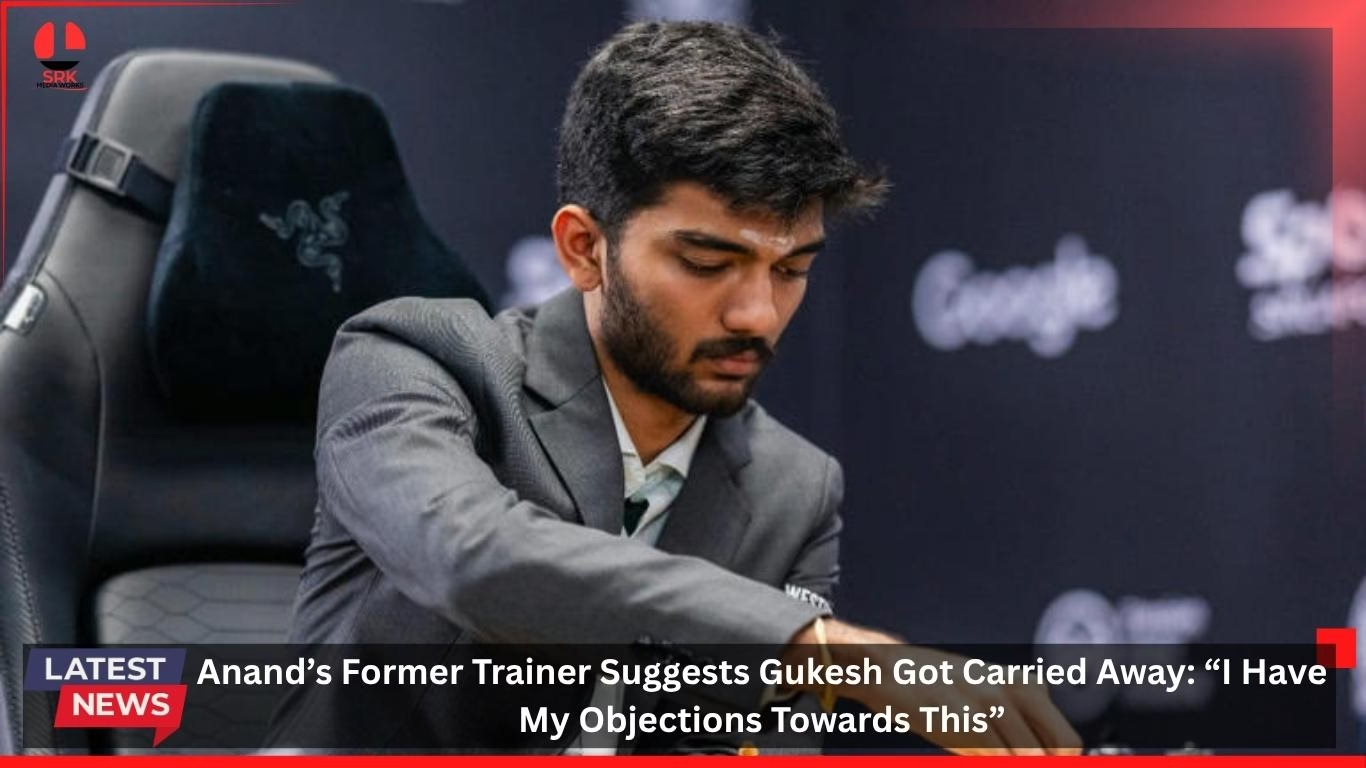
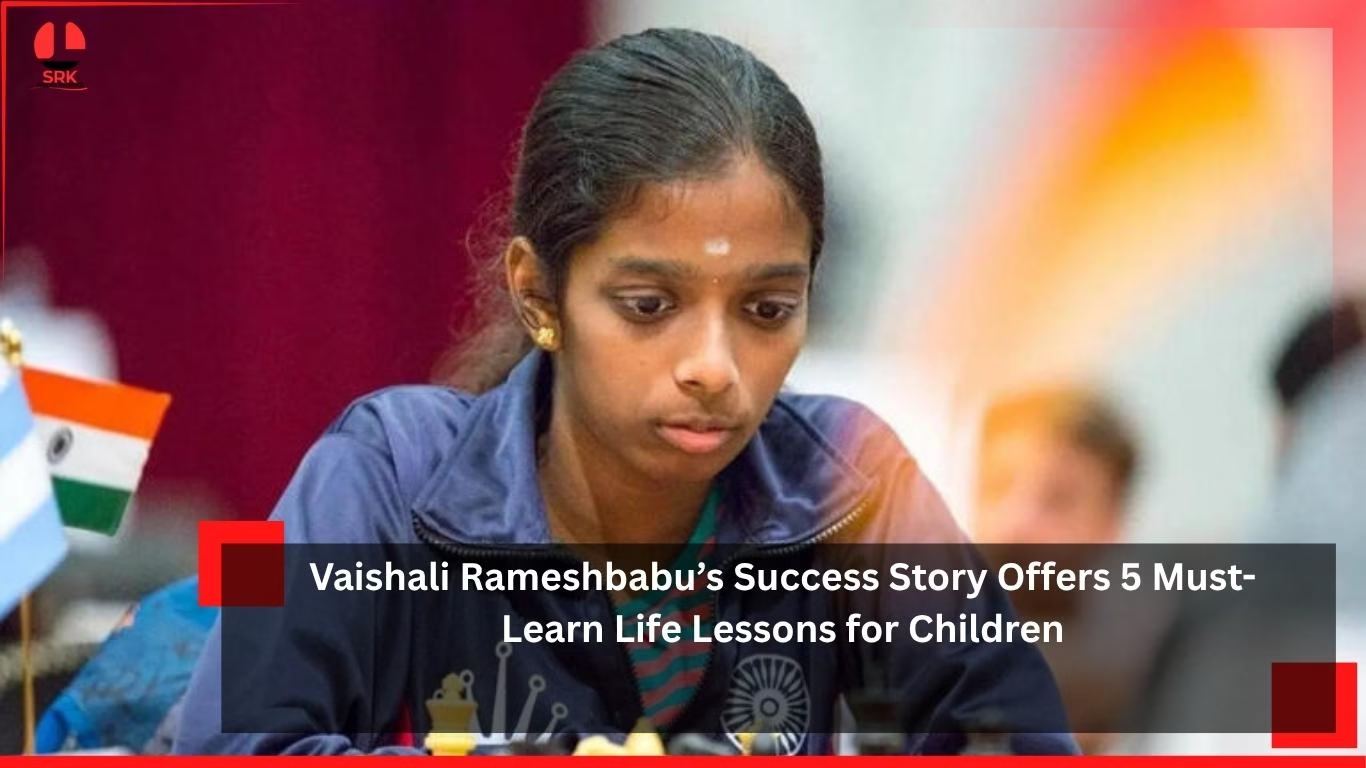
Divya’s triumph adds to the growing list of successes by Indian chess players on the global stage. In the last few years, India has seen an unprecedented rise in young chess talents — from Gukesh D and R Praggnanandhaa to Vaishali Rameshbabu and now Divya Deshmukh.
India’s Top Young Chess Performers (2023–2025)
| Player Name | Age | Notable Achievements |
|---|---|---|
| Divya Deshmukh | 18 | 2025 Chess World Cup Champion |
| R Praggnanandhaa | 19 | 2024 Candidates Finalist |
| D Gukesh | 18 | 2023 Asian Champion, Top-10 Global Rank |
| Vaishali Rameshbabu | 23 | Grandmaster Title, WGM Blitz World Silver |
| Nihal Sarin | 20 | World Youth Rapid Champion, Super GM Performances |
This surge has brought attention to India’s chess infrastructure, particularly the role of coaching academies, AI-based learning platforms, and mental training programs designed to enhance focus, patience, and performance under stress.
Divya’s Training Regime: More Than Just the Board
Divya Deshmukh’s chess preparation isn’t confined to traditional methods. Her team has reportedly integrated modern psychological techniques to boost her emotional resilience. Breathing exercises, visualization drills, and performance simulations are part of her routine.
Her coach emphasized that after the early rounds, mental fatigue was a key threat, and Divya’s ability to reset and regroup after every game gave her a strategic edge.
“She treats each match like a new start — no emotional baggage from the previous round, no overconfidence from wins. That’s rare in an 18-year-old,” her coach was quoted saying.
Susan Polgar on Women’s Chess and India’s Role
Polgar, an advocate for women’s chess development, also used the opportunity to call for more structural support for female players globally. She noted that India has become a beacon in promoting women’s chess, thanks to increased media coverage, government funding, and corporate sponsorships.
“With role models like Divya, Harika, and Vaishali, India is showing the world that women’s chess deserves equal recognition. These young women are not just players; they are ambassadors of the sport.”
She urged national federations to invest more in grassroots programs and mental training modules, which are often overlooked in conventional coaching.
Social Media Buzz and Fan Reactions
Divya Deshmukh’s victory has gone viral on social media, with hashtags like #DivyaDeshmukh and #ChessQueen trending for hours post-match. Celebrities, sports icons, and political leaders hailed her win as a moment of pride for the nation.
Fans were particularly impressed by her mature demeanor in the post-match interview, where she thanked her family, coach, and teammates for their unwavering support.
“I just tried to focus on one move at a time, one game at a time. The journey was exhausting but beautiful,” she said.
What Lies Ahead for Divya?
Now crowned the World Cup Champion, Divya’s next targets include securing a full Grandmaster title, preparing for the Candidates Tournament, and representing India at the upcoming Chess Olympiad. Experts predict that if her trajectory continues, she could become India’s second Women’s World Chess Champion after Koneru Humpy.
Her rise also bolsters India’s chances in mixed team events, with the nation likely to field one of the youngest yet strongest squads at the upcoming Olympiad.
Final Thoughts
Divya Deshmukh’s Chess World Cup triumph isn’t just a personal achievement — it is a cultural milestone for Indian chess. Her blend of tactical sharpness, strategic depth, and mental resilience sets a new gold standard for the next generation of players. With endorsements from legends like Susan Polgar, Divya’s journey from Nagpur to the top of the chess world is a testament to discipline, determination, and mental mastery.
As the chess world applauds her, one thing is certain — this is only the beginning of a glorious career.
Disclaimer: This article is based on publicly available tournament results, expert commentary, and post-event interviews. The views expressed are for informational purposes and do not reflect any personal endorsements or affiliations.