





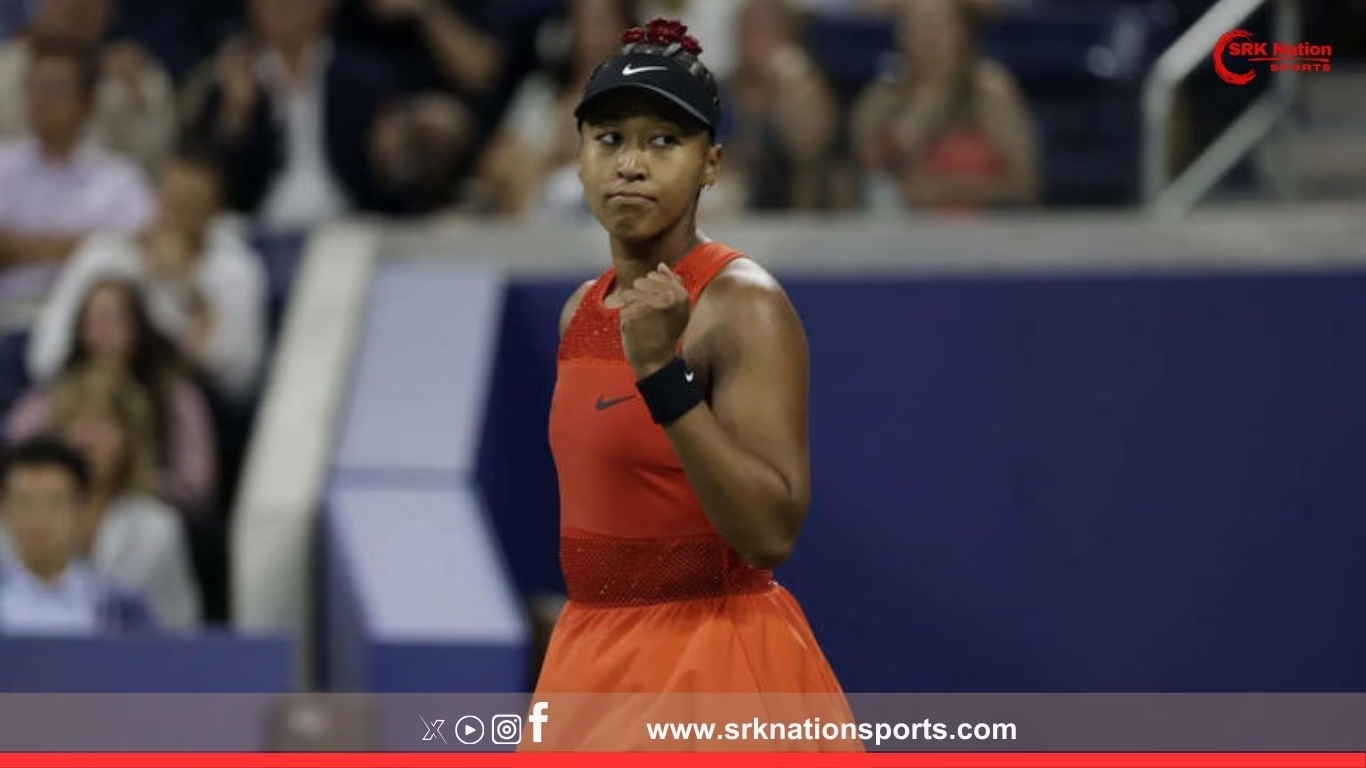
Naomi Osaka, one of the most celebrated tennis stars of her generation, has always stood out not just for her powerful performances on the court but also for her unique multicultural identity. Born in Japan to a Japanese mother, Tamaki Osaka, and a Haitian-American father, Leonard François, Osaka grew up with a blend of cultural influences that shaped her worldview. One of the most defining decisions in her career and personal life was surrendering her US citizenship and choosing to represent Japan.
The decision, heavily influenced by her parents, was not a simple one. It was a mix of personal identity, legal requirements, career opportunities, and national pride. Understanding why Leonard and Tamaki guided Naomi toward this choice requires a closer look at Japan’s nationality laws, Osaka’s career trajectory, and the expectations of her global fan base.
Japan’s Nationality Law and Dual Citizenship Dilemma
Japan does not permit dual citizenship beyond the age of 22. Individuals born with multiple citizenships are required to choose one nationality before they reach this age. Naomi Osaka, born in October 1997, faced this legal deadline in 2019. At that point, she had to decide whether to keep her US passport or retain Japanese citizenship.
Her parents, Leonard and Tamaki, strongly advised her to choose Japan. This was partly due to legal necessity but also due to cultural and career factors. As her mother Tamaki is Japanese, retaining Japanese citizenship would allow Naomi to represent her birth country in international competitions without legal hurdles.
Cultural Roots and Family Influence
For Tamaki, Naomi’s Japanese heritage was central to her identity. Growing up in Japan until the age of three, Naomi was deeply connected to her mother’s side of the family. Despite later moving to the United States and being raised there, the Osaka family maintained strong ties with Japan.
Leonard François, while Haitian-American, respected Tamaki’s cultural influence and believed Naomi would inspire millions in Japan by embracing her Japanese nationality. By surrendering her US citizenship, Naomi could fully align herself with her mother’s homeland.
Career Opportunities and Global Branding
From a career standpoint, representing Japan opened unique opportunities for Naomi. Japan was set to host the Tokyo Olympics in 2020, and Naomi Osaka was projected as the face of the games. Sponsorships, endorsements, and global branding deals flowed in from Japanese corporations eager to associate with her success and multicultural background.
Had she chosen US citizenship, Naomi would have faced stiff competition within the already dominant US tennis circuit, and her chances of becoming the Olympic poster athlete might have been reduced. Japan, on the other hand, saw her as a once-in-a-generation star who could inspire young athletes and elevate the country’s presence in international tennis.
Comparative Impact of Citizenship Choice
| Criteria | If Chose US Citizenship | If Chose Japanese Citizenship |
|---|---|---|
| Legal Status | Allowed dual identity | Required by law to renounce US |
| Career Opportunities | Compete in strong US team | Become face of Japanese sports |
| Sponsorship Deals | Limited global exposure | Strong Japanese endorsements |
| Olympic Representation | Harder to qualify | National icon for Tokyo 2020 |
| Cultural Identity | Partial alignment | Strong heritage connection |
This table clearly demonstrates why Naomi’s parents leaned toward Japan as the natural choice.
Emotional Connection with Japan
Tamaki Osaka believed that Japan needed a strong cultural ambassador to show diversity in sports. Naomi, with her Japanese-Haitian-American background, symbolized modern Japan—progressive, diverse, and internationally connected. By choosing Japan, Naomi not only respected her mother’s heritage but also gave young Japanese athletes, particularly biracial children, a figure to look up to.
Naomi herself acknowledged that while she grew up in the US, she always felt a special connection to Japan through her family, food, traditions, and language. Her decision was not merely about tennis—it was about identity.
The Role of Leonard François
Leonard, a tennis coach himself, had always focused on Naomi’s long-term career strategy. While he raised Naomi and her sister Mari in the US, he recognized that Japan offered greater opportunities for them to stand out internationally. His support of Tamaki’s wish for Naomi to retain Japanese citizenship highlighted his belief in a balanced family decision, prioritizing both heritage and career advancement.
The Tokyo Olympics and Naomi’s Legacy
One of the most significant outcomes of Naomi’s decision was her role in the Tokyo Olympics. She was chosen to light the Olympic cauldron in the opening ceremony, a symbolic gesture that made her not just a tennis player but a national icon. This historic moment would not have been possible if she had retained US citizenship.
Her parents foresaw this cultural and symbolic importance, making her decision to surrender US citizenship one of the most impactful career moves in modern sports history.
Broader Implications for Japan and the World
Naomi Osaka’s decision also sparked conversations about nationality laws, identity, and representation. In Japan, where multicultural citizens often face social barriers, her prominence challenged traditional notions of Japanese identity.
Her parents believed that Naomi could change how Japan viewed biracial citizens and open doors for greater inclusivity in sports and society. By representing Japan, Naomi became more than an athlete—she became a bridge between cultures.
Identity and Citizenship: Broader Lessons
| Aspect | Impact on Naomi Osaka | Broader Social Impact |
|---|---|---|
| Cultural Identity | Strengthened ties with Japan | Greater acceptance of diversity |
| Career Branding | Enhanced global reach | Japanese sports gain visibility |
| Social Representation | Role model for youth | Inspires biracial athletes |
| National Pride | Elevated Japan’s image | Stimulated sports development |
Conclusion
Naomi Osaka’s decision to surrender her US citizenship was not a rejection of her American upbringing but a conscious embrace of her Japanese roots, guided by the advice of her parents, Leonard and Tamaki. It was a choice shaped by legal realities, cultural pride, and strategic career opportunities.
Her parents played a pivotal role in this life-defining move, ensuring Naomi stayed connected to her heritage while maximizing her global influence. Today, Osaka is not just a tennis champion but also a symbol of diversity, resilience, and identity in a rapidly changing world.
Disclaimer: This article is intended for informational and educational purposes only. It reflects analysis of Naomi Osaka’s career and cultural decisions and does not represent official statements from the athlete or her family.