


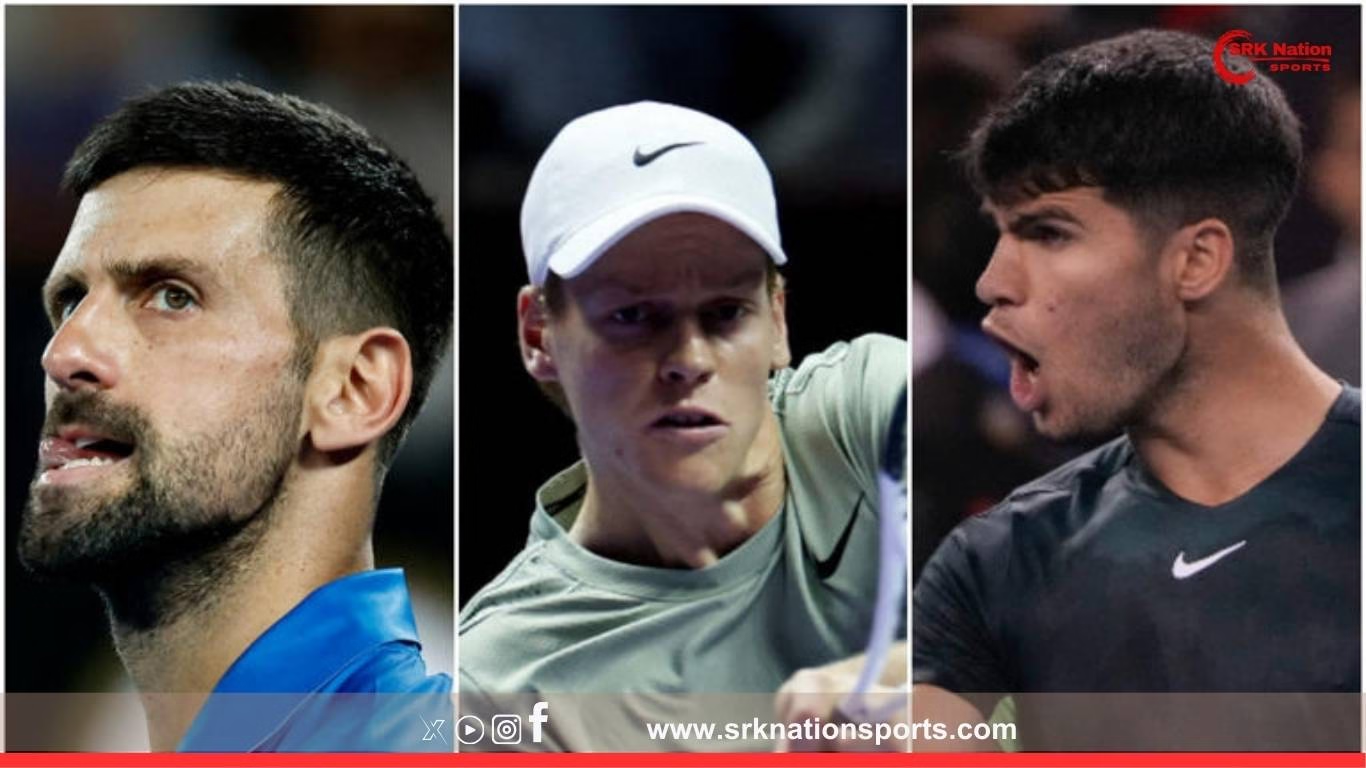
Novak Djokovic, the Serbian tennis legend who continues to dominate the sport well into his late 30s, has spoken emotionally about life on the ATP Tour after the retirements of Roger Federer, Rafael Nadal, and Andy Murray. These four players together shaped what is often called the Golden Era of Tennis, captivating fans for nearly two decades with their intense rivalries and remarkable achievements. Djokovic’s latest reflections underline how much the sport has changed in their absence, both on and off the court.
The End of an Era
Roger Federer, with his elegance, retired in 2022. Rafael Nadal, the undisputed “King of Clay,” stepped away in 2024 after battling injuries. Andy Murray, whose resilience and comeback from hip surgery inspired millions, officially announced his retirement in 2025. With their exits, Djokovic remains the last active pillar of the group known as the “Big Four.”
Speaking in a recent interview, Djokovic admitted:
“Part of me left with them. Our rivalries pushed me to be better, stronger, and more determined. Without Federer, Nadal, and Murray, tennis feels very different. I miss the battles, the drama, and the emotions that defined our era.”
Rivalries That Defined Modern Tennis
The Federer-Nadal-Djokovic-Murray era gave tennis some of its most iconic matches. From Wimbledon finals that lasted deep into the night to French Open marathons on clay and hard-fought duels at the Australian and US Opens, these four men elevated tennis to new heights.
Djokovic’s own legacy is inseparable from theirs. His pursuit of Grand Slam titles, ATP Masters 1000 crowns, and world No. 1 rankings was fueled by constant competition against these legends.
Career Achievements of the “Big Four”
| Player | Grand Slam Titles | ATP Masters 1000 Titles | Weeks at World No.1 | Olympic Medals |
|---|---|---|---|---|
| Roger Federer | 20 | 28 | 310 | Silver (2012) |
| Rafael Nadal | 22 | 36 | 209 | Gold (2008, 2016 Doubles) |
| Novak Djokovic | 24+ | 40+ | 420+ | Bronze (2008) |
| Andy Murray | 3 | 14 | 41 | Gold (2012, 2016) |
This table illustrates how Djokovic currently leads statistically, but without his rivals, the numbers alone don’t capture the emotion of their battles.
Emotional and Personal Impact on Djokovic
For Djokovic, tennis has always been about more than trophies. Competing against Federer, Nadal, and Murray was deeply personal. Each rivalry demanded unique adjustments: Federer’s finesse, Nadal’s relentless intensity, and Murray’s tactical depth.
“Playing against them was like solving different puzzles,” Djokovic explained. “I knew that if I didn’t evolve, I would not survive. They were not just rivals—they were part of my journey, shaping me as a player and a person.”
With their absence, Djokovic admits to feeling a void. While younger players like Carlos Alcaraz, Jannik Sinner, and Holger Rune represent the new generation, the emotional connection of facing familiar foes is missing.
Life on Tour Without the Big Four Dynamic
The ATP Tour is transitioning into a new era. Matches are shorter, rivalries are still developing, and the crowds, though enthusiastic, are adjusting to new names dominating the courts. Djokovic recognizes this shift but emphasizes that tennis remains in safe hands.
“I see incredible talent in the new generation,” he said. “But what we had—the Big Four—it was unique. Fans knew every match would be unforgettable. That chapter has closed, and I carry gratitude for being part of it.”
Comparison of Eras
| Era | Key Players | Defining Features |
|---|---|---|
| 2003–2022 (Golden) | Federer, Nadal, Djokovic, Murray | Legendary rivalries, 60+ Grand Slams between them, global fan explosion |
| 2023–Present (Next Gen) | Alcaraz, Sinner, Rune, Medvedev | Fresh energy, aggressive playing styles, shift in audience dynamics |
The table highlights how the sport is transitioning, but the emotional weight of the “Golden Era” remains unmatched.
Djokovic’s Future and Motivation
Despite being the last of the Big Four still competing, Djokovic shows no signs of slowing down. His training routines, dietary discipline, and mental resilience allow him to remain competitive against players nearly 15 years younger.
Yet, he admits motivation is different without Federer, Nadal, and Murray. “They were the reason I woke up every day wanting to improve. Now I find motivation in history, in inspiring young athletes, and in making my children proud.”
The Legacy of Federer, Nadal, Murray, and Djokovic
Together, the Big Four redefined tennis:
- Federer brought elegance, shot-making artistry, and a global fanbase.
- Nadal embodied fighting spirit, physical dominance, and clay-court mastery.
- Murray showcased resilience, tactical brilliance, and national pride.
- Djokovic set new benchmarks in consistency, adaptability, and mental toughness.
Their retirements leave Djokovic as the lone torchbearer of an era that may never be replicated.
Global Reaction and Fan Emotions
Fans worldwide echo Djokovic’s sentiments. The rivalries between these four transcended sport, drawing comparisons to legendary duels in boxing, Formula 1, and football. For many, the retirements feel like the end of their own sporting youth.
Tennis federations and broadcasters also acknowledge that while the future is bright, the commercial and cultural influence of the Big Four was extraordinary. Djokovic, in acknowledging that “part of me left with them,” voiced the emotions of millions.
Conclusion
Novak Djokovic’s reflections highlight the profound human side of sport. Statistics, titles, and rankings may define achievements, but rivalries define legacies. With Federer, Nadal, and Murray retired, Djokovic stands not just as the greatest champion statistically but also as the last guardian of an era that inspired generations.
As he continues to play, he carries the weight of memory—of battles fought, friendships forged, and moments that changed tennis forever. For Djokovic and the fans, the Golden Era may be gone, but its spirit lives on every time he steps on the court.
Disclaimer: This article is a sports feature written for informational and analytical purposes. It reflects publicly available insights into Novak Djokovic’s views and the history of tennis rivalries but does not represent official statements from the player or governing bodies.