



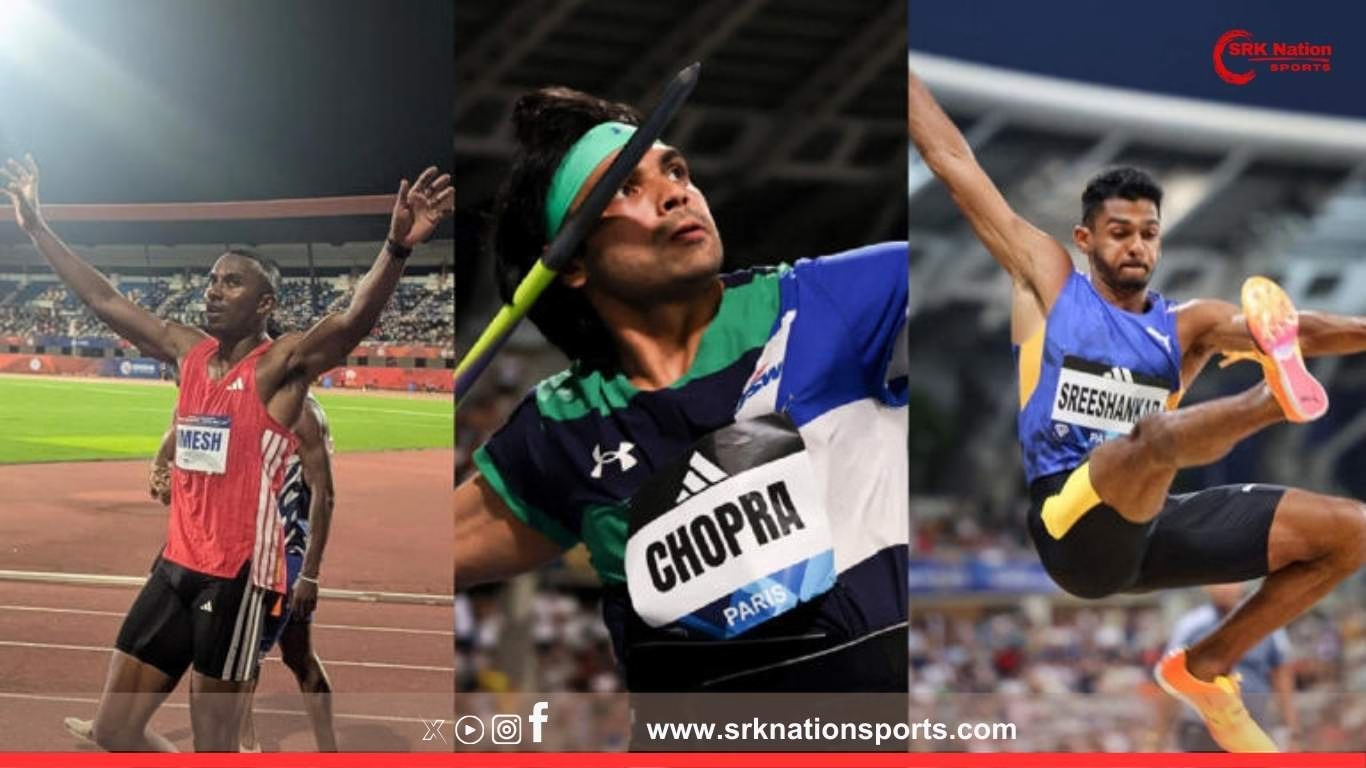
India’s athletics continues to make steady progress on the global stage, and the upcoming World Athletics Championships promises to be another defining moment. With Olympic champion Neeraj Chopra, long jump specialist Sreeshankar Murali, and emerging sprinter Animesh Kujur leading the charge, India has assembled a team that blends world-class experience with youthful promise.
The list of qualified athletes shows how Indian athletics has expanded beyond traditional events, with participation in sprints, throws, jumps, and middle-distance categories. These athletes will represent the nation not only with the goal of winning medals but also of improving their world rankings and setting benchmarks for the next generation.
Neeraj Chopra: The Flagbearer of Indian Athletics
Neeraj Chopra remains the biggest star of Indian athletics. The javelin thrower, who clinched gold at the Tokyo Olympics and later won the World Championships in 2023, enters the event as one of the favorites. Chopra’s consistency in breaching the 85–90m mark places him in a league of his own.
For India, his participation is more than a medal hope—it is about inspiring young athletes to pursue track and field sports. Chopra’s ability to perform under pressure has made him a global name, and all eyes will be on him as he aims to defend his world title.
Sreeshankar Murali: The Long Jump Challenger
Sreeshankar Murali has emerged as India’s most reliable long jump specialist. Known for his explosive take-off and ability to cross the 8m mark consistently, Sreeshankar will be aiming to compete against some of the best in the world, including athletes from the US and Europe who dominate the discipline.
After narrowly missing out on podium finishes in earlier global events, Murali will be eager to translate his form into a medal at the World Championships. His qualification underscores India’s growing presence in technical field events.
Animesh Kujur: The Rising Sprint Star
Among the fresh names, Animesh Kujur stands out as a sprinter to watch. India has traditionally struggled in sprinting events, but Kujur’s rapid improvement in the 200m has brought new hope. His qualification indicates a broader diversification of Indian athletics, where athletes are beginning to break barriers in track events long dominated by American, Caribbean, and European runners.
Kujur’s inclusion signals a shift in India’s sporting ambitions, showing that sprinting too can become a medal prospect in the future.
Other Qualified Athletes
India’s representation is not limited to Chopra, Murali, and Kujur. Several other athletes have met qualification standards across disciplines.
Indian Athletes Qualified for the World Athletics Championships
| Athlete | Event | Qualification Mark Achieved | Medal Prospects |
|---|---|---|---|
| Neeraj Chopra | Javelin Throw | 88m+ | High |
| Kishore Jena | Javelin Throw | 85m+ | Medium |
| Sreeshankar Murali | Long Jump | 8m+ | Medium |
| Jeswin Aldrin | Long Jump | 8m+ | Medium |
| Animesh Kujur | 200m Sprint | Sub-20.4 sec | Emerging Talent |
| Avinash Sable | 3000m Steeplechase | National Record Holder | Medium |
| Tajinderpal Singh Toor | Shot Put | 20m+ | Medium |
| Shaili Singh | Women’s Long Jump | 6.7m+ | Promising Future |
| Jyothi Yarraji | 100m Hurdles | National Record Holder | Promising |
| Priyanka Goswami | Race Walking | Consistent Top-10 Finisher | Outside Chance |
This table demonstrates the depth of India’s athletics squad, with representation across track, field, and road events.
Growth of Indian Athletics on the World Stage
India’s athletics ecosystem has transformed significantly in the past decade. Once considered underdogs in global track and field, Indian athletes are now regular finalists and podium contenders. The rise of athletes like Neeraj Chopra and Avinash Sable has created belief that India can consistently challenge established nations.
Comparative Growth of India at the World Athletics Championships
| Year | Number of Qualified Athletes | Finalists | Medals Won |
|---|---|---|---|
| 2015 | 5 | 1 | 0 |
| 2017 | 8 | 2 | 0 |
| 2019 | 9 | 3 | 0 |
| 2022 | 12 | 4 | 0 |
| 2023 | 14 | 5 | 1 (Neeraj Chopra) |
| 2025 | 15+ | To be decided | In progress |
The table highlights a clear upward trend in participation and performance, reflecting the efforts of Indian coaches, federations, and athletes.
Expectations from the Championships
- Neeraj Chopra’s Medal Defense – The biggest storyline is whether Chopra can retain his world title and add another chapter to his legacy.
- Long Jump Breakthrough – With Murali and Aldrin, India has two serious contenders in long jump, a rare achievement.
- Middle and Long-Distance Running – Avinash Sable will carry hopes in steeplechase, aiming to improve his timings and break into the top three.
- Women’s Participation – Athletes like Shaili Singh and Jyothi Yarraji will look to create history by winning India’s first female field-event medal.
Significance for Indian Sports
The World Athletics Championships not only test India’s athletes but also provide a platform to gauge progress before the Olympics. Strong performances here will boost confidence and attract greater investment in grassroots training, infrastructure, and international exposure.
For young fans and aspiring athletes, seeing names like Kujur and Yarraji on the global stage shows that opportunities exist beyond cricket, creating a broader sporting culture in India.
Conclusion
With Neeraj Chopra, Sreeshankar Murali, and Animesh Kujur leading a diverse team, India enters the World Athletics Championships with more confidence and ambition than ever before. The mix of experienced campaigners and fresh faces indicates a healthy pipeline of talent. While Chopra remains the nation’s best medal hope, the presence of athletes across multiple disciplines signals that Indian athletics is truly on the rise.
The Championships will not only determine medal tallies but also measure India’s progress toward becoming a global athletics powerhouse.
Disclaimer: This article is intended for informational and analytical purposes only. It is based on athlete qualifications and current trends in Indian athletics and does not represent official statements from sports federations or governing bodies.