







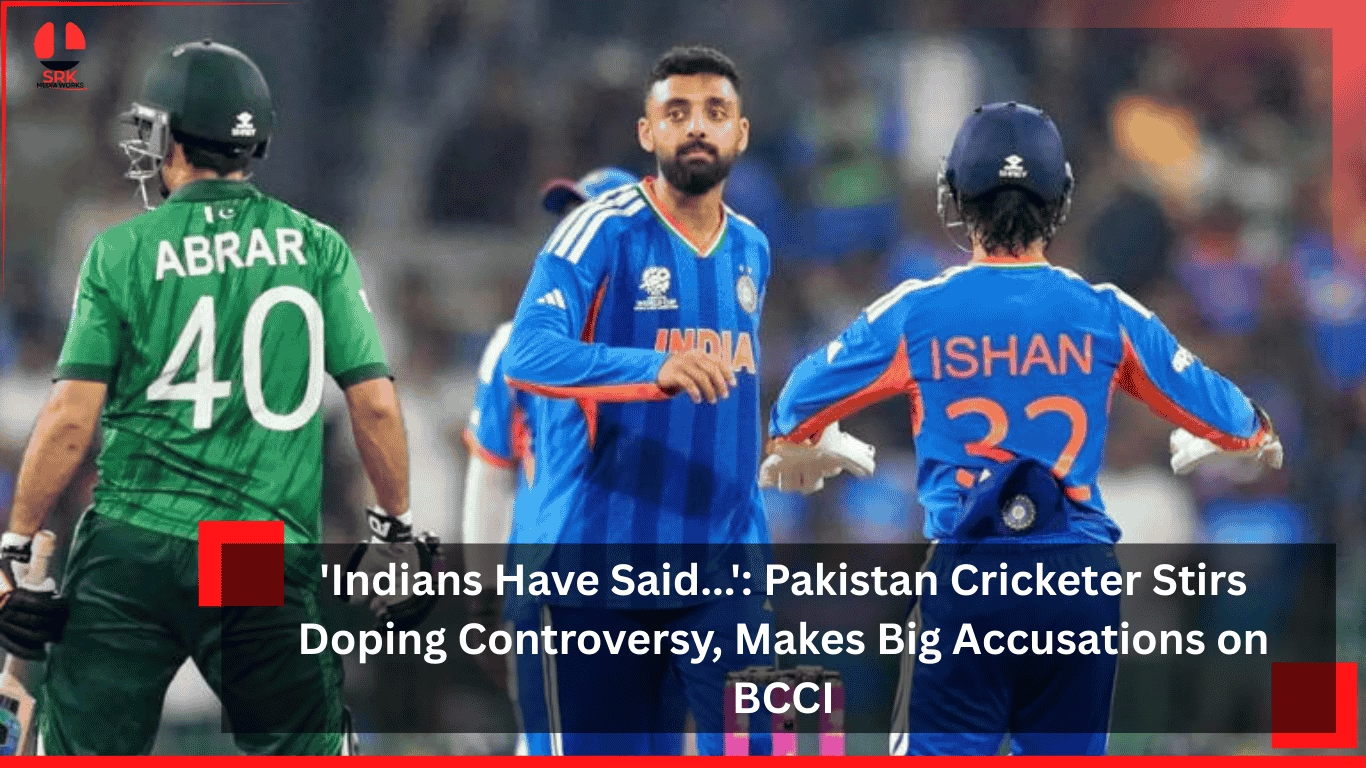
A fresh storm has hit the cricketing world after a Pakistan cricketer alleged that the Board of Control for Cricket in India (BCCI) has been avoiding full compliance with International Cricket Council (ICC) doping protocols. The player claimed that “Indians have said…” in reference to how India manages doping tests, sparking a heated debate about transparency, fairness, and governance in international cricket.
Background of the Controversy
The ICC has long maintained strict anti-doping measures to ensure fair play across global cricket. However, the Pakistan cricketer’s remarks suggest that BCCI prefers to rely on India’s National Anti-Doping Agency (NADA) rather than handing over complete authority to the ICC. This accusation has reignited discussions about whether India’s dominance in cricket allows it to bypass international oversight.
Why Doping Tests Are Crucial
Doping tests are not just about catching offenders—they are about maintaining the credibility of the sport.
- Fair Competition: Ensures no player gains an unfair advantage.
- Health Protection: Prevents athletes from consuming harmful substances.
- Global Standards: Aligns cricket with international sporting regulations.
- Public Trust: Fans expect transparency and fairness in the game.
Comparative Overview of Anti-Doping Structures
| Country | Primary Agency | Overseen By | ICC Involvement |
|---|---|---|---|
| India | NADA | WADA | Limited |
| Pakistan | PCB + ICC | ICC/WADA | Direct |
| England | UKAD | WADA | Moderate |
| Australia | ASADA | WADA | Moderate |
This table highlights how India’s reliance on NADA reduces ICC’s direct involvement compared to other cricketing nations.
BCCI’s Influence in World Cricket
The BCCI is the wealthiest and most powerful cricket board globally, largely due to the success of the Indian Premier League (IPL). Its financial clout often translates into greater influence in ICC decision-making.
Comparative Analysis of Cricket Boards
| Cricket Board | Annual Revenue (Approx.) | Global Influence | Key Tournament |
|---|---|---|---|
| BCCI (India) | $600M+ | Very High | IPL |
| ECB (England) | $250M+ | Moderate | The Hundred |
| PCB (Pakistan) | $100M+ | Limited | PSL |
| CA (Australia) | $300M+ | High | Big Bash |
This comparison shows why critics argue that BCCI’s dominance allows it to set its own rules.
The Pakistan Cricketer’s Statement
The remark “Indians have said…” was interpreted as a direct accusation that India avoids ICC oversight in doping matters. While the statement did not provide specific evidence, it has fueled debates about whether cricket’s governance is skewed in favor of India.
Reactions from Cricketing Circles
- Pakistan Media: Framed the statement as proof of India’s overreach in cricket governance.
- Indian Analysts: Dismissed the claim, arguing that BCCI follows strict anti-doping protocols under NADA.
- Neutral Experts: Suggested that ICC and BCCI need better collaboration to avoid misunderstandings.
Historical Context of India-ICC Tensions
India has often clashed with ICC over governance issues:
| Year | Issue | Outcome |
|---|---|---|
| 2008 | Sydney Test controversy | India threatened tour pullout |
| 2017 | Revenue-sharing dispute | BCCI secured larger share |
| 2020 | IPL vs ICC calendar | India resisted scheduling conflicts |
| 2026 | Doping test controversy | Renewed debate on transparency |
Implications for Global Cricket
- Credibility Risk: If ICC is sidelined, questions about fairness may arise.
- Player Trust: Athletes may feel uncertain about testing standards.
- Geopolitical Tensions: Adds fuel to India-Pakistan cricket rivalry.
- Policy Reforms: ICC may push for stricter global compliance.
Statistical Overview of Doping in Cricket
| Year | Reported Cases | Major Countries Involved | Outcome |
|---|---|---|---|
| 2010 | 3 | Pakistan, India | Suspensions |
| 2015 | 2 | South Africa, England | Warnings |
| 2020 | 1 | Afghanistan | Ban |
| 2024 | 2 | India, Sri Lanka | Investigations |
Though doping cases in cricket are relatively rare, each incident damages the sport’s reputation.
Balanced Perspectives
- Supporters of BCCI: Argue that India has robust national systems under NADA and does not need ICC oversight.
- Critics: Believe ICC involvement ensures neutrality and transparency.
- Middle Ground: Suggests collaboration between ICC and NADA to maintain credibility.
Conclusion
The Pakistan cricketer’s statement that “Indians have said…” has reignited debates about doping control, cricket governance, and the balance of power between BCCI and ICC. While India insists on autonomy through NADA, critics demand greater ICC involvement to ensure transparency.
This controversy is not just about doping—it is about who truly governs world cricket. As the sport continues to grow globally, striking a balance between national autonomy and international oversight will be crucial for cricket’s credibility.
Disclaimer
This article is based on publicly available information and expert analysis. The details of the controversy are subject to ongoing developments. Readers are advised to treat the content as informational and not as definitive evidence of wrongdoing.