



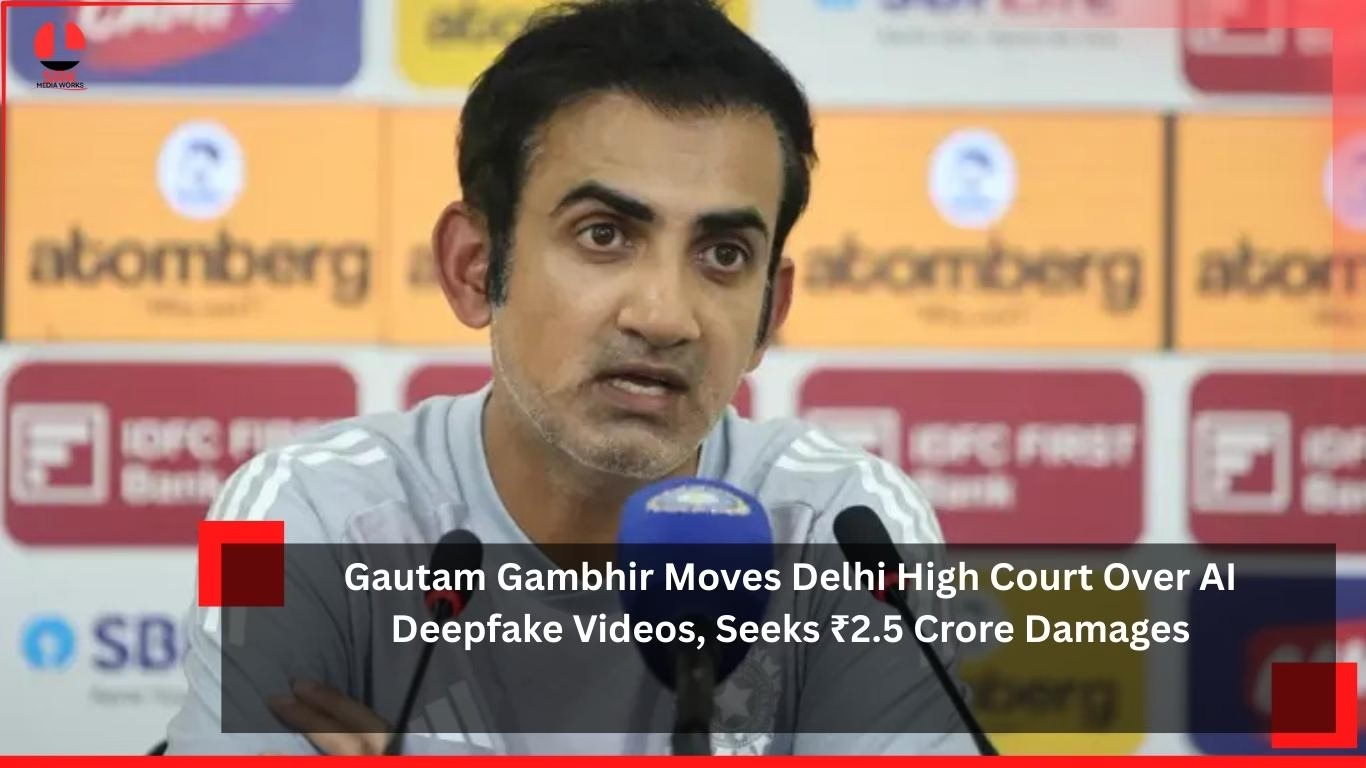
Former cricketer and BJP Member of Parliament Gautam Gambhir has approached the Delhi High Court seeking damages of ₹2.5 crore against the circulation of AI-generated deepfake videos that allegedly tarnish his reputation. The petition highlights the growing menace of deepfake technology in India and raises urgent questions about privacy, defamation, and digital security.
Context of the Case
Deepfake technology uses artificial intelligence to manipulate videos and images, often making individuals appear to say or do things they never did. Gambhir’s plea argues that such videos have been maliciously circulated to damage his public image, mislead citizens, and cause emotional distress.
Key Highlights of Gambhir’s Petition
- Damages sought: ₹2.5 crore for reputational harm.
- Nature of complaint: Circulation of AI-generated deepfake videos.
- Legal grounds: Defamation, privacy violation, and misuse of technology.
- Court’s role: To examine liability and enforce accountability.
Reactions to the Petition
The case has sparked debate among legal experts, politicians, and the public.
| Stakeholder | Reaction | Implication |
|---|---|---|
| Legal Experts | Supportive | Highlights urgent need for regulation |
| Politicians | Mixed | Concerns over misuse of tech in politics |
| Public | Alarmed | Fear of misinformation |
| Tech Analysts | Cautious | Call for stronger AI governance |
Deepfake Threat in India
India has witnessed a surge in deepfake-related incidents, particularly targeting public figures.
| Year | Incident | Impact |
|---|---|---|
| 2023 | Bollywood actor targeted | Social media panic |
| 2024 | Politician’s speech altered | Election misinformation |
| 2025 | Corporate CEO impersonated | Financial fraud |
| 2026 | Gautam Gambhir case | Legal battle for damages |
Legal Framework and Challenges
India currently lacks a comprehensive law specifically addressing deepfakes. Existing provisions under the Information Technology Act and Indian Penal Code cover aspects of defamation and cybercrime, but experts argue these are insufficient.
- Challenges:
- Difficulty in tracing perpetrators.
- Rapid spread on social media platforms.
- Lack of awareness among citizens.
Comparative Global Approach
| Country | Legal Measures | Effectiveness |
|---|---|---|
| US | State-level deepfake laws | Moderate |
| EU | AI Act regulating misuse | Strong |
| China | Strict censorship laws | High |
| India | IT Act + IPC provisions | Limited |
Broader Implications
The Gambhir case underscores the urgent need for India to:
- Strengthen cyber laws to address AI misuse.
- Enhance digital literacy among citizens.
- Hold platforms accountable for hosting harmful content.
- Protect public figures from reputational harm.
Public Sentiment
Citizens have expressed concern over the growing misuse of AI. Many fear that deepfakes could influence elections, damage reputations, and spread misinformation at unprecedented speed.
Future Outlook
Legal experts believe the Delhi High Court’s decision could set a precedent for future deepfake cases in India. If Gambhir’s plea succeeds, it may encourage other public figures to seek legal remedies against AI-driven defamation.
Conclusion
Gautam Gambhir’s move to the Delhi High Court over deepfake videos marks a critical moment in India’s battle against AI misuse. The case highlights the intersection of technology, law, and politics, and could pave the way for stronger regulations to protect individuals from reputational harm in the digital age.
Disclaimer: This article is intended for informational purposes only. It provides an overview of Gautam Gambhir’s legal petition against deepfake videos and its implications. The content does not represent official court communication, and readers are advised to consult verified legal sources for precise details.