





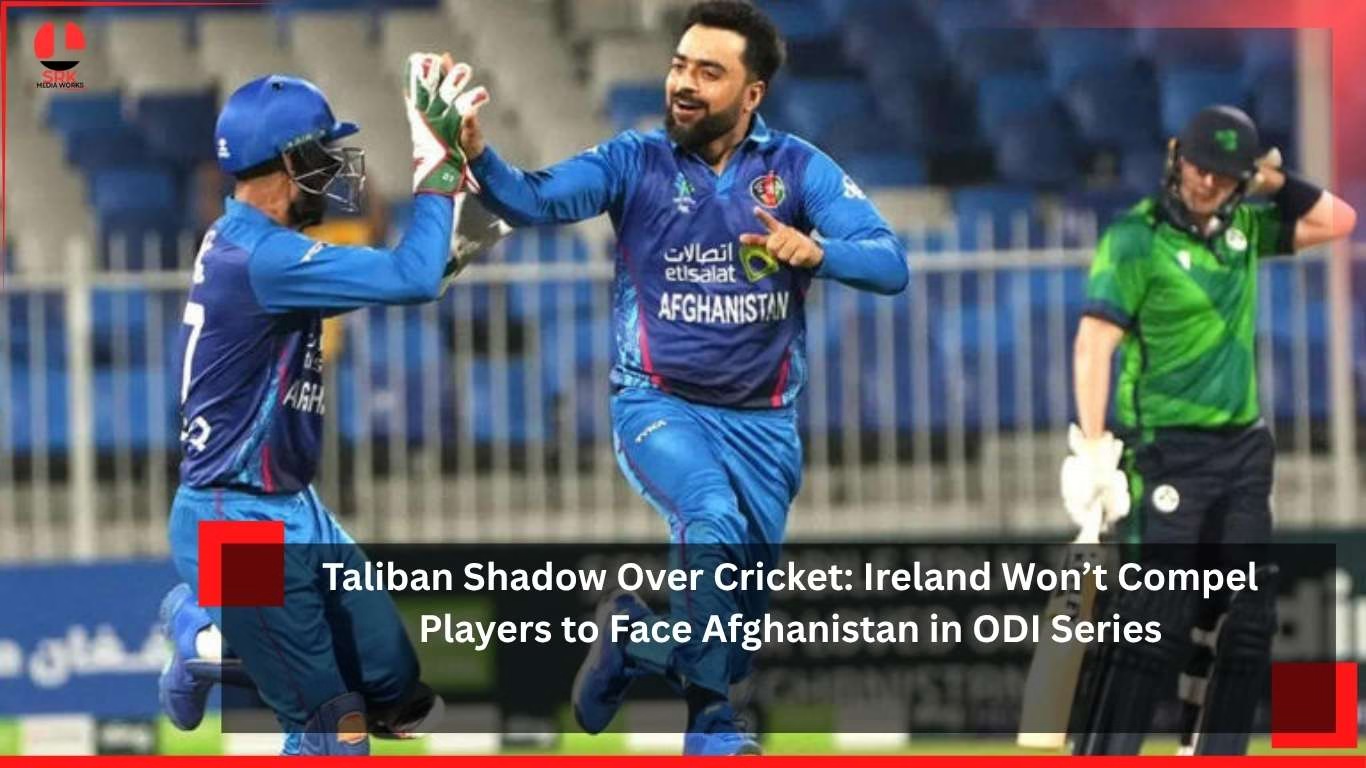
The world of cricket has once again found itself entangled in geopolitical complexities, as Ireland Cricket has announced that its players will not be compelled to face Afghanistan in the upcoming One Day International (ODI) series. This decision comes amid growing concerns about the Taliban’s influence over Afghanistan cricket, raising questions about sports, politics, and the ethical responsibilities of cricket boards.
Ireland’s Stand on Player Autonomy
Ireland Cricket emphasized that participation in matches against Afghanistan will remain a matter of personal choice. Players who feel uncomfortable due to political or ethical reasons will not be forced to take the field. This stance highlights Ireland’s commitment to respecting individual conscience while balancing international cricket obligations.
The Taliban’s Shadow on Afghan Cricket
Since the Taliban regained control of Afghanistan, concerns have been raised about the governance of cricket in the country. While Afghanistan’s cricket team continues to compete internationally, critics argue that the Taliban’s indirect influence undermines the spirit of sports as a neutral ground.
Historical Context of Sports and Politics
Sports have often been caught in the crossfire of political disputes. From boycotts during the Cold War to controversies surrounding apartheid-era South Africa, cricket and other sports have repeatedly faced dilemmas about whether to separate politics from play. Ireland’s decision echoes these historical precedents, showing how cricket remains vulnerable to global political currents.
Ireland vs Afghanistan ODI Series Overview
| Match Number | Venue | Ireland Status | Afghanistan Status |
|---|---|---|---|
| 1st ODI | Dublin | Pending | Pending |
| 2nd ODI | Belfast | Pending | Pending |
| 3rd ODI | Dublin | Pending | Pending |
Player Reactions
- Irish Players: Some have expressed relief at being given the freedom to decide.
- Afghan Players: Many remain focused on cricket, hoping politics won’t overshadow their careers.
- Global Cricketers: Several international players have praised Ireland’s respect for player autonomy.
Fan Sentiment Analysis
| Sentiment Category | Percentage |
|---|---|
| Supportive of Ireland’s stance | 60% |
| Concerned about politics in cricket | 25% |
| Neutral/Indifferent | 10% |
| Critical of Ireland’s decision | 5% |
Broader Implications for ICC
The International Cricket Council (ICC) now faces a dilemma. Should cricket boards be allowed to opt out of matches due to political concerns? Or should the ICC enforce strict participation rules to maintain the integrity of the sport? Ireland’s decision could set a precedent for other nations facing similar ethical challenges.
Comparing Ireland’s Decision with Past Boycotts
| Year | Event/Series | Reason for Boycott |
|---|---|---|
| 1980 | Olympics (US-led boycott) | Soviet invasion of Afghanistan |
| 1986 | Cricket boycott of South Africa | Apartheid policies |
| 2026 | Ireland vs Afghanistan ODI | Taliban influence concerns |
The Ethical Debate
Ireland’s stance raises a fundamental question: should cricket remain purely a sport, or should it reflect moral and political realities? Supporters argue that forcing players to compete against teams linked to controversial regimes undermines human rights. Critics, however, warn that mixing politics with cricket could destabilize the sport globally.
Afghanistan Cricket Board’s Position
The Afghanistan Cricket Board (ACB) has consistently maintained that cricket in Afghanistan is independent of political interference. They argue that players should not be penalized for the actions of governments and that cricket remains a unifying force in the country.
Ireland’s Cricketing Future
Ireland’s decision may impact its scheduling and relations with other cricket boards. While respecting player autonomy strengthens its moral stance, it could complicate bilateral series arrangements and ICC commitments.
Conclusion
The Ireland vs Afghanistan ODI series has become more than just a sporting contest—it is now a symbol of the intersection between politics and cricket. Ireland’s refusal to compel players to face Afghanistan underlines the growing importance of ethics in sports governance. Whether this decision sets a precedent for future cricketing policies remains to be seen, but one thing is clear: the Taliban’s shadow has reached the cricketing arena, and the world is watching closely.
Disclaimer
This article is based on publicly available cricketing updates and geopolitical discussions. It is intended for informational and SEO purposes only. The content does not represent official statements from the ICC, Ireland Cricket, or Afghanistan Cricket Board. Readers should follow official cricket boards for verified updates.