





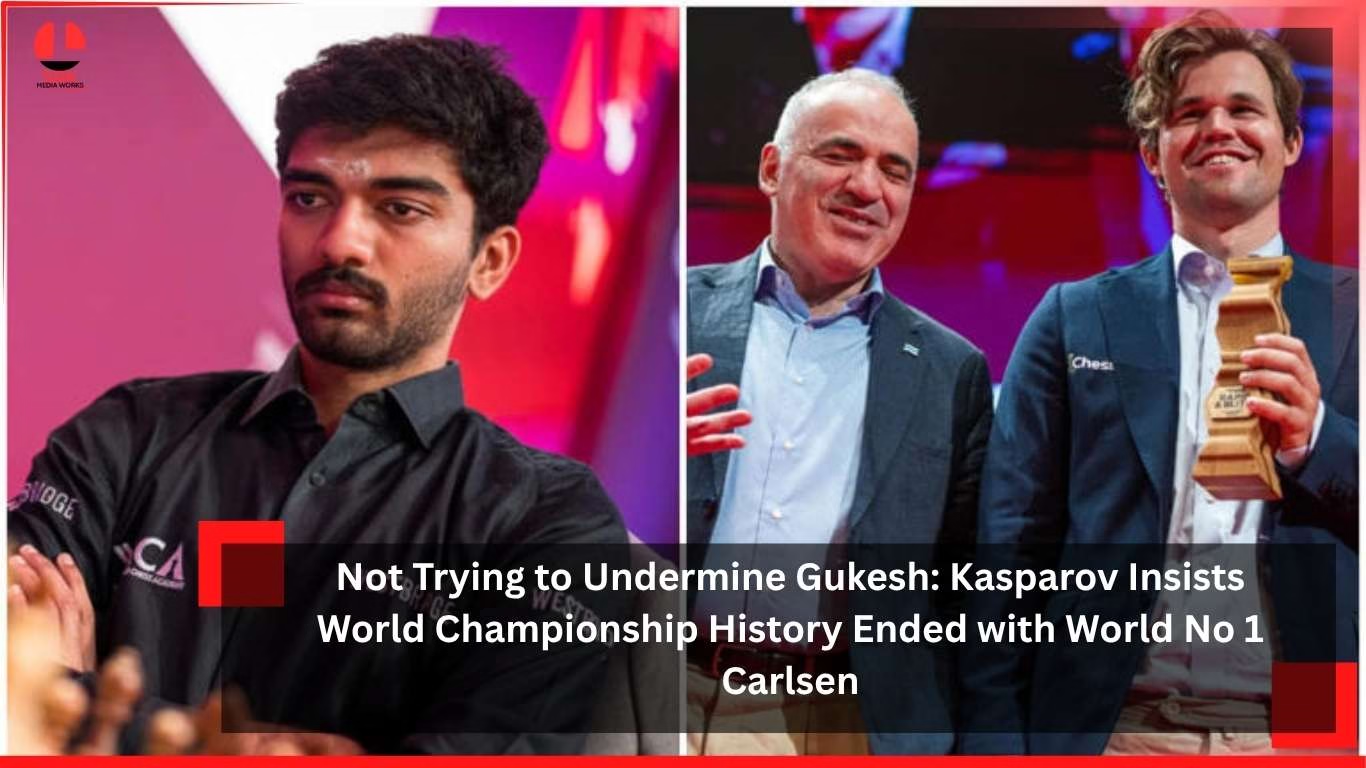
Legendary chess grandmaster Garry Kasparov has stirred debate in the chess world by stating that the history of the World Chess Championship effectively ended with Magnus Carlsen, the reigning world No. 1. Kasparov clarified that his remarks were not intended to undermine Indian prodigy D Gukesh, who recently became the youngest challenger in modern chess history, but rather to emphasize Carlsen’s dominance and his decision to step away from the classical format.
Background of Kasparov’s Statement
Kasparov, widely regarded as one of the greatest chess players of all time, has often spoken about the evolution of the game. His latest comments came in the context of Carlsen’s decision to relinquish his World Championship crown in 2023, despite being at the peak of his powers. Kasparov argued that Carlsen’s dominance and his choice to prioritize other formats marked the end of the traditional World Championship narrative.
Key Highlights
- Kasparov’s View: World Championship history ended with Carlsen’s reign.
- Clarification: Not meant to undermine Gukesh or other challengers.
- Carlsen’s Dominance: Five-time World Champion, world No. 1 for over a decade.
- Gukesh’s Rise: Youngest player to qualify for the Candidates and challenge for the crown.
- Debate in Chess: Raises questions about the relevance of the classical title in modern times.
Comparative Analysis of Chess Eras
| Era | Dominant Player | Key Achievement | Impact on Chess |
|---|---|---|---|
| 1980s–1990s | Garry Kasparov | Longest reign as World Champion | Elevated chess to global popularity |
| 2000s | Vladimir Kramnik, Viswanathan Anand | Stabilized championship after split era | Maintained prestige of classical title |
| 2013–2023 | Magnus Carlsen | Five-time World Champion, world No. 1 | Redefined dominance in modern chess |
| 2024–2026 | D Gukesh, Ian Nepomniachtchi, Ding Liren | New challengers emerging | Debate on relevance of classical crown |
Pivot Analysis: Carlsen’s Legacy vs Gukesh’s Challenge
| Factor | Carlsen’s Impact | Gukesh’s Rise | Expected Outcome |
|---|---|---|---|
| World Championship | Dominated and stepped away | Youngest challenger in modern history | Sparks debate on continuity |
| Global Ranking | World No. 1 for over a decade | Rising rapidly in FIDE rankings | Potential future world No. 1 |
| Chess Formats | Prefers rapid and online formats | Focused on classical success | Clash of philosophies |
| Public Perception | Seen as redefining chess history | Symbol of new generation | Both shaping modern chess narrative |
Implications of Kasparov’s Statement
- Debate on Relevance: Raises questions about whether the classical World Championship still holds the same prestige.
- Spotlight on Gukesh: Despite Kasparov’s remarks, Gukesh’s rise remains a historic achievement for Indian chess.
- Carlsen’s Legacy: Reinforces the idea that Carlsen’s dominance may have redefined the sport’s trajectory.
- Future of Chess: Suggests a shift toward rapid, blitz, and online formats as the new benchmarks of greatness.
Reactions
- Chess Analysts: Divided, with some agreeing that Carlsen’s reign marked a turning point, while others argue the classical title remains vital.
- Indian Fans: Proud of Gukesh’s achievements, emphasizing that his journey is historic regardless of Kasparov’s view.
- Global Players: Acknowledged Carlsen’s dominance but stressed the importance of continuing the World Championship tradition.
- Public Sentiment: Mixed, with admiration for Carlsen’s legacy and excitement for Gukesh’s future.
Historical Context
The World Chess Championship has been the pinnacle of the sport since the 19th century. From Wilhelm Steinitz to Emanuel Lasker, from Bobby Fischer to Garry Kasparov, each era has been defined by dominant champions. Carlsen’s reign, however, was unique in its longevity and his decision to step away voluntarily, sparking debates about the future of the title.
Challenges Ahead
- Maintaining Prestige: Ensuring the classical title remains relevant in the age of rapid formats.
- Supporting Young Talent: Players like Gukesh need recognition beyond debates about legacy.
- Balancing Formats: Chess must adapt to modern audiences while preserving tradition.
- Global Perception: The sport must navigate differing views on what defines greatness.
Conclusion
Kasparov’s assertion that World Championship history ended with Magnus Carlsen underscores the Norwegian’s unparalleled dominance and his decision to step away from the classical crown. While not intended to undermine Gukesh, the remarks highlight the ongoing debate about the relevance of the title in modern chess. As Gukesh rises to prominence, the sport finds itself at a crossroads—balancing tradition with evolution, and legacy with the promise of a new generation.
Disclaimer
This article is based on publicly available reports and expert commentary. It does not represent official statements from Garry Kasparov, Magnus Carlsen, or D Gukesh. Readers should interpret the content as journalistic analysis, recognizing that sporting narratives are subject to evolving perspectives and debates.