


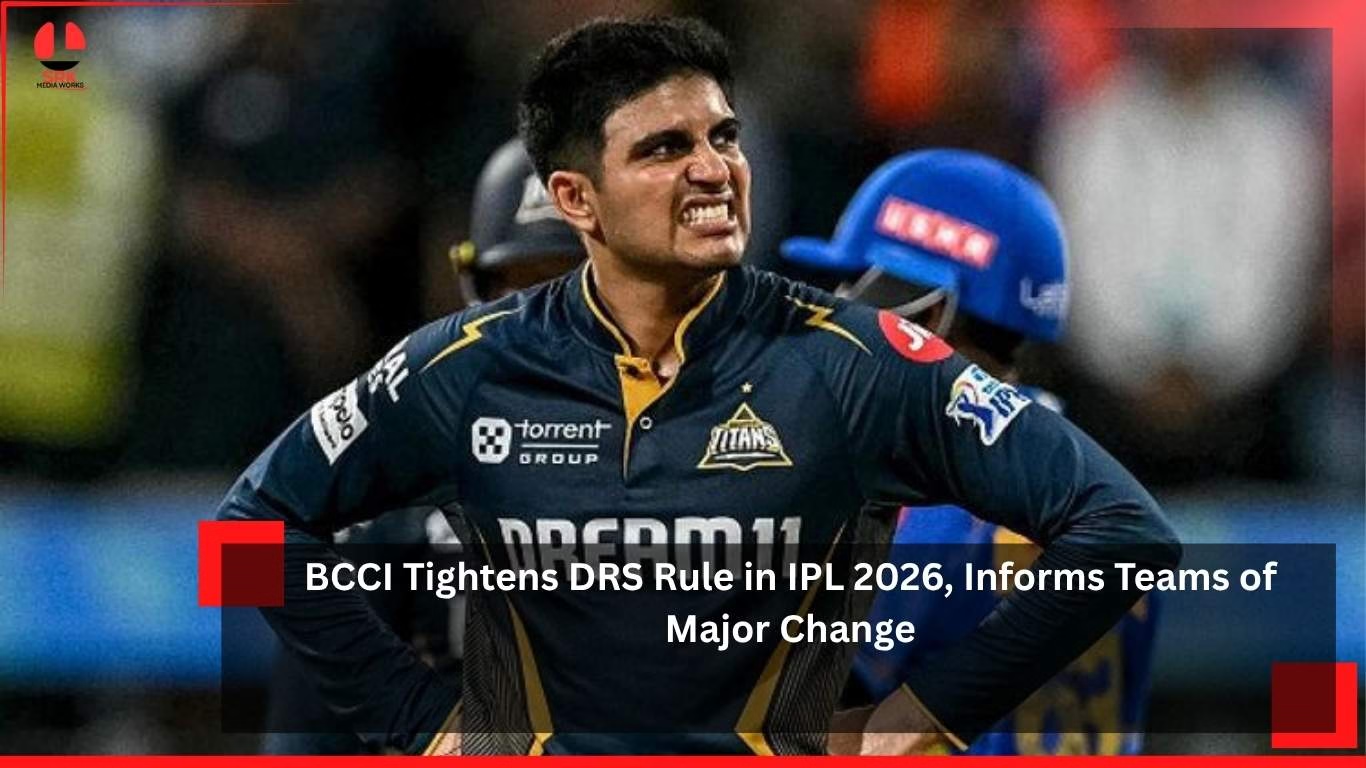
The Board of Control for Cricket in India (BCCI) has officially announced a significant change to the Decision Review System (DRS) rules for the Indian Premier League (IPL) 2026 season. This adjustment, communicated to all franchises ahead of the tournament, is expected to impact team strategies, player decision-making, and the overall flow of matches.
Background of DRS in IPL
The Decision Review System was introduced in the IPL to ensure fairness and accuracy in umpiring decisions. Over the years, teams have used DRS to challenge on-field calls related to dismissals, boundaries, and other critical moments. While the system has largely improved transparency, it has also sparked debates over its usage limits and timing.
The New Rule
BCCI has tightened the DRS regulations by:
- Reducing Review Opportunities: Teams will now have fewer reviews per innings compared to previous seasons.
- Time Restriction: Captains must signal for a review within a shorter time frame after the umpire’s decision.
- Expanded Scope: Certain decisions, previously not reviewable, will now fall under DRS scrutiny, including close catches and boundary calls.
- Penalty for Frivolous Reviews: Teams that misuse reviews may face stricter penalties, including loss of reviews and fines.
Comparative Analysis of DRS Rules
| Aspect | Previous Seasons | IPL 2026 Rule | Impact |
|---|---|---|---|
| Reviews per Innings | 2 | 1 | Greater caution required |
| Time to Signal Review | 15 seconds | 10 seconds | Faster decision-making |
| Scope of Review | Limited | Expanded | More accuracy |
| Penalty for Wrong Review | Loss of review | Loss + fine | Discourages misuse |
Stakeholder Perspectives
| Stakeholder Group | Reaction | Implications |
|---|---|---|
| Players | Mixed reactions | Need to adapt quickly |
| Captains | Concern over reduced reviews | Strategic use becomes crucial |
| Coaches | Supportive of clarity | Training players for faster calls |
| Fans | Divided opinions | Expect more drama and tension |
| Analysts | Positive outlook | Improved fairness and accountability |
Pivot Analysis of Future Scenarios
| Scenario | Likelihood | Impact |
|---|---|---|
| Teams Adapt Quickly | High | Smooth transition |
| Increased Controversies | Moderate | Heightened drama |
| Strategic Use of Reviews | High | Tactical advantage |
| Fan Backlash | Moderate | Pressure on BCCI |
Broader Implications
The tightening of DRS rules reflects BCCI’s intent to streamline match proceedings and reduce unnecessary delays. By limiting reviews and enforcing stricter penalties, the board aims to ensure that teams use the system responsibly. This change could also influence match outcomes, as captains will need to be more judicious in their use of reviews.
Challenges Ahead
- Player Adaptation: Teams must train players to make quicker decisions.
- Fan Acceptance: Convincing fans that fewer reviews enhance fairness.
- Umpire Coordination: Ensuring smooth implementation during high-pressure moments.
- Consistency: Maintaining uniform application across all matches.
Opportunities for Growth
- Enhancing the credibility of umpiring decisions.
- Encouraging captains to rely more on instinct and team input.
- Reducing match delays caused by excessive reviews.
- Setting a global benchmark for T20 leagues worldwide.
Conclusion
The BCCI’s decision to tighten DRS rules in IPL 2026 marks a pivotal moment in the tournament’s evolution. While the changes may initially spark debate, they are designed to improve fairness, reduce misuse, and enhance the pace of the game. As franchises adapt to the new regulations, fans can expect more strategic drama and sharper decision-making on the field.
Disclaimer
This article is based on official announcements and public reports regarding BCCI’s changes to the DRS rules in IPL 2026. The content is intended for informational and analytical purposes only, not as verified fact. Readers are encouraged to follow official updates for accurate information.