





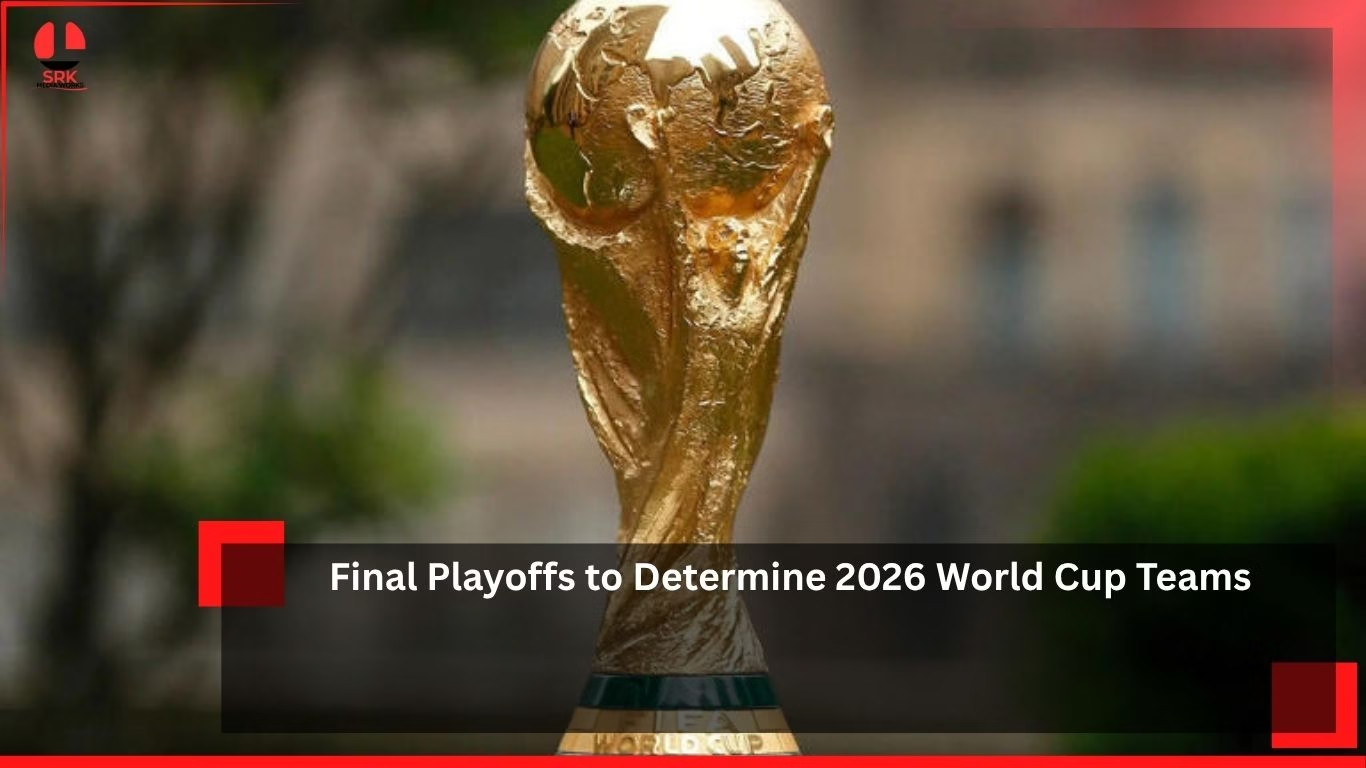
The road to the 2026 FIFA World Cup is reaching its climax as the final playoff matches are set to determine which nations will secure the remaining spots in the expanded tournament. With the World Cup being jointly hosted by the United States, Canada, and Mexico, the stakes are higher than ever, as teams from across continents battle for the last tickets to football’s biggest stage.
Background: Expanded Format
The 2026 World Cup will feature 48 teams, an increase from the traditional 32. This expansion has created more opportunities for nations to qualify, but it has also introduced a complex playoff system. Confederations such as UEFA, CONMEBOL, CAF, AFC, and CONCACAF have already completed most of their qualification rounds, leaving the playoffs as the final hurdle.
Structure of the Playoffs
The playoff system involves intercontinental matchups, where teams from different regions face off in knockout-style fixtures. These matches are often tense, high-stakes encounters, as they represent the last chance for nations to secure qualification.
Key features of the playoff system:
- Intercontinental clashes: Teams from Asia, Africa, South America, and Oceania compete.
- Neutral venues: Matches often played in host nations or designated stadiums.
- Single-leg format: In some cases, one match decides qualification.
- High drama: Historically, playoffs have produced unforgettable moments.
Timeline of Qualification
| Stage | Confederation | Status |
|---|---|---|
| Group Stage | UEFA, CONMEBOL, CAF, AFC | Completed |
| Regional Playoffs | CONCACAF, AFC | Completed |
| Intercontinental Playoffs | Global | Final stage ongoing |
| April 2026 | Final playoff matches | Remaining teams decided |
Teams in Contention
Several nations are vying for the final spots. While traditional powerhouses have already qualified, the playoffs often feature emerging football nations and underdogs. These teams bring unpredictability and passion to the competition.
Examples of teams in contention:
- Asian hopefuls: Nations like Jordan or Uzbekistan.
- African challengers: Teams such as Mali or Burkina Faso.
- South American contenders: Ecuador or Chile if they missed direct qualification.
- Oceania representative: Likely New Zealand, facing tough intercontinental opposition.
Comparative Analysis: Qualified vs. Playoff Teams
| Category | Qualified Teams | Playoff Teams |
|---|---|---|
| Traditional Powerhouses | Brazil, Germany, Argentina, France | Rarely in playoffs |
| Emerging Nations | Morocco, Japan, USA | Often in playoffs |
| Underdogs | Smaller football nations | Playoffs are their main chance |
| Pressure Level | Lower, already qualified | Extremely high, last chance |
Fan Reactions
Fans worldwide are eagerly awaiting the playoff matches, as they often deliver drama equal to the World Cup itself. Social media is buzzing with predictions, debates, and emotional support for underdog teams. For many nations, qualifying for the World Cup is not just a sporting achievement but a matter of national pride.
Broader Implications
The playoffs highlight several important aspects of global football:
- Inclusivity: The expanded format allows more nations to participate.
- Competitiveness: Smaller nations now have realistic chances to qualify.
- Global reach: Football continues to grow in regions traditionally outside the spotlight.
- Economic impact: Qualification boosts tourism, sponsorship, and national morale.
Conclusion
The final playoffs for the 2026 FIFA World Cup represent the last chapter in a long qualification journey. With nations battling for pride, recognition, and a place on the world’s biggest stage, these matches promise high drama and unforgettable moments. As the dust settles, the complete lineup of 48 teams will be ready to compete in a historic World Cup across North America.
Disclaimer
This article is based on reported football qualification structures and independent analysis. It does not confirm or deny official match results or team standings. Readers should treat the content as interpretative reporting rather than definitive tournament documentation.