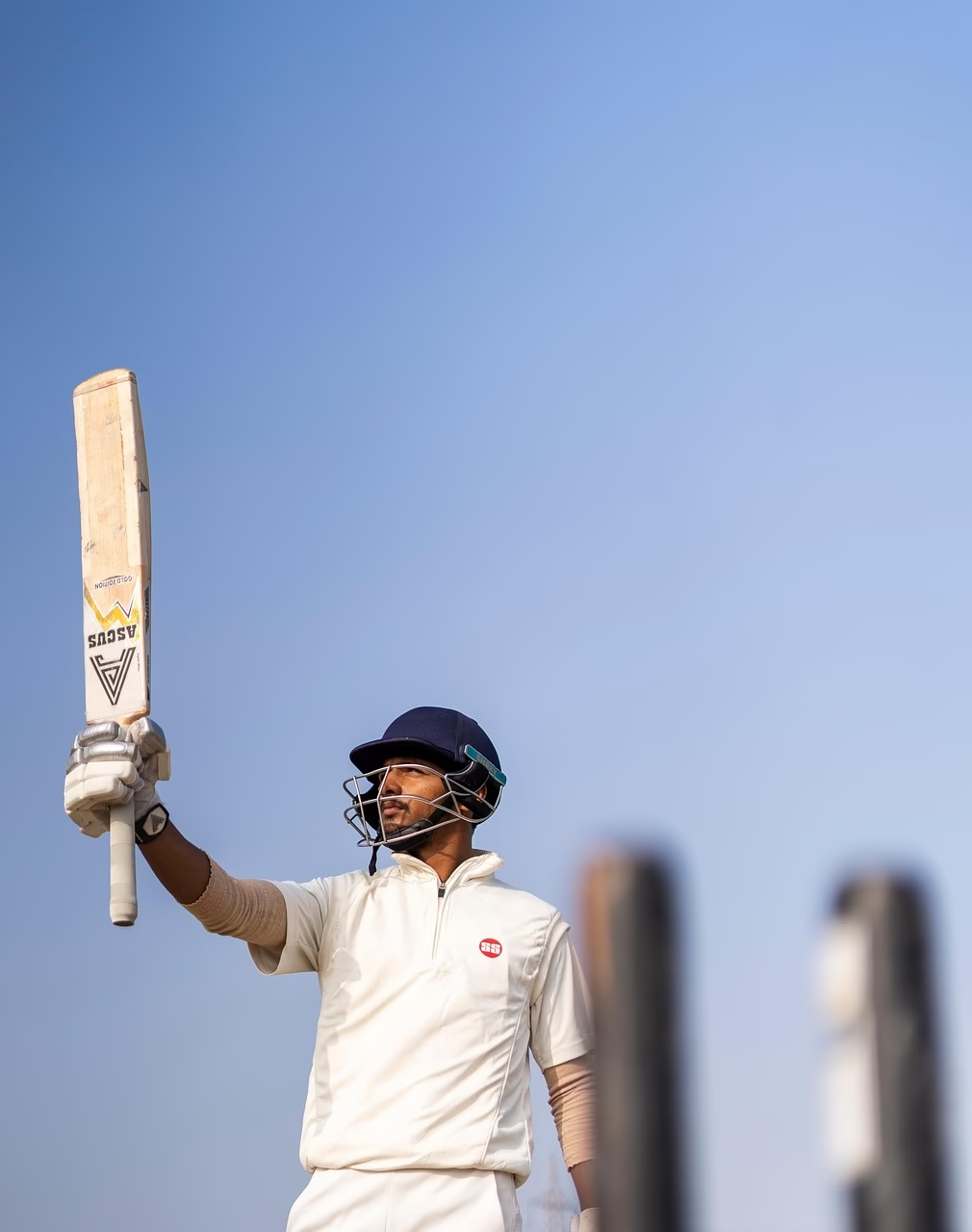






In a remarkable cricketing evolution, Shivang Kumar, initially celebrated as a swashbuckling opener in the Madhya Pradesh T20 League, has rapidly transformed into a coveted chinaman bowler, culminating in his selection by Sunrisers Hyderabad for the upcoming IPL season. This astonishing shift, guided by his father, a former Bengal U-19 cricketer, unfolded within a single year, propelling the Bundelkhand Bulls’ marquee player from a Rs 13 lakh batting prospect to a multi-faceted talent on the national stage.
From Batting Prowess to Spin Craft: A Year of Transformation
Shivang Kumar first garnered attention for his explosive batting in the Madhya Pradesh T20 League. His aggressive style earned him a significant contract with the Bundelkhand Bulls, who secured his services for Rs 13 lakh for the 2026 season, marking him as a key player for his opening prowess.
The Madhya Pradesh T20 League serves as a vital proving ground for local talent, offering a platform for players to showcase their skills to a broader audience, including scouts from the Indian Premier League (IPL). It is in this competitive environment that players often define their primary roles.
However, an unexpected turn in his career trajectory began under the tutelage of his father. A former Bengal U-19 cricketer, Shivang’s father recognized a latent talent for wrist-spin, specifically the rare art of chinaman bowling.
A chinaman bowler delivers left-arm wrist-spin, a skill known for its deceptive flight and sharp turn, often catching batsmen off guard due to its unconventional trajectory. This style is less common than traditional off-spin or leg-spin, making specialists particularly valuable in T20 cricket.
The Rapid Acquisition of a Rare Skill
What makes Shivang Kumar’s journey particularly noteworthy is the speed of his transformation. Within a mere twelve months, he not only grasped the intricate mechanics of chinaman bowling but also honed it to an impactful level.
Sources close to the player indicate that his father meticulously guided him through countless hours of practice, focusing on wrist position, grip, and release point. This dedicated training allowed Kumar to develop control and variation, crucial elements for any spinner.
His immediate impact as a chinaman bowler was evident in subsequent local tournaments. Reports from various scouting networks highlighted his ability to pick up crucial wickets in the middle overs and maintain an economical spell, capabilities highly sought after in the fast-paced T20 format.
The scarcity of quality wrist-spinners, especially left-arm wrist-spinners, in Indian cricket has long been a topic of discussion among experts. This makes Shivang Kumar’s emergence all the more significant.
IPL Franchises Take Notice
The IPL, known for its extensive scouting network and emphasis on identifying unique talents, quickly registered Shivang Kumar’s dual abilities. Franchise scouts are constantly on the lookout for players who can offer more than one dimension, and a batsman who can also deliver effective wrist-spin is a prized asset.
Following his impressive displays, Kumar was invited for multiple trials with various IPL franchises. These rigorous sessions test a player’s skills under pressure, assessing their consistency, temperament, and adaptability.
Ultimately, it was Sunrisers Hyderabad who secured his services, recognizing the immense potential in his newfound bowling prowess combined with his established batting capabilities. His inclusion in an IPL squad underscores the league’s commitment to nurturing diverse talent pools.
According to analysis from Cricbuzz, wrist-spinners have historically boasted a higher wicket-taking percentage in the middle overs (7-15) of T20 innings compared to finger-spinners, often breaking partnerships and stemming the flow of runs. This data point likely played a role in the franchises’ interest in Kumar.
Implications for Modern T20 Cricket and Aspiring Players
Shivang Kumar’s extraordinary trajectory offers several key implications for the landscape of modern T20 cricket and for aspiring cricketers across the nation.
Firstly, it highlights the increasing premium placed on multi-dimensional players. In a format where every ball and every run counts, players who can contribute significantly with both bat and ball provide invaluable flexibility to team compositions.
Secondly, it underscores the critical role of domestic leagues like the Madhya Pradesh T20 League as incubators for talent. These platforms allow players to experiment with their game, develop new skills, and gain competitive experience under the watchful eyes of national scouts.
For young cricketers, Kumar’s story serves as an inspiring example of adaptability and the rewards of dedicated mentorship. It demonstrates that a player’s initial role is not always their final one, and that continuous skill development can open unexpected doors to professional success.
His selection by Sunrisers Hyderabad will now place him under intense scrutiny on a global stage. How he adapts to the pressure of the IPL, fine-tunes his chinaman bowling against world-class batsmen, and balances his dual roles will be keenly observed.
The cricketing world will be watching to see if Shivang Kumar can replicate his domestic success in the IPL, further solidifying his position as a unique all-rounder and a testament to the power of rapid skill transformation.