

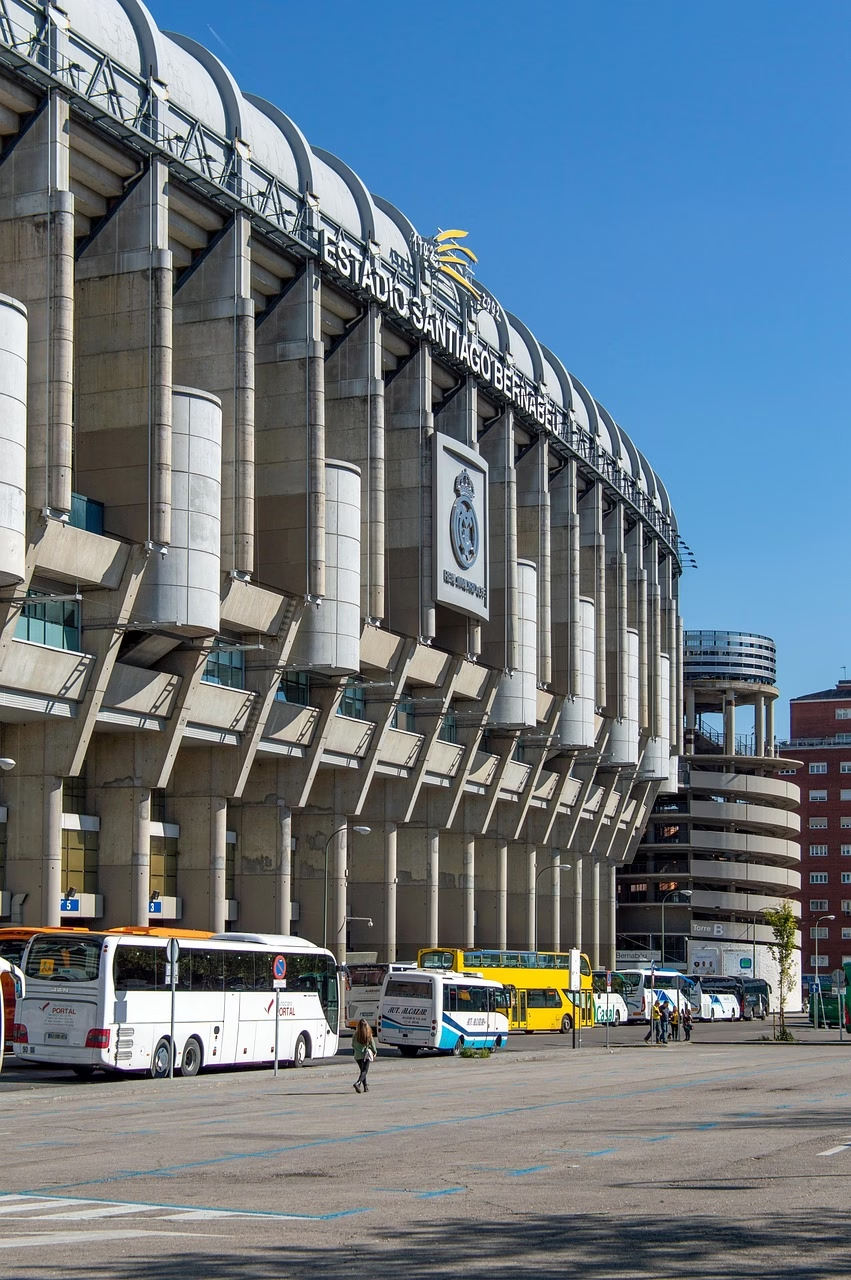
José Mourinho, the revered and often controversial Portuguese football manager, is reportedly on the cusp of rejoining Real Madrid as the club’s new head coach. Sources close to the Spanish giants indicate an announcement could come as early as the end of the current season, signaling a dramatic move to inject discipline and a winning mentality back into a squad widely perceived as underperforming at the Santiago Bernabéu. Spanish football expert Guillem Balague suggests this potential appointment stems from Real Madrid’s urgent need for a strong, decisive leader to navigate its current turbulent period.
Real Madrid’s Current Landscape
Real Madrid finds itself in a precarious position, struggling for consistency across domestic and European competitions. The club has experienced a period of managerial instability since Zinedine Zidane’s departure, cycling through several coaches without finding a lasting solution. Recent performances have often been characterized by a lack of cohesion, defensive vulnerabilities, and an inability to consistently convert chances, leading to growing frustration among the fanbase and within the club’s hierarchy. The team’s current standing, several points adrift in La Liga and facing challenges in the Champions League, underscores the urgency for significant change.
Mourinho’s previous spell at Real Madrid, from 2010 to 2013, was marked by both significant success and intense controversy. He famously broke Barcelona’s dominance, securing a La Liga title with a record 100 points and a Copa del Rey. However, his tenure also saw highly publicized clashes with players, rival coaches, and the media, solidifying his reputation as an “iron fist” who demands absolute control and unwavering loyalty. This history provides crucial context for his potential return.
The Rationale Behind Mourinho’s Comeback
The decision to potentially re-hire Mourinho appears to be a calculated gamble by Real Madrid President Florentino Pérez, driven by a perceived need for radical intervention. “Real Madrid is a broken team right now, lacking direction and discipline,” states Guillem Balague in a recent analysis. “Mourinho thrives in these environments. He’s a manager who isn’t afraid to make tough decisions, to challenge star players, and to demand absolute commitment. The club believes only a figure of his stature and intensity can re-establish order.”
Sources inside the club, speaking anonymously, suggest that a primary motivation is to restore a stringent culture of accountability. The current squad, despite its immense talent, has at times appeared disjointed, lacking the competitive edge that defines Real Madrid’s historical success. Mourinho’s reputation for instilling an uncompromising work ethic and tactical rigor could be seen as the antidote to these issues.
Tactically, Mourinho’s teams are known for their defensive solidity, organized structure, and devastating counter-attacks. This approach could appeal to a club looking to stabilize its backline and capitalize on the pace of its attacking players. However, it also raises questions about the integration of more creative, possession-based players and whether his style aligns with the evolving demands of modern football. Reports suggest that if appointed, Mourinho would be granted significant authority over transfers, indicating a willingness from the board to fully back his vision for squad reconstruction.
Divided Opinions and Potential Pitfalls
The prospect of Mourinho’s return has elicited a mixed reaction from Real Madrid’s passionate fanbase. Many supporters recall the trophies and the fierce competitive spirit his teams displayed, yearning for a return to that era of dominance. “We need someone who can shake things up, someone who demands respect and gets results,” commented one fan forum user. Others, however, harbor reservations, remembering the internal conflicts, the often-negative press conferences, and the abrasive style that characterized his first spell. There is concern that his return could reignite past controversies and potentially alienate key players or segments of the fanbase.
His recent managerial stints at Tottenham Hotspur and AS Roma have shown flashes of his former brilliance but also highlighted challenges in maintaining long-term success and adapting to new club cultures. Data from Opta Sports indicates a slight decline in his teams’ average points per game in his last two roles compared to his prime, suggesting a need for him to prove his continued efficacy at the highest level of European football.
Implications and What to Watch Next
Should José Mourinho indeed return to the Bernabéu, the implications for Real Madrid, La Liga, and European football would be substantial. For Real Madrid, it would signal a clear shift towards a more pragmatic, results-oriented approach, prioritizing immediate success and defensive solidity. The club would likely experience a significant overhaul in squad dynamics, with some players potentially thriving under his demanding leadership while others might find themselves on the periphery. The upcoming summer transfer window would become a crucial period, as Mourinho would undoubtedly seek to mold the squad to his specific tactical requirements, potentially leading to high-profile departures and arrivals.
For La Liga, Mourinho’s presence would undoubtedly intensify rivalries, particularly with Barcelona, and guarantee heightened media scrutiny and global interest in Spanish football. His press conferences alone are often major events, adding a layer of drama that few other managers can provide. His return also presents a critical juncture for his own legacy; a successful second chapter could solidify his standing as one of football’s all-time greats, capable of turning around even the most challenging situations. Conversely, a failure could further cement perceptions of a manager whose methods are increasingly outdated.
Observers will closely watch his initial interactions with the squad, his transfer targets, and the early tactical setups. The immediate challenge will be to unify a potentially fractured dressing room and instill the discipline and winning mentality that Real Madrid’s hierarchy believes is missing. His ability to navigate the complex politics of the club and deliver immediate results will define the success of this audacious second act.