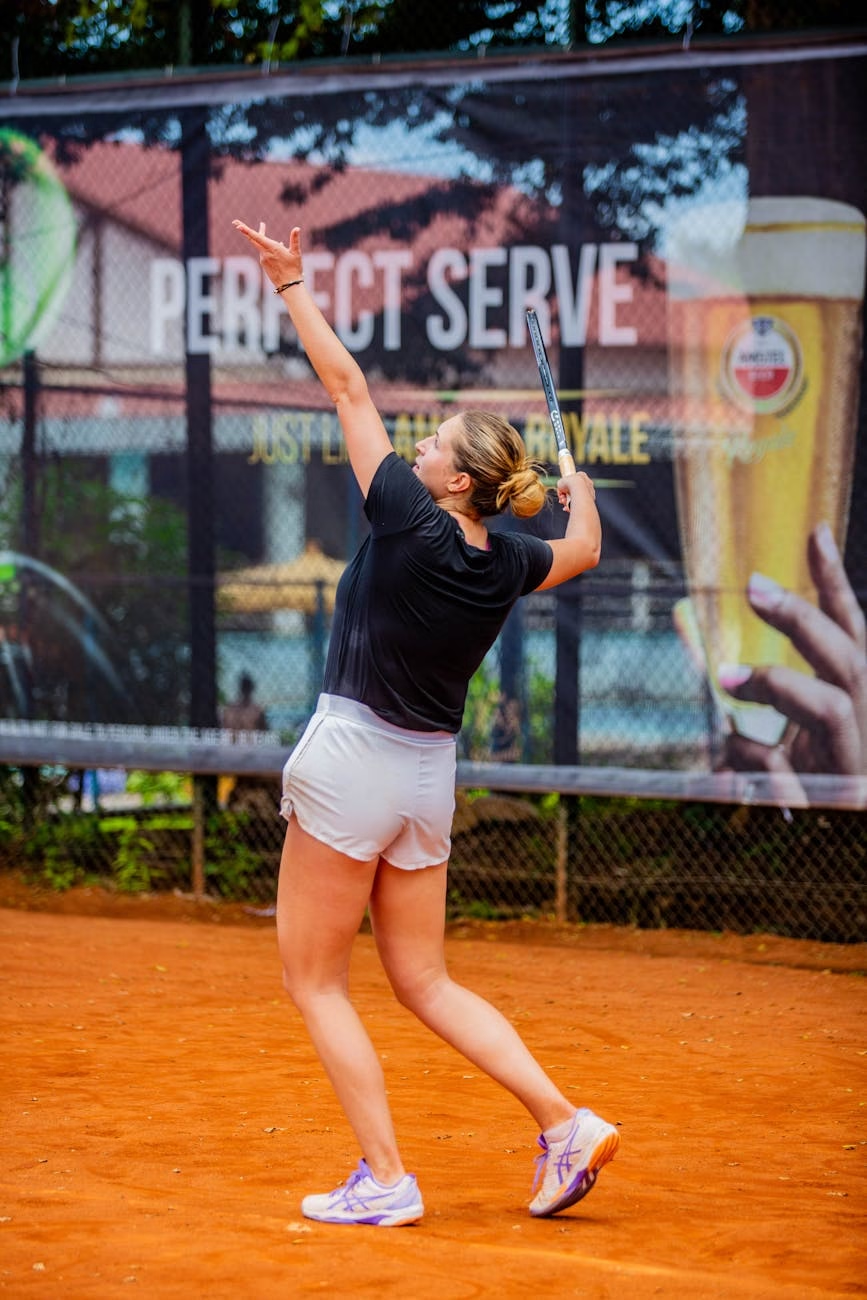






The world’s top professional tennis players are poised to dramatically scale back their pre-French Open media engagements to a mere 15 minutes each, initiating a collective protest against what they deem insufficient prize money at the prestigious Grand Slam event. This coordinated action, expected to unfold in the days leading up to the tournament at Roland Garros in Paris, signals a growing tension between athletes and Grand Slam organizers over financial compensation and the commercial demands placed upon players.
Context: A Long-Standing Financial Imbalance
For decades, Grand Slams like the French Open have stood as the pinnacle of professional tennis, attracting massive global audiences and significant broadcast and sponsorship revenues. While prize money has increased over the years, players, particularly those outside the sport’s elite, have consistently argued that the growth in player compensation has not kept pace with the soaring commercial success and profitability of these major tournaments. The physical and mental toll of a professional tennis career, coupled with travel expenses and coaching costs, means that only a fraction of touring professionals truly achieve financial stability. This long-simmering discontent often resurfaces during negotiations, with players seeking a larger share of the revenue pie.
Player Grievances and Industry Dynamics
This latest protest underscores a long-held grievance among players regarding the distribution of wealth within professional tennis. Many athletes contend that while tournament revenues, boosted by lucrative television deals, sponsorship agreements, and ticket sales, have seen exponential growth, prize money increases have been comparatively modest, particularly for early-round losers and qualifiers. A significant disparity exists between the astronomical earnings of the top-tier players and the financial struggles faced by many lower-ranked professionals, who often rely heavily on prize money to cover their considerable touring expenses.
The players’ decision to limit media interactions is a strategic move designed to leverage their collective influence. Media obligations, including pre-tournament press conferences, interviews, and promotional appearances, are a contractual requirement for players at Grand Slams. By restricting this access, players aim to disrupt a crucial aspect of tournament promotion and draw global attention to their financial concerns, without directly impacting the on-court product. This tactic highlights the increasing awareness among athletes of their commercial value and their willingness to use it as leverage in negotiations.
Tournament organizers, including the French Tennis Federation which oversees Roland Garros, face a delicate balancing act. While they rely on star players to drive viewership and attendance, they also manage substantial operational costs, including venue maintenance, infrastructure development, and officiating. The financial models of Grand Slams are complex, involving significant investments in the sport’s long-term health, from grassroots development to anti-doping programs. However, the exact breakdown of revenues and expenditures, and the percentage allocated to player prize money, remains a frequent point of contention.
Expert Perspectives and Data Points
“This isn’t just about the French Open; it’s a symptom of a broader issue across the sport,” stated a prominent sports economist, who requested anonymity due to ongoing consultancy work with tennis bodies. “Players are increasingly sophisticated in understanding their market value. When you see Grand Slam revenues in the hundreds of millions, and prize money growth lagging behind that, it naturally leads to friction.” Data compiled by various industry watchdogs indicates that while overall prize money across the four Grand Slams has grown by roughly 50-70% over the last decade, tournament revenues, driven by record-breaking broadcast rights deals, have often seen increases upwards of 100-150% in the same period. This disparity fuels the players’ argument that they are not receiving a proportionate share of the sport’s burgeoning commercial success.
Historically, player power has manifested in various forms, from the formation of the ATP and WTA tours to occasional boycotts or threats of independent tours. This specific action, however, targets a less disruptive but highly visible aspect of the tournament: media engagement. It forces organizers and the public to confront the issue without immediately impacting match play, thereby garnering sympathy rather than alienating fans.
Implications and What to Watch Next
The immediate implications for the French Open could include a significant reduction in pre-tournament media buzz and potentially frustrated broadcasters and sponsors who rely on player interviews for content. For the players, the success of this protest will be measured by the organizers’ willingness to enter meaningful discussions about future prize money structures.
Looking ahead, this collective action at Roland Garros could set a precedent for future player-tournament relations across all Grand Slams and potentially other major events. It signals a shift towards a more unified and assertive player body, keen to secure a larger portion of the sport’s financial prosperity. Observers will be watching closely to see if this limited media strike escalates, or if it prompts a swift resolution. The outcome of this stand-off could reshape how professional tennis players negotiate their terms and conditions, not just at the French Open, but across the entire professional circuit, potentially leading to more transparent revenue sharing models and a more equitable distribution of wealth within the sport. The response from the French Open organizers and, subsequently, other Grand Slams will be critical in determining the future landscape of player compensation and media access in professional tennis.