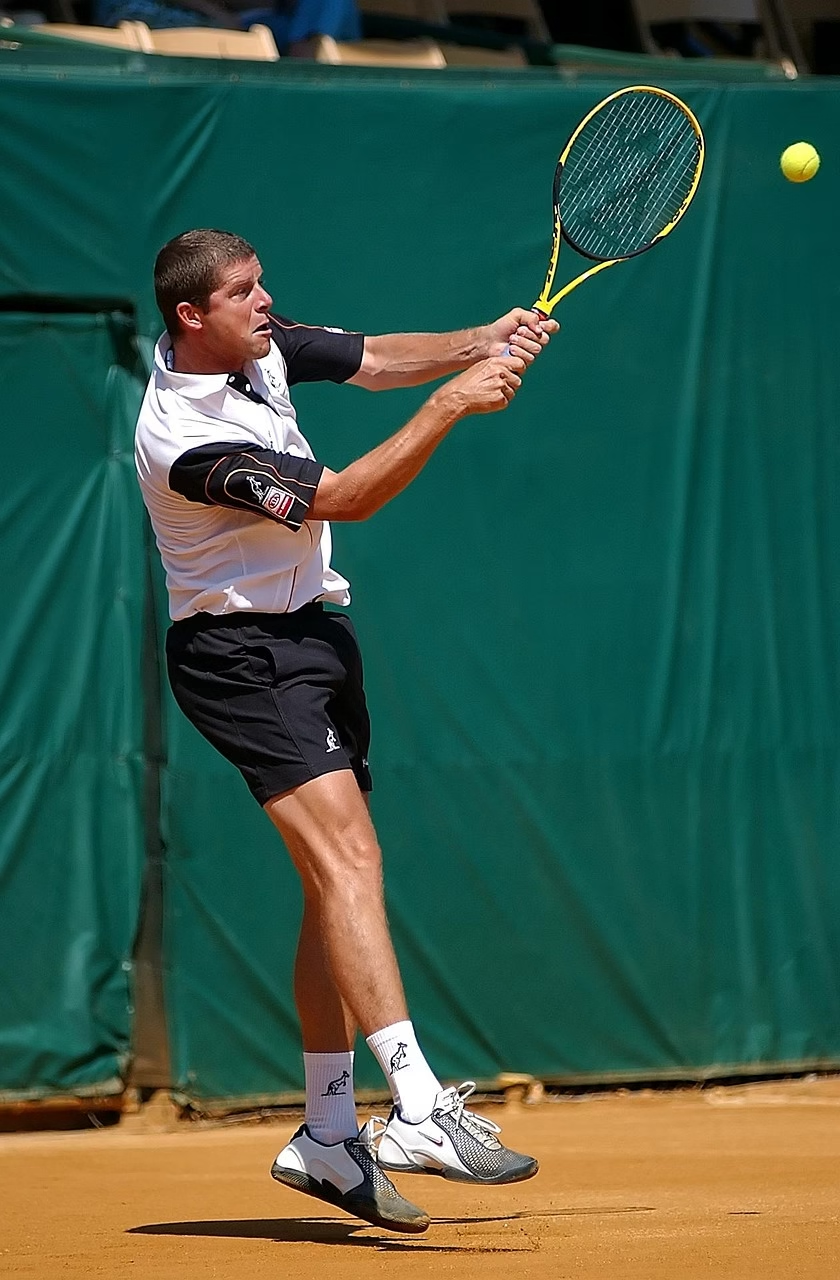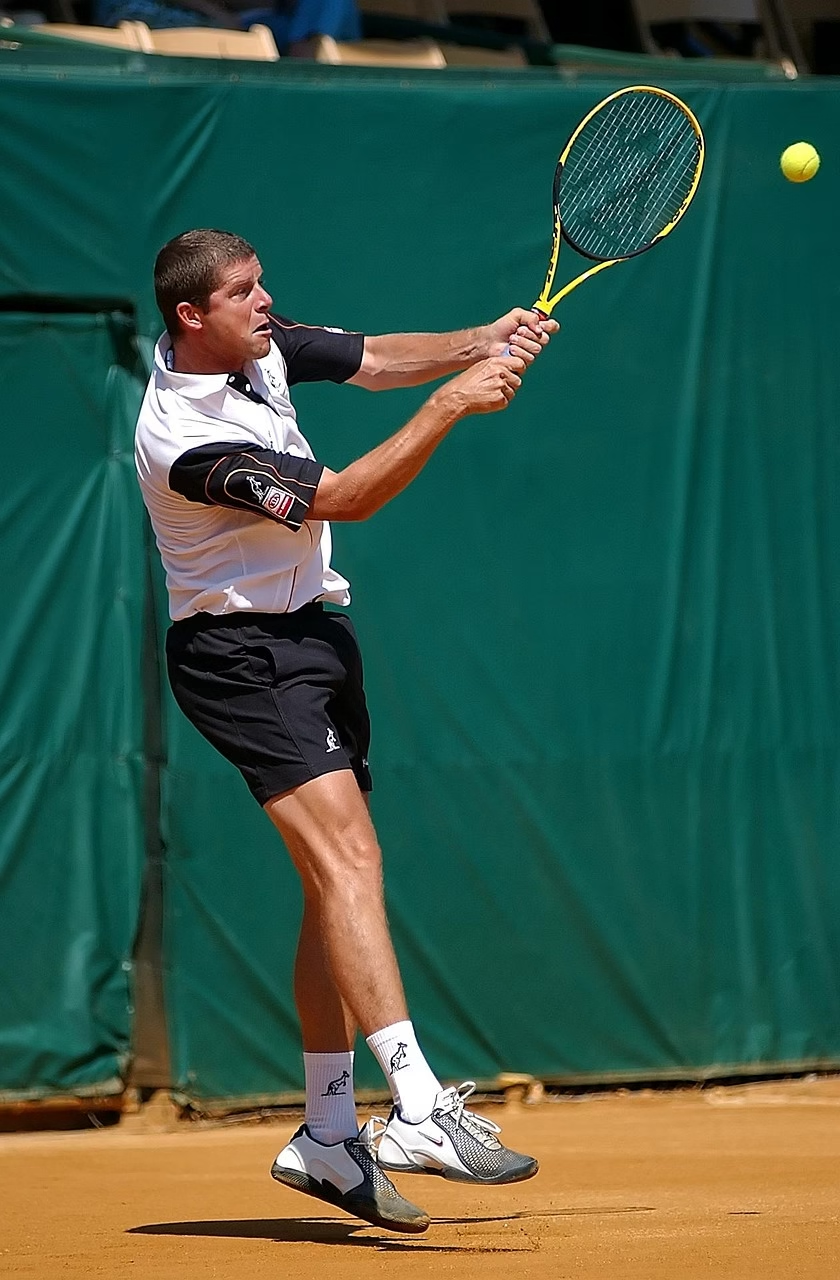









German tennis star Alexander Zverev faced another Grand Slam final heartbreak on Sunday, January 28, 2024, at Melbourne’s Rod Laver Arena, as he succumbed to tournament winner Jannik Sinner in straight sets at the Australian Open. The 6-3, 7-6 (4), 6-3 defeat marks Zverev’s third major final loss, leaving the 27-year-old still searching for his maiden Grand Slam title despite consistently ranking among the world’s elite.
Context of a Challenging Journey
Zverev’s journey to a major championship has been fraught with near misses. His previous two Grand Slam final appearances saw him build significant leads, only to falter. At the 2020 U.S. Open, he held a two-set advantage and even a match point against Dominic Thiem before ultimately losing in five sets. Similarly, in a prior significant match, he led Carlos Alcaraz two sets to one, only for that lead to slip away. Ranked No. 2 globally, Zverev has openly expressed his strong desire to avoid ending his career without a Grand Slam trophy, a sentiment underscored by his dedicated efforts both on and off the court.
The Australian Open Final: A Detailed Look
The recent Australian Open final saw Zverev unable to replicate the dominant form that carried him through earlier rounds, including impressive victories over top opponents. Facing a formidable and focused Jannik Sinner, Zverev struggled to gain a foothold in the match, his powerful serve and groundstrokes often met with Sinner’s relentless defense and precise counter-attacks. The first set slipped away relatively quickly, setting a challenging tone for the German.
The second set, however, proved to be the most contentious and arguably the match’s turning point. Both players battled fiercely, exchanging powerful rallies and holding serve until the tie-break. Zverev came tantalizingly close to leveling the match, finding himself just two points away from securing the second set. Yet, Sinner, demonstrating the composure of a seasoned champion, seized the crucial moments, winning four consecutive points to secure the tie-break 7-4 and establish a commanding two-set lead.
This pivotal moment shifted the match’s trajectory decisively, boosting Sinner’s confidence while visibly deflating Zverev’s. “That was a massive point,” Zverev reflected post-match, acknowledging the profound psychological impact of losing the second set. “Being down two sets to love, especially, then his confidence goes up, mine goes down. It’s a long way back then against someone like Jannik. If it’s one set all, maybe I have a chance. But… I didn’t stop fighting. I didn’t stop believing.”
Despite his continued fighting spirit, the German conceded that Sinner “outplayed me more than in the other sets” during the third, which Sinner ultimately closed out 6-3. Throughout the match, Zverev’s frustration became increasingly evident, punctuated by instances of cracking rackets and animated gestures, highlighting the immense pressure and disappointment he felt in real-time.
Support Amidst Defeat and Historical Context
In a moment of genuine sportsmanship that resonated across Rod Laver Arena, Jannik Sinner offered Zverev words of encouragement during the trophy ceremony. “Keep believing in yourself,” Sinner advised, placing an arm around his opponent’s shoulder. “Keep working hard, because we all believe that you can lift one of these very, very soon.” This sentiment was warmly echoed by Simone Vagnozzi, one of Sinner’s coaches, who publicly stated, “I really hope, sooner or later, he wins a Slam, because he deserves it.” These gestures of support underscore the respect Zverev commands among his peers, even as he grapples with the final hurdle of Grand Slam success.
Zverev’s 0-3 record in Grand Slam finals places him in a unique, albeit challenging, historical context. He is only the seventh man in the Open era, which began in 1968, to start a career with three title match defeats at one of tennis’s four most important events. Notably, five of the other six players in this group eventually went on to secure at least one major championship. Casper Ruud is the only other active player in this specific category who has yet to break through. This historical precedent offers a glimmer of hope for Zverev, suggesting that persistence often pays off in the long run for elite athletes.
Implications for Zverev’s Future
This latest Grand Slam final loss, while undoubtedly painful for Alexander Zverev, underscores the persistent mental and strategic hurdles he faces in converting his immense talent into major titles. His consistent presence at the sport’s pinnacle, including a current world No. 2 ranking, is undeniable, yet the ability to close out crucial matches against the very best, particularly in the high-stakes, physically demanding five-set Grand Slam formats, remains his ultimate challenge. The competitive landscape of men’s tennis is currently more intense than ever, with the sustained excellence of legends like Novak Djokovic, the explosive rise of young stars like Jannik Sinner and Carlos Alcaraz, and a deep pool of contenders. Breaking through this formidable barrier requires not just skill, but an unparalleled mental fortitude and perhaps a slight tactical adjustment in those decisive moments.
Zverev’s emotional honesty about his disappointment, coupled with his unwavering commitment to intense training and self-improvement, indicates that his pursuit of a Grand Slam will continue with renewed vigor. The question for many observers is not if he has the game, but if he can overcome the psychological weight of past near misses. The tennis world will closely watch his performance in upcoming tournaments, particularly the next Grand Slams at Roland Garros, Wimbledon, and the U.S. Open. These events will test his resilience and offer new opportunities to finally translate his undeniable potential into the major championship he so desperately craves, solidifying his legacy among the sport’s elite, or if this pattern of agonizingly close defeats will continue to define his career’s most significant moments.