


The build‑up to the India vs Pakistan U‑19 Asia Cup 2025 clash has taken a dramatic turn as the International Cricket Council (ICC) has reportedly urged both teams to resume the customary post‑match handshake, ending the ongoing “no‑handshake” stance adopted by Indian teams across formats since the Pahalgam terror attack earlier this year.
However, the Board of Control for Cricket in India (BCCI) has issued strict internal instructions, signalling that the Indian U‑19 team may continue the no‑handshake policy, despite ICC’s push for normal protocol.
The high‑voltage match, scheduled for December 14 at the ICC Academy Ground in Dubai, has now become the centre of a global debate—not just for cricketing reasons but for the political symbolism attached to the handshake controversy.
🌍 Background: Why India Stopped Handshakes With Pakistan
The handshake boycott began after the Pahalgam terror attack in April/May 2025, which escalated political tensions between India and Pakistan. As a symbolic gesture of solidarity with the armed forces, Indian teams—across men’s, women’s, and junior categories—stopped shaking hands with Pakistani players during tournaments.
This stance was visible in:
- Men’s Asia Cup 2025
- Women’s ODI World Cup
- Rising Stars Asia Cup T20
- Multiple bilateral and multi‑nation events
The U‑19 Asia Cup is the latest stage where this policy is being tested.
📊 Key Facts About the Handshake Controversy
| Category | Details |
|---|---|
| ICC’s Position | Wants handshake protocol restored |
| BCCI’s Position | Issued strict instructions; likely to continue no‑handshake stance |
| Match Date | December 14 |
| Venue | ICC Academy Ground, Dubai |
| Reason for Boycott | Solidarity after Pahalgam terror attack |
| Teams Involved | India U‑19 vs Pakistan U‑19 |
| India’s Captain | Ayush Mhatre |
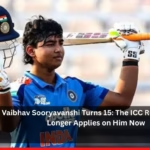
| Spotlight Player | Vaibhav Suryavanshi |
🔍 ICC Push vs BCCI Directive
| Factor | ICC’s View | BCCI’s View | Impact on Match |
|---|---|---|---|
| Sportsmanship | Handshake is essential protocol | Symbolic boycott must continue | Tense atmosphere |
| Politics | Wants politics out of junior cricket | Gesture tied to national sentiment | High scrutiny |
| Player Conduct | Encourages normal behaviour | Players instructed to avoid handshake | Confusion possible |
| Global Optics | Wants positive messaging | Prioritises national stance | Divided global reaction |
| Tournament Integrity | Prefers uniform protocol | No compromise on directive | Media spotlight intensifies |
🏏 ICC’s Stand: “Keep Politics Out of Junior Cricket”
According to multiple reports, the ICC has communicated to both boards that:
- The handshake is a standard sportsmanship protocol
- Junior cricket should remain free from political gestures
- The U‑19 Asia Cup should not repeat the handshake boycott seen in senior tournaments
ICC officials reportedly want the match to “set the right example” for young cricketers
🇮🇳 BCCI’s Firm Directive: No Change in Policy
Despite ICC’s push, the BCCI has issued strict instructions to the Indian U‑19 team, signalling that:
- The no‑handshake stance remains in place
- Players must follow the board’s directive
- The symbolic gesture is non‑negotiable at this stage
Reports indicate that the BCCI is unlikely to alter its position until there is a formal review of the policy at the senior level.
🔥 Why This Clash Is More Than Just a Cricket Match
India vs Pakistan matches are always emotionally charged, but this one carries additional layers:
1. Political Tensions Post‑Pahalgam Attack
The terror attack earlier this year has shaped India’s diplomatic and sporting stance.
2. Symbolism of the Handshake
A handshake is no longer a simple gesture—it has become a political statement.
3. Youth Cricket Under Spotlight
The ICC wants junior cricket insulated from political narratives.
4. Media and Fan Attention
The handshake issue has overshadowed team strategies and player form.
🧭 How the Handshake Saga Began
The “handshake saga” became a major storyline during the Men’s Asia Cup 2025, where India defeated Pakistan three times on their way to the title—but refused handshakes after each match.
The women’s team continued the stance during the Women’s ODI World Cup, and the Rising Stars Asia Cup T20 also saw no handshakes between the two sides.
The U‑19 Asia Cup is now the latest chapter in this ongoing saga.
🧒 Inside the Indian U‑19 Camp
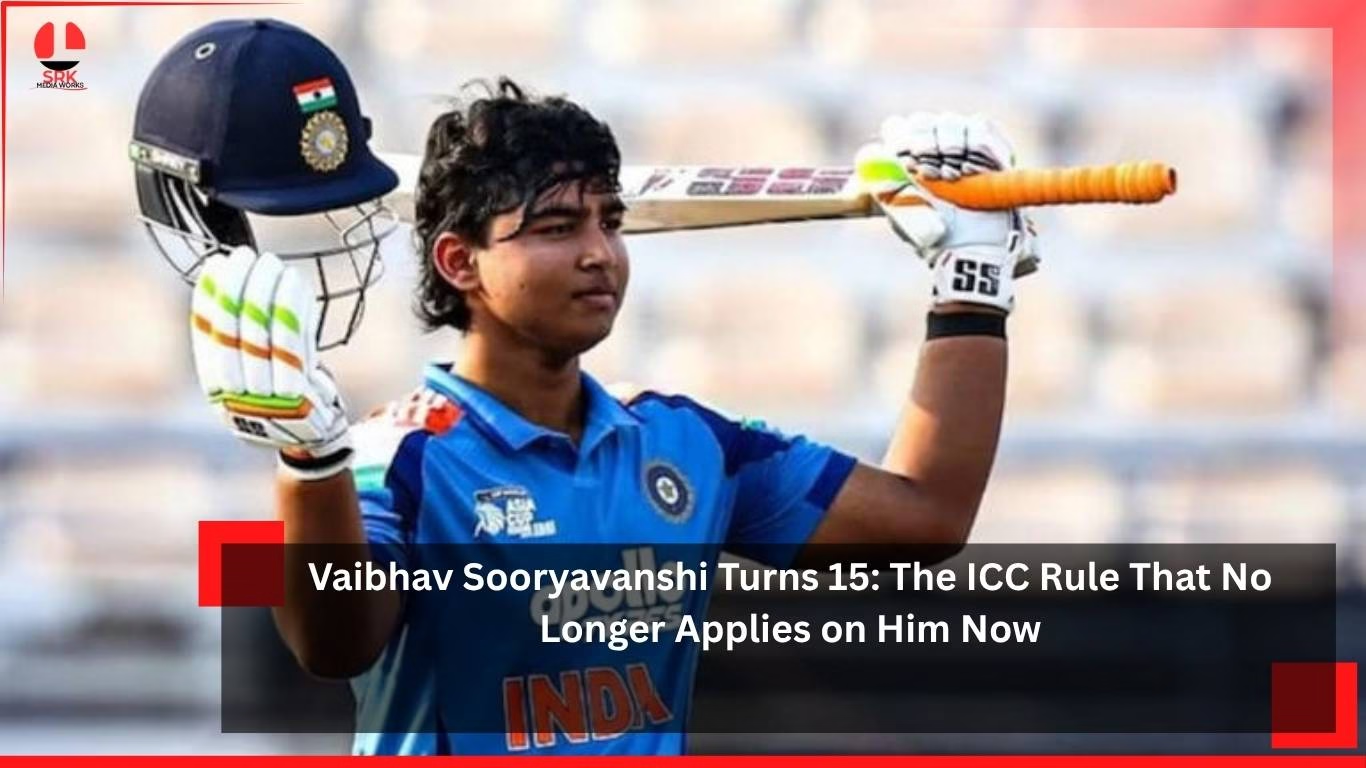
The Indian squad, led by Ayush Mhatre, is reportedly focused on cricketing preparations rather than the handshake debate.
Key players include:
- Vaibhav Suryavanshi, the breakout star of the tournament
- A strong bowling unit
- A balanced middle order
Coaches have instructed players to:
- Stay disciplined
- Follow BCCI’s directive
- Avoid unnecessary interactions
🏟️ Match Expectations: High Stakes, High Pressure
The India‑Pakistan U‑19 match is expected to:
- Draw massive global viewership
- Influence semifinal qualification
- Showcase rising stars from both nations
- Be played under intense media scrutiny
The handshake issue has only amplified the hype.
🧩 Public Reaction: Divided and Emotional
Supporters of the No‑Handshake Policy Say:
- It is a symbolic gesture of national solidarity
- Sports cannot be isolated from national security concerns
- The stance should remain until political tensions ease
Critics Say:
- Junior cricket should not be politicised
- Handshake is a basic sportsmanship gesture
- ICC protocols must be respected
The debate continues to intensify as the match approaches.
⚖️ Legal and Ethical Dimensions
While the ICC can recommend protocols, it cannot force a team to shake hands.
Ethically, the debate centres on:
- Sportsmanship vs symbolism
- Youth cricket vs political messaging
- Autonomy of national boards vs global governance
The BCCI’s stance is legally valid, though controversial.
🧠 What Happens If India Refuses the Handshake Again?
Possible outcomes include:
1. ICC Issues a Formal Advisory
But cannot impose penalties.
2. Media Backlash
Especially from international outlets.
3. Continuation of the Boycott
If BCCI maintains its stance.
4. Increased Tension in Future Matches
Especially in ICC tournaments.
📝 Conclusion
The India‑Pakistan U‑19 Asia Cup clash on December 14 is no longer just a cricket match—it has become a symbolic battleground for sportsmanship, politics, and national sentiment.
With the ICC pushing for a handshake and the BCCI issuing firm directives to maintain the boycott, the stage is set for a high‑stakes encounter both on and off the field.
Whether the young players shake hands or not, the match will be remembered not only for cricketing brilliance but also for the broader narrative surrounding it.
🛡️ Disclaimer
This article is based on publicly available news reports, verified statements, and factual information. It is intended solely for informational and editorial purposes, offering insights into the ICC‑BCCI handshake controversy ahead of the India‑Pakistan U‑19 Asia Cup match.