

England and Wales Cricket Board (ECB) Chairman Richard Thompson has sparked a fresh debate in global cricket circles by calling out the sport’s increasingly congested calendar. Speaking at the inauguration of a new all-weather cricket dome in Darwen, Lancashire, Thompson described cricket’s schedule as “unrelenting” and “too much,” highlighting the unique pressure of hosting a World Cup every year across formats.
Thompson’s remarks come amid growing concerns over player burnout, scheduling conflicts, and the commercial demands placed on national boards. With the return of the ICC Champions Trophy, the biennial World Test Championship final, and alternating T20 and ODI World Cups, cricket has become the only major sport to host a global tournament annually.
“Cricket arguably does play too much,” Thompson told BBC Sport. “We’re the only sport to have a World Cup every year, which I personally think is too much.”
The Weight of Annual ICC Events
Thompson’s comments underscore a structural issue in international cricket: the relentless cycle of ICC tournaments layered over bilateral series, franchise leagues, and domestic competitions. Since 2021, the ICC has scheduled either a T20 World Cup, ODI World Cup, or World Test Championship final every year. The reintroduction of the Champions Trophy in 2025 only adds to the load.
| Year | ICC Event Scheduled | Format | Host Nation |
|---|---|---|---|
| 2021 | T20 World Cup | T20 | UAE/Oman |
| 2022 | T20 World Cup | T20 | Australia |
| 2023 | ODI World Cup | ODI | India |
| 2024 | T20 World Cup | T20 | USA/West Indies |
| 2025 | Champions Trophy | ODI | Pakistan |
| 2025 | World Test Championship Final | Test | England |
| 2026 | T20 World Cup | T20 | India/Sri Lanka |
This frequency of high-stakes tournaments has led to what Thompson calls “an exam to sit every year,” especially for white-ball players who are expected to peak repeatedly without adequate rest or preparation windows.
Player Fatigue and Scheduling Conflicts
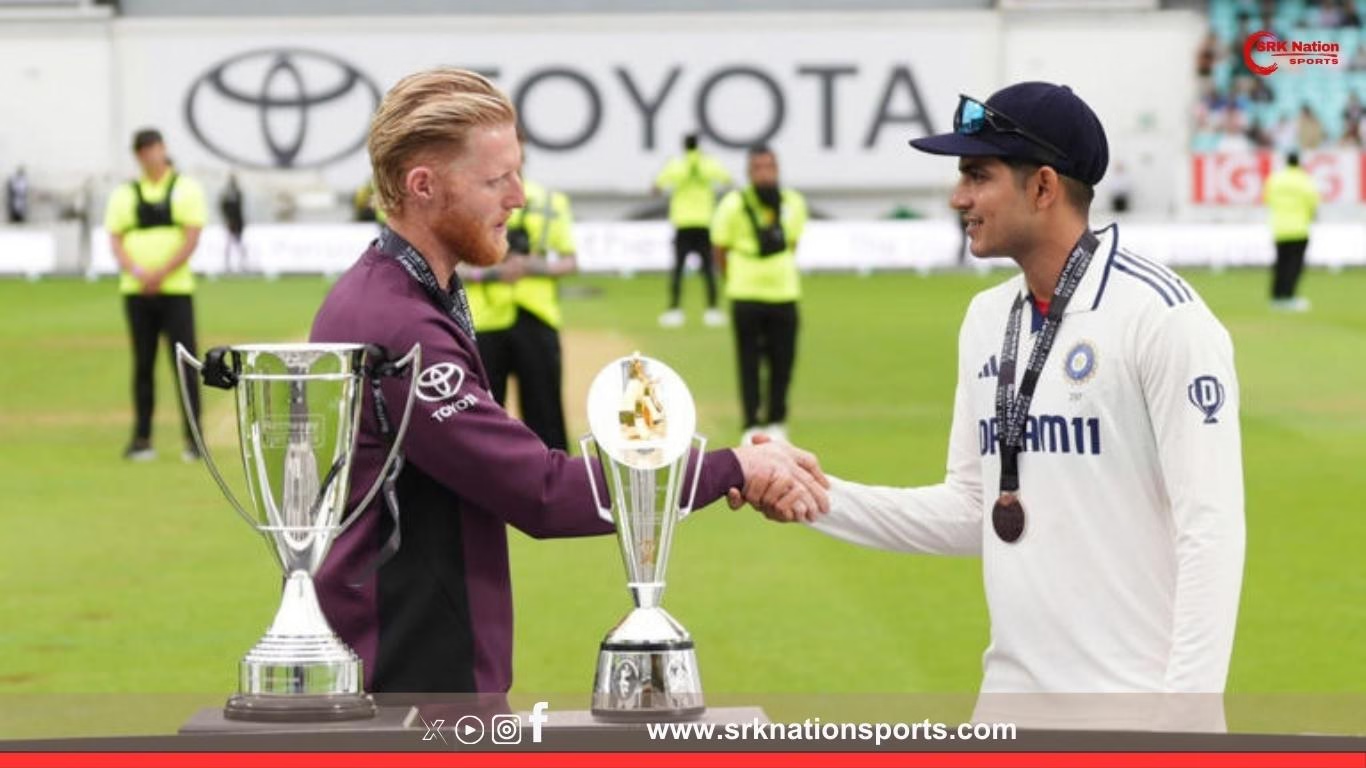
Thompson’s concerns are not theoretical. England’s recent five-Test series against India, which ended in a 2–2 draw, saw every match stretch to the full five days. Players like Ben Stokes and Jamie Smith were visibly fatigued, prompting selectors to rest key white-ball players for the subsequent T20I series against South Africa.
| Series/Event | Duration | Player Fatigue Indicators |
|---|---|---|
| England vs India Test Series | 2 months | Full 5-day matches |
| T20I vs South Africa | 1 week later | Key players rested |
| The Hundred | Begins 2 days after ODI vs India | Player availability concerns |
Thompson noted, “I can’t ever remember a five-Test series going five days in every Test. This was a one-off in the sense of ensuring the players actually had the ability to get to the end of it. But yes, there were some creaking bodies.”
Domestic Adjustments and The Hundred’s Dilemma
In response to mounting pressure, the ECB is considering reducing the number of T20 Blast and County Championship matches. However, The Hundred—England’s flagship 100-ball franchise competition—remains untouched due to fresh investments and commercial commitments.
New investors have demanded full availability of England players for The Hundred, even as the tournament is scheduled to begin just two days after an ODI series against India and three days before a Test series against Pakistan. Thompson acknowledged the scheduling clash but said meaningful changes can only be made after the current TV rights cycle ends in 2028.
| Domestic Tournament | Current Status | Proposed Changes | Investor Demands |
|---|---|---|---|
| T20 Blast | Active | Match reduction | None |
| County Championship | Active | Match reduction | None |
| The Hundred | Expanded | No reduction | Full player availability |
“This Hundred investment has come when we’re actually in the middle of a rights path that we can’t change. So we’re only three years away from being able to ensure there is a gap at the beginning and end of that period,” Thompson explained.
Global Comparisons and Unique Pressure on Cricket
Thompson’s critique draws attention to cricket’s unique structure compared to other global sports. Football, for instance, hosts the FIFA World Cup every four years, with continental tournaments like the UEFA Euro or Copa América in between. Tennis and golf have Grand Slams and Majors, but no annual world championship. Even Olympic sports operate on quadrennial cycles.
| Sport | World Championship Frequency | Major Events Between |
|---|---|---|
| Cricket | Every Year | Bilaterals, Leagues |
| Football | Every 4 Years (FIFA WC) | Euro, Copa América |
| Tennis | No World Cup | Grand Slams |
| Golf | No World Cup | Majors |
| Athletics | Every 2 Years (World Champs) | Olympics |
This relentless calendar places unique physical and mental demands on cricketers, especially those who play across formats and participate in franchise leagues like the IPL, BBL, and CPL.
Calls for Reform and Balanced Scheduling
Thompson’s remarks have reignited calls for a more balanced international calendar. Several cricket boards, including Australia and South Africa, have expressed interest in rethinking bilateral commitments and prioritizing player welfare. The ICC, however, remains committed to its current tournament cycle, citing commercial viability and global engagement.
Experts suggest that reforms could include:
- Rotating formats to avoid back-to-back World Cups
- Introducing mandatory rest periods for multi-format players
- Aligning domestic and international windows to reduce overlap
- Revisiting the Future Tours Programme (FTP) with player input
| Reform Proposal | Potential Impact |
|---|---|
| Format Rotation | Reduced burnout |
| Mandatory Rest Periods | Improved player longevity |
| Domestic-International Alignment | Better scheduling harmony |
| FTP Revision | More equitable workload |
Thompson emphasized that while commercial interests are important, the sport must not lose sight of its human element. “Whether it’s in 50-over format or T20 format, we have a World Cup every year, so we have an exam to sit that does put white-ball players actually under more pressure,” he said.
Conclusion: A Wake-Up Call for Global Cricket
Richard Thompson’s candid assessment of cricket’s “unrelenting” schedule is a timely reminder of the sport’s growing pains in the modern era. As cricket continues to expand its global footprint, the challenge lies in balancing commercial growth with player welfare and sustainable scheduling.
With the next ICC rights cycle approaching in 2028, stakeholders have a window to rethink the calendar and ensure that cricket remains both competitive and compassionate. Until then, players, fans, and administrators will continue navigating a packed and demanding landscape—one World Cup at a time.
Disclaimer: This article is based on publicly available interviews, media reports, and official statements. It is intended for informational purposes only and does not constitute professional advice. All projections and opinions are subject to change based on future policy decisions and stakeholder actions.