





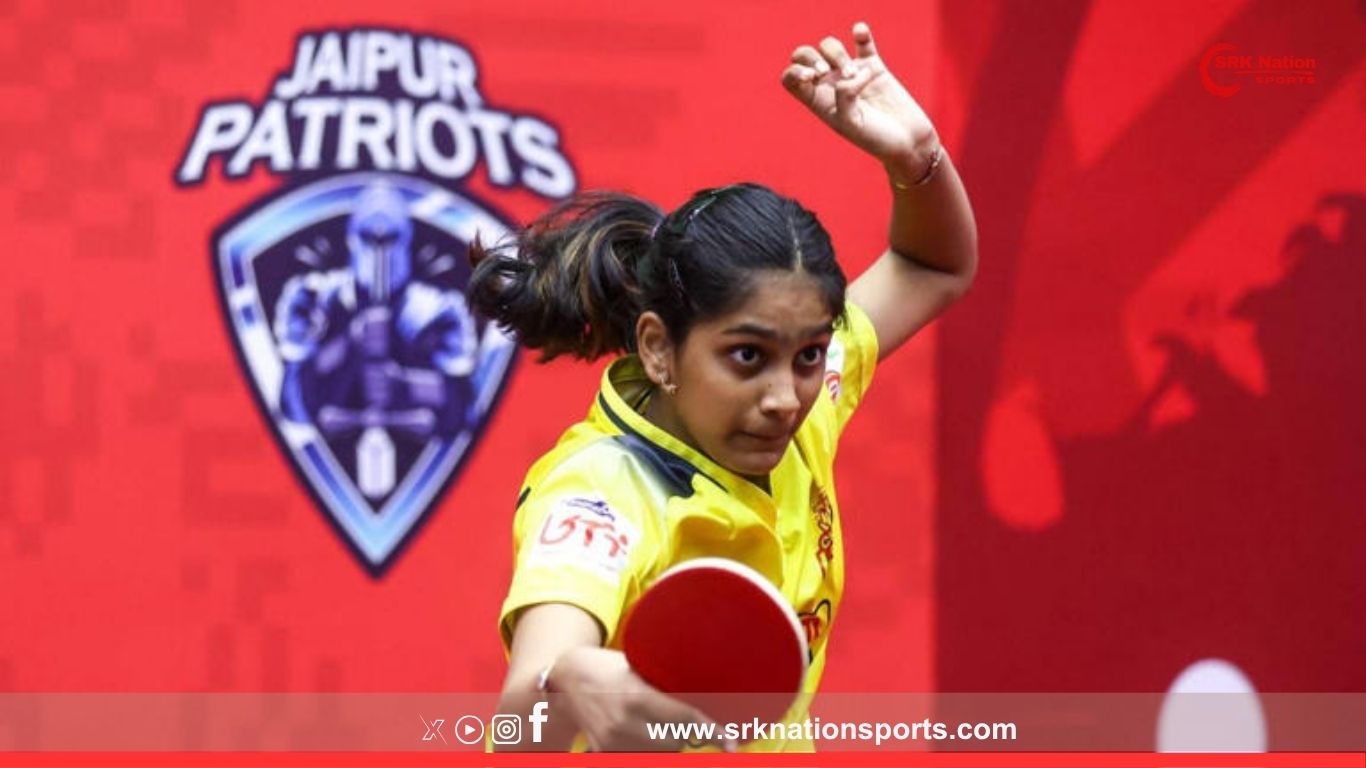
Divyanshi, a 15-year-old table tennis prodigy from India, has scripted history by winning the Asian Junior Table Tennis Championship, defeating three top-ranked Chinese players in a stunning run to the title. Her victory marks a rare feat in Asian table tennis, long dominated by China, and highlights how parental vision, technology, and relentless training created an extraordinary champion.
A Triumph That Shook Asian Table Tennis
In the finals held in Bangkok, Divyanshi beat China’s top-seeded junior player in a thrilling 4-3 match, coming back from two sets down to clinch the decider 11-9. Her journey to the finals was equally impressive, having overcome two other highly-ranked Chinese opponents in the pre-quarters and semi-finals with tactical finesse and mental resilience.
This is India’s first gold medal in the girls’ singles category at the Asian Juniors in over a decade.
The Unseen Force: Father’s Foresight
Divyanshi’s father, Rajeev Sharma, a small business owner in Meerut, recognised her reflexes and concentration abilities when she was only seven years old. Despite limited local facilities, he enrolled her in Delhi’s table tennis academies, commuting 150 km daily.
When the pandemic shut down sporting facilities, his foresight kept her training uninterrupted. Rajeev sourced a table tennis robot, importing it at significant personal expense to replicate match-level rallies at home.
“The robot could feed her up to 100 balls per minute at varying spins and placements. She practised four hours daily, simulating Chinese-style fast rallies,” Rajeev shared.
How The TT Robot Changed Her Game
The robot’s programmable settings allowed Divyanshi to:
- Practice receiving heavy top-spin loops and fast flat hits
- Train footwork against quick side-to-side balls
- Improve her backhand flick and counter-spin blocks under fatigue
- Build mental focus with repetitive drills for over 1000 returns per session
Her coach credits this technological support for bridging the gap with China’s advanced multi-ball training systems.
The Road To The Asian Championship
| Round | Opponent | Country | Result |
|---|---|---|---|
| Round of 16 | Li Xiaoming | China | Won 4-2 |
| Quarterfinals | Kim Eun-Ji | Korea | Won 4-1 |
| Semifinals | Chen Yu | China | Won 4-3 |
| Finals | Wang Mei | China | Won 4-3 |
Divyanshi’s calm presence, quick footwork, and deceptive placements forced her Chinese opponents into uncharacteristic errors, a testament to her relentless robot-based training.
Balancing Studies And Elite Training
A class 10 student, Divyanshi manages a tight routine:
- 5 am – 8 am: Fitness and robot-based drills
- 9 am – 3 pm: School
- 4 pm – 7 pm: On-table practice with sparring partners
- 8 pm – 9 pm: Mental conditioning and match video analysis
Her discipline and focus have won her admiration from India’s table tennis fraternity, who believe she could be a future Asian Games and Olympic medalist.
The Mental Game: Turning Fear Into Confidence
Divyanshi shared post-final:
“Facing Chinese players used to intimidate me. The robot training built my confidence. I felt ready for their pace.”
Her sports psychologist worked on visualisation techniques, helping her simulate championship match scenarios, manage adrenaline surges, and stay calm during intense rallies.
Family Sacrifices Behind The Success
Rajeev Sharma reportedly spent over ₹12 lakh on her training, travel, and equipment last year alone, a huge sum for their middle-class family. Her mother took over family business responsibilities to free up Rajeev for Divyanshi’s tournaments.
“It’s a family dream. We have no regrets. She is making India proud,” said her mother.
Reactions Across Indian Sports Fraternity
Former Olympian paddler Mouma Das stated:
“This is a watershed moment. Beating three Chinese in a single Asian championship is no small feat. Divyanshi has shown what structured planning and scientific training can achieve.”
Sports Minister Anurag Thakur congratulated her, calling her victory “an inspiration for India’s sporting daughters”.
China’s Dominance And The Significance Of Her Win
China has historically produced over 70% of the world’s top table tennis players. Divyanshi’s win signals a possible shift, inspiring Indian coaches to integrate robotic and AI-based training systems.
| Asian Junior Girls’ Singles Past Winners (Recent Years) |
|---|
| 2019 – Wang Yidi (China) |
| 2020 – Chen Xingtong (China) |
| 2021 – No tournament (pandemic) |
| 2022 – Sun Yingsha (China) |
| 2023 – Liu Weishan (China) |
| 2024 – Wang Mei (China) |
| 2025 – Divyanshi (India) |
What Lies Ahead For Divyanshi
Her immediate goals include:
- Competing at the World Junior Championships later this year
- Qualifying for India’s senior women’s team for the 2026 Asian Games
- Training in Europe or China for advanced sparring exposure
She remains grounded, stating:
“I will continue working hard. This is just the beginning.”
Final Takeaway
Divyanshi’s historic Asian triumph is a result of visionary parenting, technological innovation, disciplined training, and mental fortitude. Her story is a beacon for aspiring athletes and their families, proving that with the right blend of support and innovation, even seemingly invincible barriers can be shattered.
Disclaimer: This news content is based on athlete and family statements, coach interviews, and championship data for public information and inspiration. It does not constitute professional sports training or psychological advice.