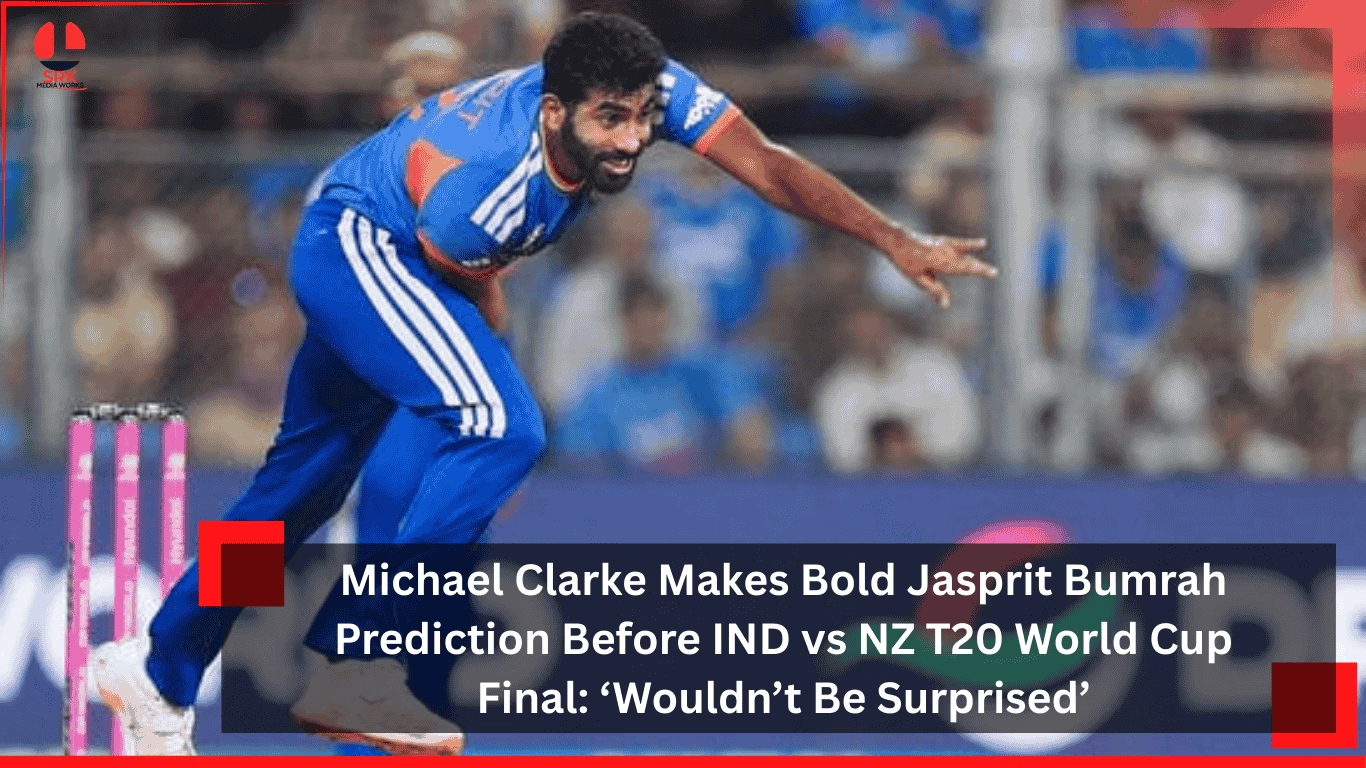






As anticipation builds for the T20 World Cup 2026 final between India and New Zealand, reports have clarified a major controversy surrounding the pitch conditions. Contrary to speculation, India did not request a batting-friendly surface for the final. The International Cricket Council (ICC) had already pre-decided the pitch allocation well before the knockout stages, ensuring neutrality and fairness.
🌍 Background of the Pitch Controversy
Leading up to the final, rumors circulated that India had influenced the pitch preparation to favor their batting-heavy lineup. However, ICC officials confirmed that pitch assignments were finalized weeks in advance, with no team having input into the decision.
This clarification is crucial, as pitch conditions often play a decisive role in T20 matches, especially finals where margins are slim.
🏏 ICC’s Pitch Policy
- Neutrality: ICC ensures that pitches are allocated without team influence.
- Pre-Decision: Surfaces for semifinals and finals are decided before the tournament begins.
- Balance: The aim is to provide a fair contest between bat and ball.
- Ground Staff Role: Local curators prepare pitches under ICC guidelines, not under instructions from participating teams.
📊 Comparative Analysis of Pitch Allocations in ICC Events
| Tournament | Final Venue | Pitch Nature | Outcome |
|---|---|---|---|
| T20 World Cup 2022 | Melbourne | Balanced, batting-friendly | England chased successfully |
| ODI World Cup 2023 | Ahmedabad | Batting-friendly | Australia adapted better |
| T20 World Cup 2026 | Pre-decided neutral pitch | Yet to be played | India vs New Zealand |
📈 Pivot Analysis: Batting-Friendly vs Balanced Pitches
| Factor | Batting-Friendly Pitch | Balanced Pitch |
|---|---|---|
| Run Scoring | High | Moderate |
| Bowler Impact | Reduced | Significant |
| Fan Excitement | High-scoring thrillers | Tactical battles |
| Fairness | Questioned if influenced | Ensured neutrality |
🔎 Broader Implications
- Team Strategy: India’s batting depth and New Zealand’s bowling strength will be tested on a neutral surface.
- Public Perception: Clarification from ICC helps dispel rumors of favoritism.
- Tournament Integrity: Reinforces ICC’s commitment to fairness and transparency.
🗣️ Expert Opinions
- Former Players: Stress that finals should always be played on balanced pitches to test all skills.
- Analysts: Note that speculation about pitch influence often arises in high-stakes matches.
- Fans: Many welcomed ICC’s clarification, emphasizing that the final should be decided by skill, not surface bias.
🌐 Impact on IND vs NZ Final
The neutral pitch ensures that both India and New Zealand enter the final on equal footing. India’s batting lineup, led by Sanju Samson and Virat Kohli, will face the challenge of New Zealand’s disciplined attack spearheaded by Trent Boult and Tim Southee. The outcome will depend on adaptability rather than pitch conditions.
📝 Conclusion
Reports confirming that India did not ask for a batting-friendly surface for the T20 World Cup final highlight ICC’s strict neutrality in pitch allocation. With the surface pre-decided, the stage is set for a fair contest between India and New Zealand. The final will be determined by skill, temperament, and execution rather than external influence, ensuring the integrity of cricket’s biggest stage.
Disclaimer
This article is based on public reports and ICC’s official tournament guidelines. It does not represent endorsement of any team or prediction of match outcomes. The content is intended for informational and educational purposes only, highlighting the rules and fairness of pitch allocations in ICC events. Readers are encouraged to follow official updates for real-time developments.