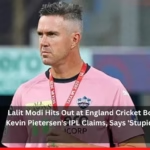

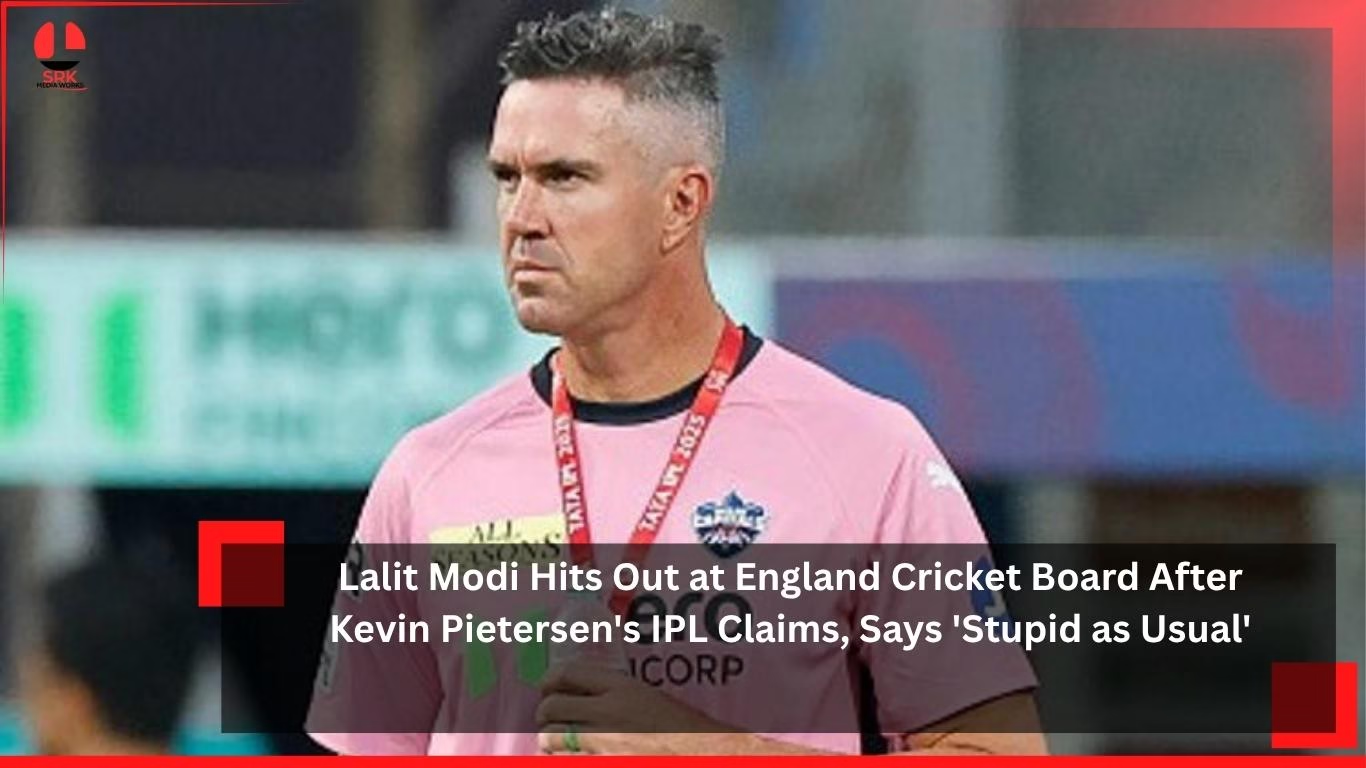
The cricketing world has been stirred by a fresh controversy involving former IPL chairman Lalit Modi, who has lashed out at the England and Wales Cricket Board (ECB) following Kevin Pietersen’s recent claims about the Indian Premier League (IPL). Modi, known for his outspoken nature, criticized the ECB’s stance and dismissed their approach as “stupid as usual,” reigniting debates about the relationship between English cricket and the IPL.
Background of the Controversy
Kevin Pietersen, one of England’s most flamboyant batsmen, has long been vocal about the importance of the IPL in shaping modern cricket. His recent remarks suggested that the ECB failed to recognize the tournament’s global significance and the opportunities it offered to English players. Pietersen argued that the IPL was instrumental in revolutionizing cricket, both financially and strategically.
Lalit Modi, who was the architect of the IPL’s inception in 2008, quickly responded to Pietersen’s comments. He accused the ECB of being shortsighted and resistant to change, labeling their policies as “stupid as usual.” Modi’s remarks have sparked widespread debate, with fans and experts weighing in on whether the ECB mishandled its relationship with the IPL.
Lalit Modi’s Criticism
Modi’s criticism centered on several key points:
- Resistance to IPL: He accused the ECB of failing to embrace the IPL’s global appeal.
- Player Restrictions: Modi highlighted how English players were often restricted from participating fully in the IPL due to scheduling conflicts.
- Financial Opportunities: He emphasized that the IPL provided unmatched financial benefits for players, which the ECB undervalued.
- Global Influence: Modi argued that the IPL had reshaped cricket worldwide, and ignoring its impact was detrimental to English cricket.
Kevin Pietersen’s Role in the Debate
Pietersen has consistently championed the IPL, often clashing with the ECB over its policies. His career was marked by tensions with English cricket authorities, particularly regarding his participation in franchise leagues. His latest remarks reignited old debates, with Modi’s support amplifying the criticism against the ECB.
Comparative Analysis of ECB vs. IPL Approach
| Attribute | England Cricket Board (ECB) | Indian Premier League (IPL) |
|---|---|---|
| Player Participation | Restricted, controlled | Open, global |
| Financial Benefits | Moderate | High, lucrative |
| Global Reach | Limited | Extensive, worldwide |
| Innovation | Conservative | Aggressive, experimental |
| Fan Engagement | Traditional | Modern, digital-driven |
Pivot Analysis of ECB and IPL Relations
| Factor | Before Pietersen’s Remarks | After Modi’s Response |
|---|---|---|
| ECB Reputation | Stable, traditional | Questioned, criticized |
| IPL Influence | Recognized but limited | Strongly emphasized |
| Player Sentiment | Divided | Leaning toward IPL |
| Media Coverage | Routine | Intensified scrutiny |
| Fan Debate | Minimal | Widespread discussion |
Reactions from Cricketing Circles
- Fans: Many fans sided with Pietersen and Modi, arguing that the ECB should have embraced the IPL earlier.
- Experts: Analysts believe the ECB’s conservative stance limited opportunities for English players in global cricket.
- Players: Current and former cricketers expressed mixed views, with some defending the ECB’s focus on domestic cricket.
- Media: Coverage has been extensive, with debates on television, print, and digital platforms.
Broader Implications for Cricket
This controversy highlights broader issues in cricket governance:
- Globalization of Cricket: The IPL has become a global brand, influencing cricket beyond India.
- Player Freedom: The debate underscores the need for boards to balance national commitments with franchise opportunities.
- Financial Dynamics: The IPL’s financial clout continues to challenge traditional cricket structures.
- Cultural Shifts: Fans increasingly value entertainment-driven formats, pushing boards to adapt.
Challenges Ahead for ECB
The ECB faces several challenges in the wake of this controversy:
- Rebuilding Trust: Addressing criticism from players and fans.
- Scheduling Conflicts: Finding ways to align domestic cricket with global leagues.
- Financial Balance: Ensuring players are rewarded fairly without compromising national commitments.
- Modernization: Adapting to the changing demands of cricket audiences.
Conclusion
Lalit Modi’s sharp criticism of the ECB following Kevin Pietersen’s IPL remarks has reignited debates about the role of franchise cricket in shaping the sport’s future. While the ECB has traditionally prioritized domestic cricket, the IPL’s global influence cannot be ignored. Modi’s comments, though blunt, reflect a broader sentiment that cricket boards must adapt to modern realities.
The controversy serves as a reminder that cricket is evolving rapidly, and those unwilling to embrace change risk being left behind.
Disclaimer
This article is intended for informational purposes only. It is based on publicly available developments and does not represent official statements from Lalit Modi, Kevin Pietersen, or the England and Wales Cricket Board. Readers should rely on official announcements for verified updates.