






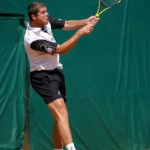


Qualifier Maja Chwalinska stands on the precipice of tennis history at the French Open in Paris this week, marking a stunning professional resurgence just one win away from an unthinkable Grand Slam title. The Polish underdog, who battled severe mental health struggles and physical setbacks over the past two years, has captivated the Roland Garros crowd with a series of upset victories that defied pre-tournament expectations.
The Road Back to Roland Garros
Chwalinska’s journey to the main draw of the French Open was far from guaranteed. After falling outside the top 300 in the world rankings due to a prolonged hiatus, the 22-year-old had to navigate the grueling qualifying rounds just to secure her place in Paris.
Her current performance serves as a stark contrast to the period between 2021 and 2022, when she stepped away from the sport to prioritize her mental well-being. During this time, Chwalinska was candid about her struggles with clinical depression, an experience that nearly ended her career before it truly began.
The Symbolism of Resilience
Observers have pointed to a small, discreet tattoo on her wrist as a focal point for her newfound perspective on the court. While she has kept the specific meaning private, teammates and coaches suggest it serves as a daily reminder of the perspective she gained during her time away from tennis.
This tattoo has become a symbol of her tactical shift: playing with a sense of freedom rather than the crushing weight of expectation. Her game, characterized by a unique left-handed slice and exceptional court craft, has neutralized the power-hitting styles of higher-seeded opponents throughout the tournament.
Statistical Dominance
Data from the tournament shows that Chwalinska currently leads the women’s draw in break points saved, a metric that highlights her composure under pressure. According to match analysts, her ability to extend rallies beyond 10 shots has frustrated opponents who rely on quick points, forcing them into uncharacteristic unforced errors.
Sports psychologists note that players returning from mental health breaks often exhibit a different psychological profile, often displaying increased resilience during high-stakes moments. Chwalinska’s performance in Paris appears to validate this trend, as she has successfully defended multiple match points across her last three outings.
Industry Implications
The success of Chwalinska has sparked a broader conversation within the WTA regarding the support structures available to lower-ranked players. Her run demonstrates the potential for depth in the sport when athletes are given the space to recover from burnout and personal crises.
For the tennis industry, this narrative shifts the focus from purely physical conditioning to the necessity of mental health resources at the challenger level. If Chwalinska secures the title, it will likely lead to increased funding for wellness programs across ITF and WTA circuits, aiming to prevent the premature exit of talented young athletes.
Looking ahead, the tennis world will be watching to see if Chwalinska can maintain this level of intensity in the final match. Regardless of the outcome, her performance has already secured her a spot in the top 100 rankings, ensuring her direct entry into future Grand Slam events and fundamentally changing the trajectory of her professional career.