

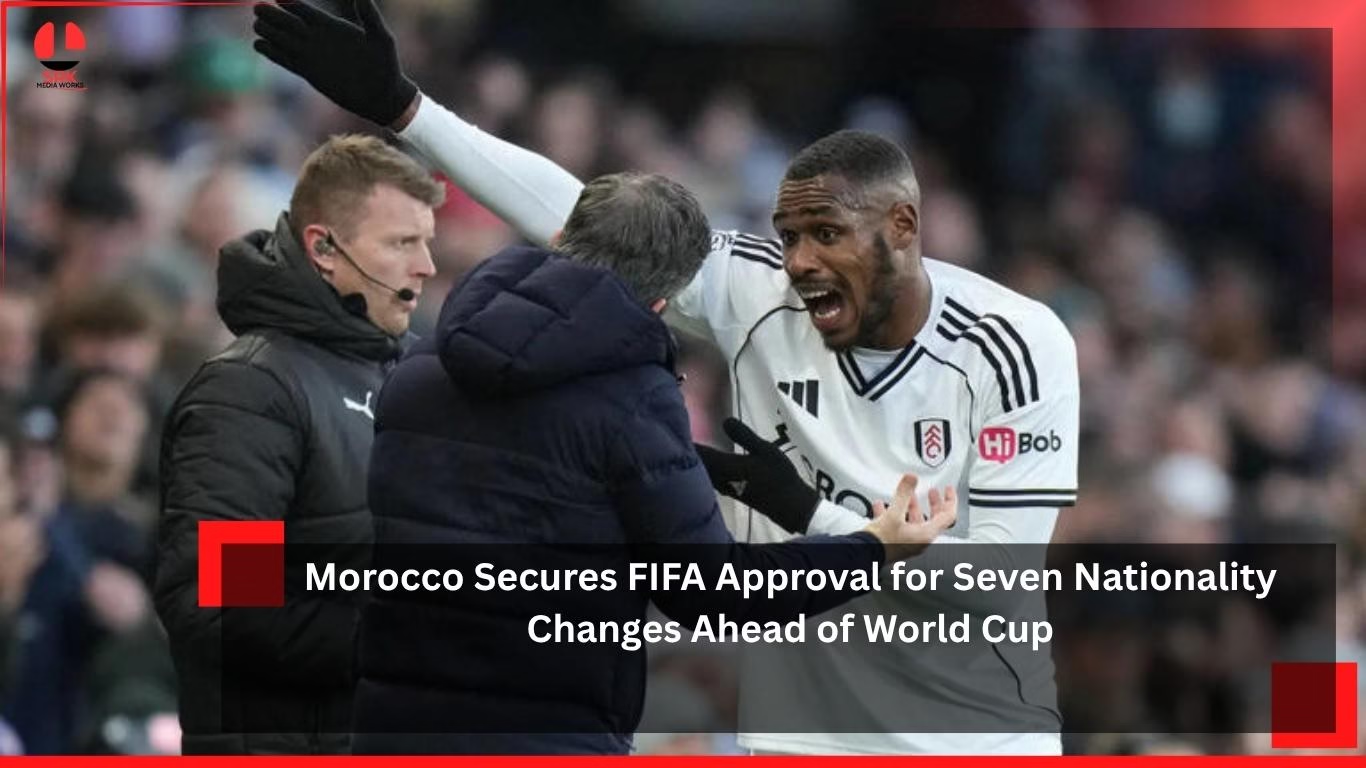
Morocco has taken a bold step in strengthening its squad for the upcoming FIFA World Cup by securing approval for seven nationality changes. This move, which includes high-profile names such as Fulham defender Issa Diop and Ajax midfielder Rayane Bounida, reflects Morocco’s strategy of tapping into its diaspora talent pool to build a competitive team. The approvals come at a crucial time, as the Atlas Lions aim to replicate and surpass their historic semifinal run at the 2022 World Cup.
The Players Who Switched Allegiance
Key Additions
- Issa Diop (Fulham, Defender): Former France youth international, now cleared to represent Morocco.
- Rayane Bounida (Ajax, Midfielder): Switched from Belgium, considered one of Europe’s brightest young prospects.
- Five other dual-nationality players: Young talents from Belgium and the Netherlands, all under 20, strengthening Morocco’s long-term squad depth.
Context
- Morocco has now secured 16 nationality changes since March 2025, showing a consistent recruitment drive.
- The approvals were finalized ahead of friendlies against Ecuador and Paraguay, where new coach Mohamed Ouahbi will test the revamped squad.
Strategic Importance
Morocco’s aggressive approach to nationality switches highlights its long-term vision. By integrating players from Europe’s top academies and leagues, the Atlas Lions are ensuring depth, versatility, and competitiveness.
| Strategy | Benefit |
|---|---|
| Recruiting diaspora talent | Access to elite training and experience |
| Youth-focused switches | Long-term squad stability |
| Balancing experience and youth | Stronger bench strength |
| FIFA-approved changes | Legitimacy and compliance with regulations |
Pivot Analysis: Stakeholder Narratives
| Stakeholder | Narrative | Implication |
|---|---|---|
| Moroccan FA | Building a stronger squad | Boosts national pride |
| Players | Opportunity to play at World Cup | Career-defining decision |
| Fans | Excited about new talent | Higher expectations |
| FIFA | Ensures fair process | Maintains integrity of rules |
| Opponents | Concerned about Morocco’s depth | Tougher competition |
Impact on Morocco’s World Cup Campaign
The inclusion of seven new players significantly enhances Morocco’s options in defense, midfield, and attack. With Issa Diop adding solidity at the back and Rayane Bounida bringing creativity in midfield, Morocco’s squad looks more balanced than ever.
Possible Benefits
- Stronger defensive unit with Diop’s Premier League experience.
- Creative midfield options with Bounida’s technical skills.
- Increased competition for places, raising overall performance.
- Greater tactical flexibility for coach Mohamed Ouahbi.
Comparative Analysis: Morocco vs Other Nations
| Country | Nationality Switches | Impact |
|---|---|---|
| Morocco | 16 since 2025 | Strengthened squad depth |
| Algeria | 8 in recent years | Boosted midfield options |
| France | Limited switches | Relies on domestic talent |
| Netherlands | Few switches | Focus on academy graduates |
Fan Reactions
Moroccan fans have welcomed the nationality changes, seeing them as a sign of ambition and progress. Social media buzz reflects excitement about the new recruits, with many predicting Morocco could be a dark horse in the World Cup.
Possible Outcomes
| Scenario | Impact |
|---|---|
| New players excel | Morocco emerges as strong contender |
| Struggles with integration | Team cohesion issues |
| Balanced performance | Consistent progress in tournament |
| Injuries or setbacks | Pressure on existing squad depth |
Conclusion
Morocco’s approval of seven nationality changes ahead of the World Cup is a landmark move that strengthens its squad and signals its intent to compete at the highest level. By blending diaspora talent with homegrown players, the Atlas Lions are positioning themselves as one of the most exciting teams to watch in 2026.
Disclaimer
This article is intended for informational and analytical purposes only. It does not represent the official stance of FIFA, the Moroccan FA, or any institution mentioned. The content is based on sports analysis, historical context, and public reports. Readers are encouraged to explore multiple perspectives for a comprehensive understanding of the issue.