




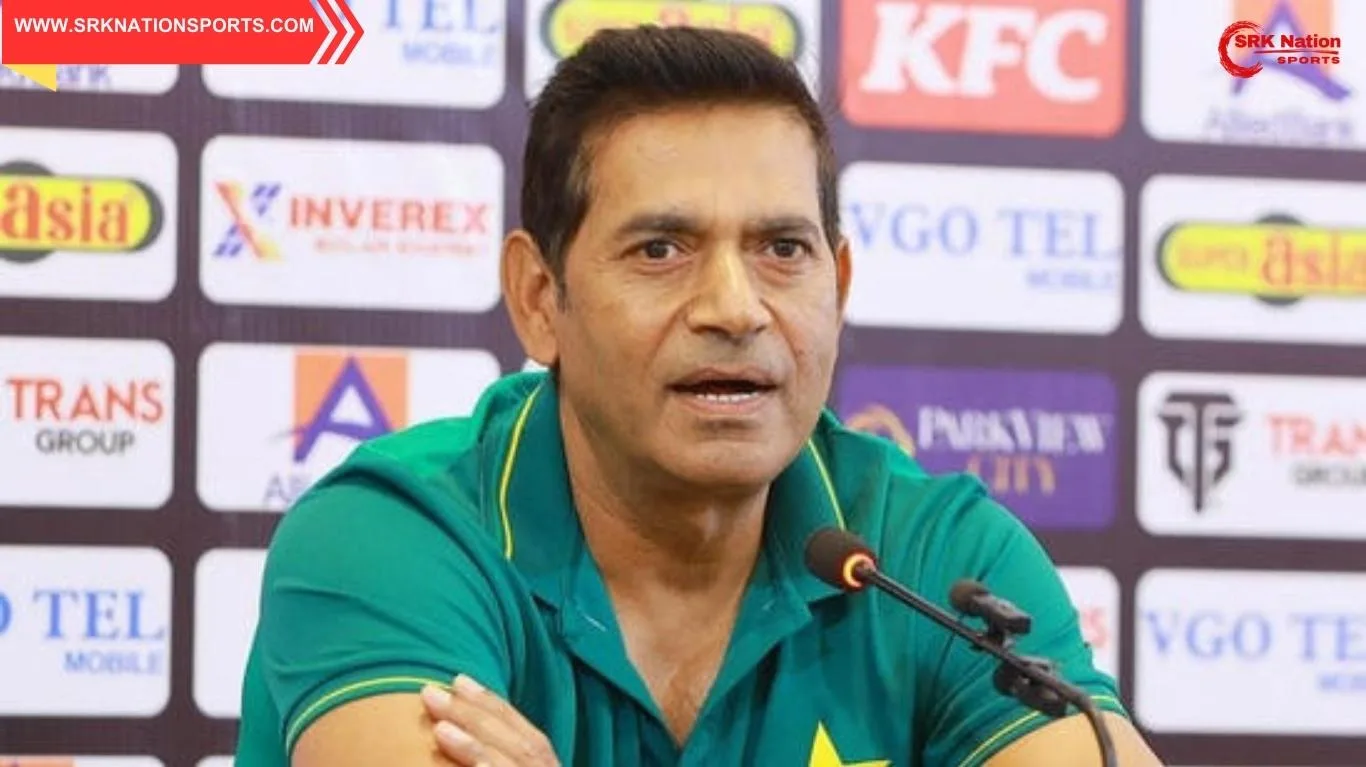
Former Pakistan pacer and coach Aaqib Javed has stirred the cricketing world with a bold revelation, claiming that India once reached out to Pakistan for guidance on fast-bowling techniques. His statement has raised eyebrows across the cricket fraternity, sparking debates about cross-border cricketing exchanges, the legacy of Pakistan’s pace factory, and India’s historical struggles to produce genuine fast-bowling talent compared to their neighbors.
Background of Aaqib Javed’s Claim
- Aaqib Javed, a member of Pakistan’s 1992 World Cup-winning squad, has long been associated with nurturing fast-bowling talent.
- He claimed that Indian cricket officials and coaches had, at one point, sought advice from Pakistan on how to develop fast bowlers.
- The statement highlights Pakistan’s reputation as a “fast-bowling factory,” producing legends like Wasim Akram, Waqar Younis, Shoaib Akhtar, and Imran Khan.
- India, historically known for its batting depth and spin tradition, has only recently developed a strong fast-bowling unit.
Key Highlights of the Statement
| Indicator | Details |
|---|---|
| Speaker | Aaqib Javed |
| Subject | India seeking guidance from Pakistan on fast-bowling |
| Context | Historical struggles of India in producing fast bowlers |
| Reaction | Raised eyebrows, sparked debates |
| Broader Impact | Renewed focus on Pakistan’s fast-bowling legacy |
Pakistan vs India in Fast-Bowling Development
| Factor | Pakistan | India | Implication |
|---|---|---|---|
| Historical Legacy | Produced world-class pacers consistently | Relied on spin and batting depth | Pakistan seen as pace powerhouse |
| Training Infrastructure | Specialized academies, mentorship from legends | Focused on batting academies | India lagged behind until recent years |
| Global Recognition | Known for producing fastest bowlers | Known for batting maestros | Different cricketing identities |
| Current Scenario | Emerging talents but inconsistent | Strong pace unit with Bumrah, Shami, Siraj | India catching up |
Why This Claim Matters
- Cross-Border Cricketing Dynamics: Highlights rare instances of cooperation between India and Pakistan despite political tensions.
- Fast-Bowling Legacy: Reinforces Pakistan’s reputation as the ultimate hub for pace bowling.
- India’s Evolution: Shows how India has transformed from a spin-heavy side to a pace-dominant team.
- Public Debate: Sparks discussions about whether cricketing nations should share expertise across borders.
Pakistan’s Fast-Bowling Legacy
| Attribute | Details |
|---|---|
| Legends Produced | Imran Khan, Wasim Akram, Waqar Younis, Shoaib Akhtar |
| Unique Traits | Swing, reverse swing, raw pace |
| Training Culture | Emphasis on natural talent and aggressive bowling |
| Global Impact | Revolutionized fast-bowling strategies |
| Current Status | Producing talents like Shaheen Afridi, Naseem Shah |
Pakistan’s ability to consistently produce fast bowlers has been a hallmark of its cricketing identity, often intimidating opponents with sheer pace and skill.
India’s Historical Struggles
- India traditionally relied on batting legends like Sunil Gavaskar, Sachin Tendulkar, and Rahul Dravid.
- Spin was India’s weapon of choice, with stalwarts like Anil Kumble and Harbhajan Singh dominating.
- Genuine fast bowlers were rare, with Kapil Dev being one of the few exceptions in earlier decades.
- The lack of infrastructure and focus on pace development hindered India’s ability to produce consistent fast-bowling talent.
India’s Modern Fast-Bowling Revolution
| Attribute | Details |
|---|---|
| Key Bowlers | Jasprit Bumrah, Mohammed Shami, Mohammed Siraj |
| Training Infrastructure | NCA programs, IPL exposure, advanced fitness regimes |
| Global Recognition | India now boasts one of the best pace attacks |
| Transformation | Shift from spin-heavy to pace-dominant side |
| Impact | Success in overseas Tests, improved ODI/T20 performances |
India’s transformation in the last decade has been remarkable, with fitness, technology, and exposure to global leagues playing a crucial role.
Expert Opinions
- Former Cricketers: Some agree with Aaqib’s claim, acknowledging Pakistan’s unmatched fast-bowling legacy.
- Analysts: Note that India’s recent success in pace bowling is due to structural reforms, not external guidance.
- Fans: Divided, with Pakistani fans celebrating the claim and Indian fans questioning its authenticity.
- Coaches: Stress that cricketing nations often learn from each other, even if informally.
Challenges Ahead
- Pakistan: Needs to modernize training infrastructure to sustain its fast-bowling dominance.
- India: Must continue nurturing pace talent while balancing workload management.
- Global Cricket: Ensuring fair competition while encouraging knowledge-sharing.
- Public Perception: Managing narratives that may fuel rivalry rather than cooperation.
Opportunities for Cricket
- Cross-Border Coaching Programs: Encouraging collaboration between cricketing nations.
- Youth Development: Sharing expertise to nurture young fast bowlers globally.
- Technology Integration: Using analytics to refine pace bowling strategies.
- Global Recognition: Celebrating fast-bowling as a shared cricketing heritage.
Broader Context of India-Pakistan Cricket Rivalry
- Matches between India and Pakistan are often emotionally charged, with immense pressure on players.
- Despite political tensions, cricket has occasionally served as a bridge between the two nations.
- Aaqib’s claim adds another layer to the rivalry, highlighting Pakistan’s pride in its fast-bowling tradition.
- The debate underscores how cricketing identities are shaped by historical strengths and weaknesses.
Public Sentiment
- Pakistani fans celebrated Aaqib’s statement as validation of their cricketing heritage.
- Indian fans questioned the accuracy, pointing to India’s modern pace revolution.
- Neutral observers emphasized the importance of sportsmanship and knowledge-sharing.
- Social media amplified the debate, with hashtags trending across platforms.
Conclusion
The revelation by Aaqib Javed that India once sought guidance from Pakistan on fast-bowling has reignited discussions about cricketing legacies, rivalries, and cooperation. While Pakistan continues to pride itself on its pace factory, India’s modern transformation into a pace powerhouse shows how cricket evolves with time, infrastructure, and innovation. The claim may raise eyebrows, but it also highlights the interconnectedness of cricketing cultures across borders.
Disclaimer
This article is intended for informational purposes only and does not constitute sports or policy advice. Player statements, public reactions, and cricketing developments are subject to change based on evolving circumstances. Readers are encouraged to follow official updates for accurate information. The author and publisher are not responsible for any decisions made based on this article.