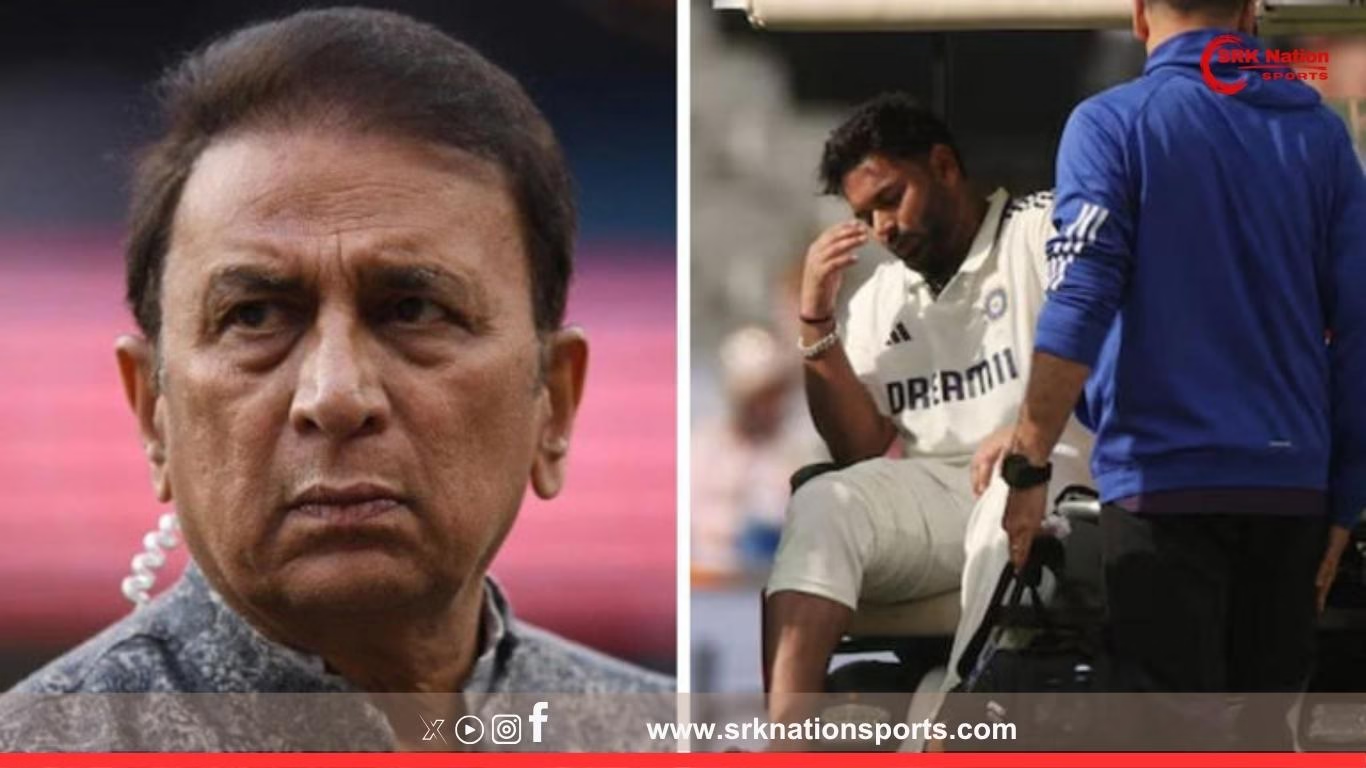
In a strongly worded criticism that has stirred fresh debates across the cricketing world, Indian cricket legend Sunil Gavaskar has lashed out against the current concussion substitute rule, labelling it as a “like-for-like substitute for incompetence”. His comments have not only targeted the rule itself but also questioned the mental toughness of modern-day batters who, he believes, are overly protected under the present system.
Speaking on a cricket broadcast after a recent Test match incident involving a concussion sub, Gavaskar said, “If you can’t handle short balls, then go play tennis or golf. In cricket, you need courage to face bouncers. The concussion sub rule is being misused. It was meant for genuine head injuries but now it’s turning into a like-for-like substitute for incompetence against the short ball.”
Why Gavaskar’s remarks have sparked debates
The International Cricket Council (ICC) introduced concussion substitutes in 2019 after the tragic death of Australian cricketer Phillip Hughes in 2014 due to a bouncer impact. The rule allows a team to replace a player diagnosed with concussion with a ‘like-for-like’ substitute after medical assessment by the team doctor and match referee approval.
However, Gavaskar believes that this well-intended rule is being exploited by batters who fail to handle bouncers. He added, “It’s dangerous to misuse such rules. If a batter ducks late or can’t read bouncers, the team ends up getting a fresh batter with no penalty. This is unfair to bowlers who work hard to set them up.”
Current concussion sub rule at a glance
| Rule Feature | Details |
|---|---|
| Introduced | August 2019 |
| Applicable formats | All international cricket including Tests, ODIs, T20Is |
| Replacement criteria | Like-for-like substitute approved by match referee |
| Common reason | Head impact injury confirmed as concussion |
| Notable usage | Steve Smith replaced by Marnus Labuschagne during 2019 Ashes |
Players and experts divided
While Gavaskar’s comments received agreement from a section of ex-cricketers who believe batters must show more courage, others termed his view as “harsh” and “insensitive”. Former England captain Nasser Hussain stated, “Sunil is a legend, but we have moved ahead from bravado to player safety. No one wants another Phillip Hughes incident.”
Indian domestic coaches too feel young batters need to toughen up against short-pitched bowling. “In Ranji Trophy, we don’t get express pace often. When these youngsters face quality pace in Tests, they struggle. Gavaskar sir’s point is partially valid – they must prepare better,” said a Mumbai-based coach.
Concussion sub incidents in recent Tests
| Match | Player replaced | Reason | Substitute |
|---|---|---|---|
| Ashes 2019, Lord’s | Steve Smith | Blow to neck by Jofra Archer | Marnus Labuschagne |
| India vs Bangladesh 2022 | Litton Das | Hit on helmet by Shardul Thakur | Nurul Hasan |
| India vs Australia 2023 | Shreyas Iyer | Hit by short ball from Cummins | Suryakumar Yadav |
The ethical dilemma
The rule’s intention is to prioritise player safety. However, Gavaskar’s words raise a genuine question – is there a grey area where tactical advantage is being derived under the guise of injury replacement?
Former India physio John Gloster highlighted, “Concussion rules must remain strict. It’s not easy to fake concussion symptoms as medical teams follow protocols. But psychological fear of bouncers is different from genuine concussion.”
What ICC says
The ICC maintains that concussion assessments are purely medical decisions. In its concussion guidelines, it states:
“The decision to replace a concussed player must be based on the team doctor’s diagnosis of concussion in consultation with the match referee. Tactical advantage is not the basis of replacement approval.”
However, critics argue that ‘like-for-like’ remains subjective. For example, a bowling all-rounder replaced by a batting all-rounder could subtly shift balance in tight matches.
Gavaskar’s old-school philosophy
Gavaskar, known for his fearless batting against the West Indies’ four-pronged pace attack without a helmet in the 1970s and 80s, always believed courage defined top-order batting. His view reflects the generational gap in approach, where modern cricket has prioritised safety with better equipment, helmets, neck guards, and strict concussion protocols.
He emphasised, “When we faced Marshall, Holding, Roberts, Garner, it was about guts. Today, helmets have removed fear but also brought complacency. Technique against bouncers is non-existent now.”
Mixed reactions from fans and analysts
Fans on social media were divided, with hashtags like #GavaskarConcussionSubComment, #PlayerSafetyFirst, and #CricketDebate trending. While some hailed Gavaskar’s honesty, others felt he undermined the importance of player health in modern cricket.
Impact on cricket laws
The concussion sub rule is unlikely to be scrapped but Gavaskar’s comments may reignite discussions on stricter implementation to avoid tactical misuse. Analysts suggest mandatory independent neurologist assessments to strengthen the credibility of replacements.
Final thoughts
Cricket continues to evolve between aggression, safety, and fair play. Gavaskar’s statement, “Play tennis or golf if you can’t handle short balls”, will remain a talking point for weeks, reflecting the eternal debate between old-school toughness and new-era player welfare.
Disclaimer: This news content is for informational purposes only. It includes expert views, cricketing opinions, and interpretations from multiple public statements without any intention to undermine official cricket laws or concussion safety protocols. Readers are advised to follow official ICC statements and medical advisories for final guidelines.