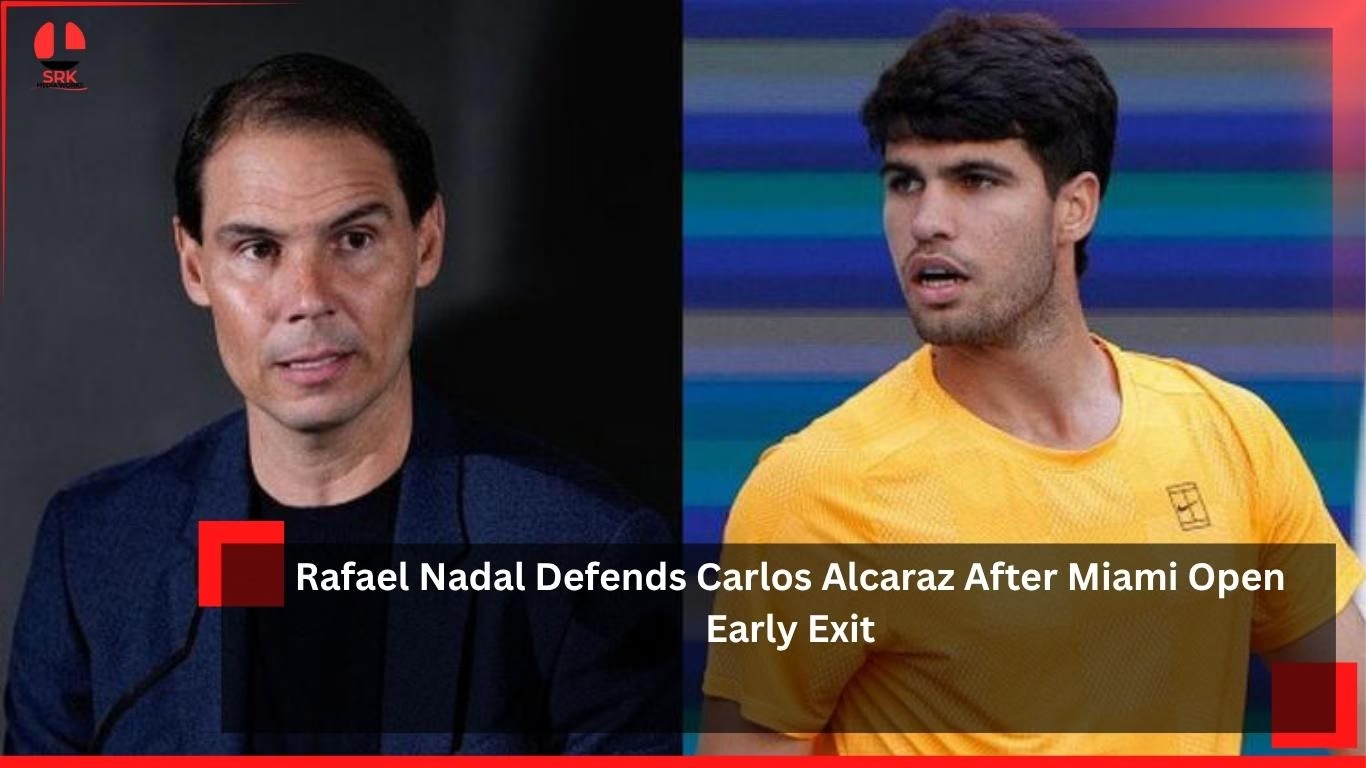





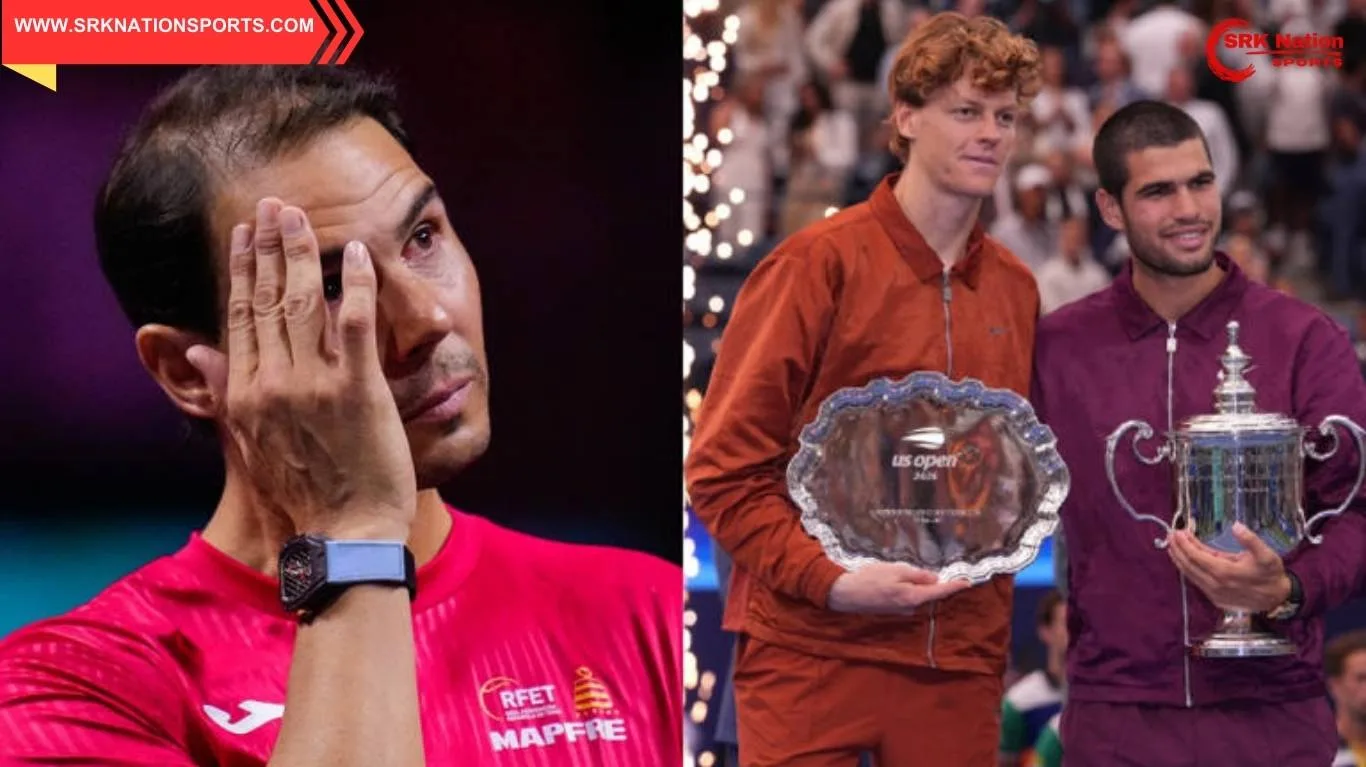
Tennis legend Rafael Nadal has offered a thoughtful perspective on the rising stars of men’s tennis, Jannik Sinner and Carlos Alcaraz, highlighting how their playing styles differ not only from each other but also from his own approach during his peak years. Nadal’s remarks have sparked widespread interest among fans and analysts, as the sport continues to witness a generational shift with new champions emerging on the global stage.
Background of Nadal’s Statement
- Rafael Nadal, a 22-time Grand Slam champion, has long been considered one of the greatest players in tennis history.
- With his career entering its twilight phase, Nadal has often been asked to comment on the new generation of players.
- In a recent interview, Nadal explained that while both Sinner and Alcaraz are exceptional talents, they are “different players from what I was.”
- His comments shed light on the evolution of tennis styles, strategies, and athleticism across generations.
Key Highlights of Nadal’s Perspective
| Indicator | Details |
|---|---|
| Player Speaking | Rafael Nadal |
| Rising Stars | Jannik Sinner, Carlos Alcaraz |
| Statement | “They’re different players from what I was” |
| Context | Comparison of styles and generational differences |
| Broader Impact | Insight into tennis evolution and future rivalries |
Comparing Nadal, Sinner, and Alcaraz
| Factor | Rafael Nadal | Jannik Sinner | Carlos Alcaraz | Implication |
|---|---|---|---|---|
| Playing Style | Heavy topspin, baseline dominance | Clean ball-striking, precision | Aggressive all-court game | Different tactical approaches |
| Physical Attributes | Exceptional endurance, speed | Tall, powerful serve | Explosive movement, agility | Varied strengths |
| Mental Toughness | Legendary resilience | Calm under pressure | Fearless and confident | Diverse psychological profiles |
| Generational Context | Dominated Federer/Djokovic era | Rising in post-Big Three era | Emerging as Nadal’s successor | Transition in tennis hierarchy |
Nadal on Jannik Sinner
- Nadal praised Jannik Sinner for his clean ball-striking and ability to hit winners from both wings.
- Sinner’s tall frame and powerful serve give him an edge in modern tennis, where precision and pace are crucial.
- Nadal noted that Sinner’s style is more about efficiency and control compared to his own heavy topspin and grinding rallies.
- Sinner’s calm demeanor under pressure has also been highlighted as a key strength.
Nadal on Carlos Alcaraz
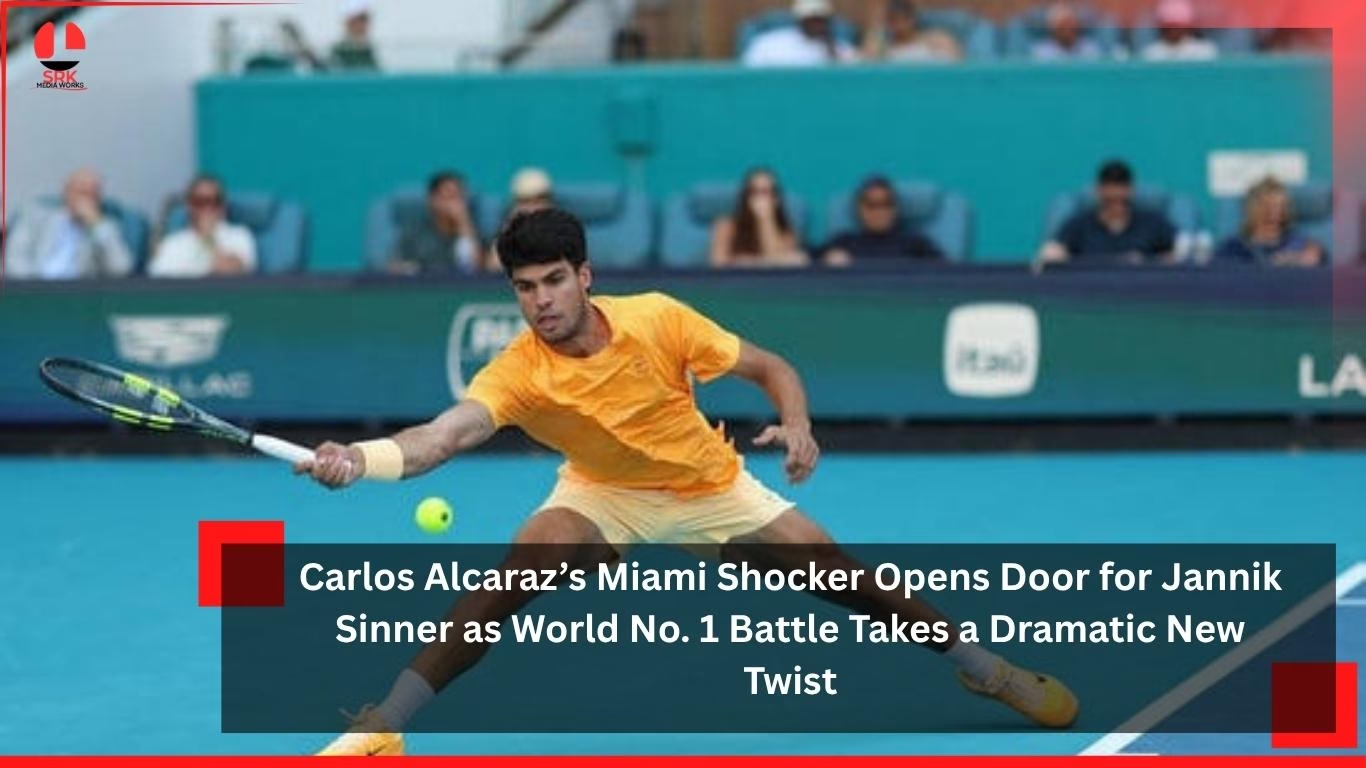
- Nadal described Carlos Alcaraz as a fearless competitor with explosive athleticism.
- Alcaraz’s aggressive all-court game, combined with his ability to adapt quickly, makes him a formidable opponent.
- Nadal acknowledged that Alcaraz’s style is closer to his own in terms of intensity, but with more variety in shot-making.
- Alcaraz’s confidence at a young age has drawn comparisons to Nadal’s early career, though Nadal emphasized their differences in approach.
Nadal on Himself
| Attribute | Details |
|---|---|
| Playing Style | Heavy topspin, relentless baseline rallies |
| Strengths | Endurance, mental toughness, clay-court dominance |
| Rivalries | Federer, Djokovic, Murray |
| Legacy | 22 Grand Slam titles, unmatched clay record |
| Difference from New Gen | More physical grind, less reliance on precision or variety |
Nadal reflected that his own game was built on endurance, resilience, and a grinding style that wore opponents down, whereas today’s stars rely more on precision, explosiveness, and adaptability.
Expert Opinions
- Analysts: Highlight Nadal’s comments as evidence of tennis evolving toward faster, more aggressive styles.
- Coaches: Emphasize the importance of adaptability in modern tennis, as seen in Alcaraz’s game.
- Fans: Appreciate Nadal’s humility and insight into the next generation.
- Historians: Note the shift from Nadal’s era of long rallies to today’s emphasis on quick points.
Challenges Ahead for Sinner and Alcaraz
- Consistency: Maintaining high performance across surfaces and tournaments.
- Injuries: Avoiding physical setbacks that often plague top players.
- Pressure: Living up to comparisons with legends like Nadal, Federer, and Djokovic.
- Rivalries: Building sustained rivalries that define their era.
Opportunities for the New Generation
- Global Recognition: Rising stars can attract new fans to tennis.
- Style Diversity: Different playing styles enrich the sport.
- Legacy Building: Chance to dominate in the post-Big Three era.
- Innovation: Incorporating new training and technology into their games.
Broader Context of Tennis Evolution
- Tennis has evolved from long baseline rallies to faster, more aggressive styles.
- Advances in racket technology, fitness, and training have reshaped the sport.
- Nadal’s comments reflect the generational shift from endurance-based dominance to explosive athleticism.
- The rivalry between Sinner and Alcaraz could define the next decade of men’s tennis.
Public Sentiment
- Fans praised Nadal’s thoughtful remarks, noting his respect for younger players.
- Social media discussions highlighted excitement about future rivalries between Sinner and Alcaraz.
- Many expressed nostalgia for Nadal’s era while embracing the new generation.
- Overall sentiment reflects admiration for Nadal’s humility and anticipation for tennis’s future.
Conclusion
Rafael Nadal’s statement that “Jannik Sinner and Carlos Alcaraz are different players from what I was” offers a profound insight into the evolution of tennis. While Nadal’s legacy is built on endurance, resilience, and heavy topspin, Sinner and Alcaraz represent a new generation defined by precision, explosiveness, and adaptability. As the sport transitions into a new era, Nadal’s reflections highlight both the differences and the continuity that make tennis timeless.
Disclaimer
This article is intended for informational purposes only and does not constitute professional sports analysis or coaching advice. Player performances, career trajectories, and public statements are subject to change based on evolving circumstances. Readers are encouraged to follow official updates for accurate information. The author and publisher are not responsible for any decisions made based on this article.