

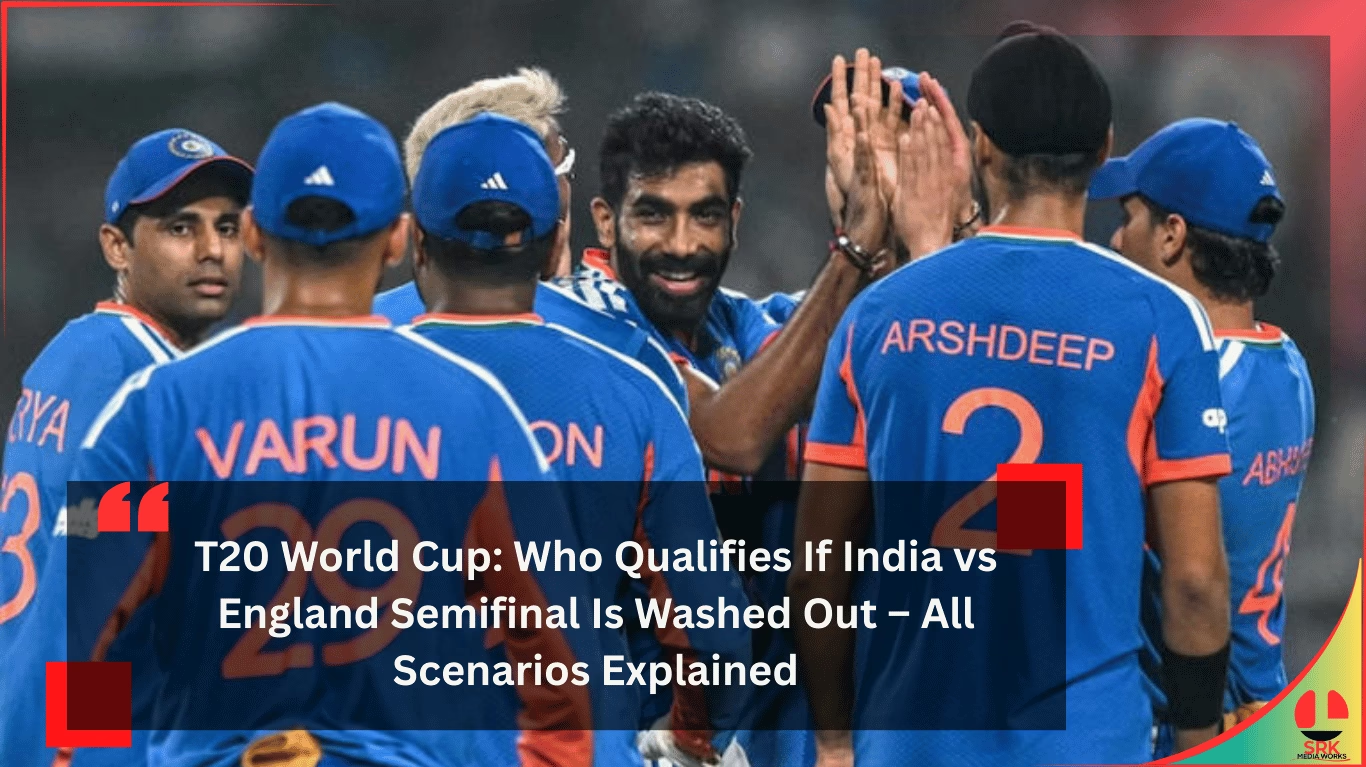
The ICC Men’s T20 World Cup 2026 has reached its high-stakes semifinal stage, with India set to face England at the Wankhede Stadium in Mumbai. However, concerns over weather disruptions have raised questions about what happens if this blockbuster clash is washed out. Fans are eager to know the rules, reserve day provisions, and qualification scenarios that could decide who reaches the final without a ball being bowled.
Context of the Semifinal
India, led by Suryakumar Yadav, secured their semifinal berth after a dominant win over West Indies, despite an earlier setback against South Africa in the Super Eight stage. England, captained by Harry Brook, qualified with consistent performances and now face India in a repeat of the 2022 semifinal rivalry. The other semifinal features South Africa against New Zealand at Eden Gardens, Kolkata.
With rain predicted in Mumbai, the India vs England clash could face interruptions, making the ICC’s contingency rules crucial.
ICC Rules for Washed-Out Semifinals
- Reserve Day Provision: The ICC has scheduled a reserve day for the India vs England semifinal.
- Extra Time: Officials can extend play by 90 minutes on the scheduled day and 120 minutes on the reserve day to complete at least a five-over match.
- No Result Scenario: If both days are washed out, the team that finished higher in the Super Eight standings will progress to the final.
Comparative Analysis of Scenarios
| Scenario | Outcome for India | Outcome for England | Impact on Fans |
|---|---|---|---|
| Full Match Played | Winner progresses | Loser eliminated | Fair competition |
| Rain Delay, Match Shortened | 5-over minimum match | Same rules apply | Nervous excitement |
| Washed Out, Reserve Day Used | Match rescheduled | Match rescheduled | Relief for fans |
| Both Days Washed Out | India progress (higher Super Eight finish) | Eliminated | Controversy, disappointment |
Pivot Analysis of Sentiment
| Sentiment Category | Impact on India | Impact on England | Impact on Global Cricket |
|---|---|---|---|
| Supporter Morale | Boosted – higher Super Eight finish secures advantage | Frustration – elimination without play | Sparks debate on fairness |
| Media Coverage | Extensive – highlights rain rules | Focus on England’s misfortune | Keeps tournament in spotlight |
| Public Perception | India seen as lucky beneficiaries | England seen as unlucky victims | Divides opinion among fans |
| Tournament Integrity | ICC rules seen as decisive | Questions over fairness | Raises calls for format review |
Why This Matters
The washout scenario matters because:
- Tournament Integrity: Ensures clear rules for progression.
- Fan Engagement: Millions of fans await clarity on outcomes.
- Team Morale: Players must prepare for uncertainty.
- Global Debate: Sparks discussions on fairness in knockout formats.
Challenges Ahead
- For India: Avoid complacency, prepare for shortened matches.
- For England: Overcome psychological disadvantage of rain rules.
- For ICC: Address criticism over washout qualification rules.
- For Fans: Coping with disappointment if no play occurs.
Opportunities Emerging
- For India: Chance to reach final even if weather intervenes.
- For England: Motivation to push for victory if play is possible.
- For ICC: Showcase preparedness with reserve day planning.
- For Fans: Renewed excitement if reserve day delivers a thriller.
Broader Implications
The situation reflects broader realities in cricket:
- Weather Risks: Rain remains a major disruptor in global tournaments.
- Format Debate: Calls for indoor stadiums or flexible scheduling.
- Fan Narratives: Washouts fuel debates on fairness and luck.
- Global Governance: ICC’s handling sets precedent for future events.
Conclusion
If the India vs England semifinal at Wankhede is washed out, ICC rules dictate that India will progress to the final due to their higher finish in the Super Eight stage. While a reserve day offers hope for play, the possibility of elimination without a ball being bowled looms large for England. The outcome underscores the importance of contingency planning in cricket and highlights how weather can dramatically alter the course of tournaments.
Disclaimer
This article is a journalistic analysis based on publicly available information and ICC tournament rules. It does not endorse or oppose any cricket board, team, or institution. Readers are encouraged to interpret the content as informative coverage and verify facts independently before forming opinions.