




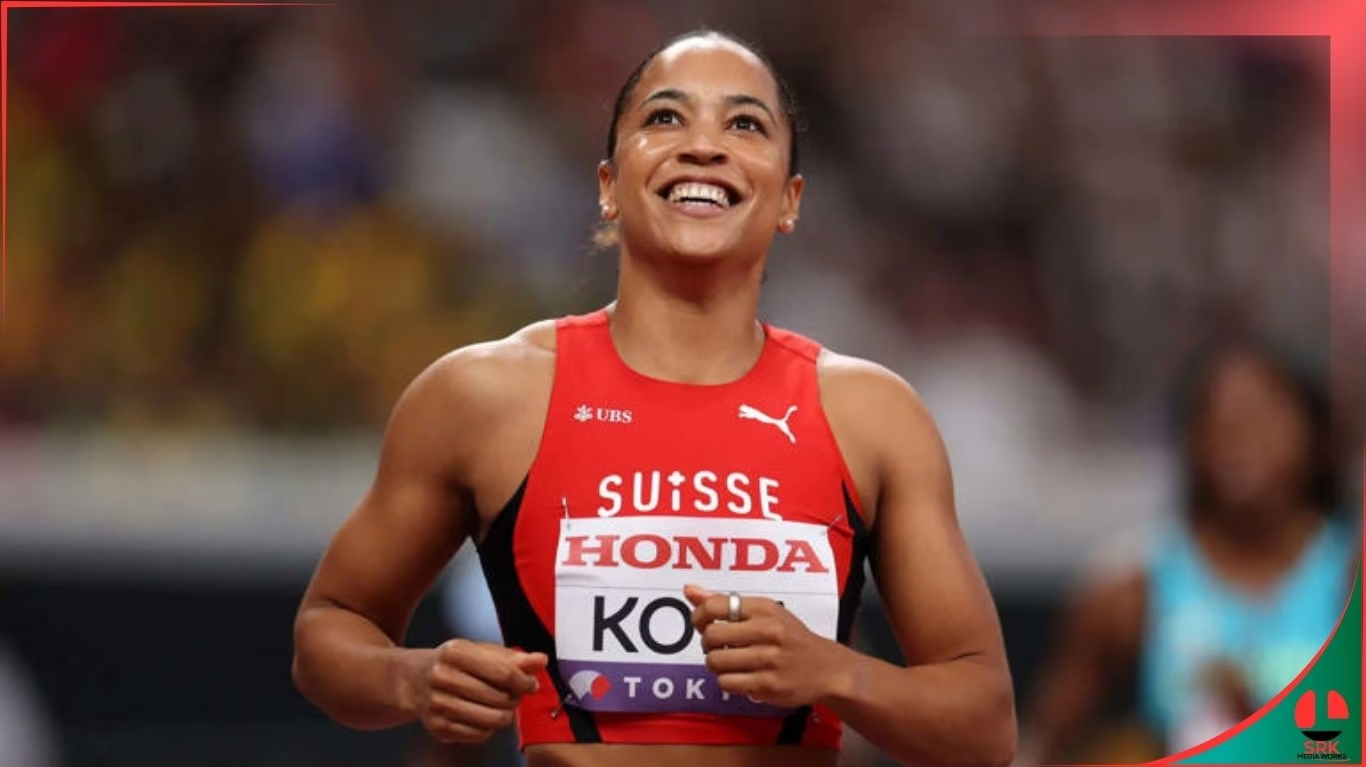
The Olympic Games have always been a showcase of versatility, resilience, and extraordinary talent. Yet, some athletes stand out not only for excelling in their primary discipline but also for mastering another competitive arena. These Olympians have proven that greatness is not confined to a single track—whether it’s the athletics track or the racing circuit, they embody the spirit of adaptability and determination.
Dual Excellence: Athletes Who Shine Beyond One Track
- Athletics and Cycling: Some Olympians have transitioned from sprinting to cycling, leveraging explosive power and endurance.
- Athletics and Motorsport: A few athletes have taken their competitive instincts from running tracks to racing tracks, excelling in motorsport events.
- Winter and Summer Games: Certain Olympians have competed in both Winter and Summer Olympics, showcasing adaptability across vastly different sports environments.
Comparative Analysis of Dual-Track Olympians
| Athlete | Primary Discipline | Secondary Discipline | Achievements |
|---|---|---|---|
| Jesse Owens (historic example) | Athletics (sprints) | Exhibition racing | Olympic gold medals, global icon |
| Clara Hughes | Cycling | Speed Skating | Medals in both Summer & Winter Olympics |
| Usain Bolt (post-Olympics career) | Athletics (sprints) | Football (soccer) | Olympic legend, professional football stints |
| Lolo Jones | Athletics (hurdles) | Bobsleigh | Competed in both Summer & Winter Olympics |
| Victoria Pendleton | Cycling | Horse Racing | Olympic cycling champion, professional jockey |
Why Dual Excellence Matters
- Expands Legacy: Athletes who excel in multiple disciplines inspire future generations.
- Showcases Adaptability: Transitioning between sports highlights versatility and mental toughness.
- Global Appeal: Competing across different tracks broadens fan bases and cultural impact.
- Innovation in Training: Cross-disciplinary skills often enhance performance in primary sports.
Challenges Faced by Dual-Track Olympians
- Training Demands: Balancing two sports requires immense physical and mental effort.
- Injury Risks: Different disciplines pose unique injury challenges.
- Public Expectations: Fans often expect athletes to replicate success across all fields.
- Institutional Support: Not all federations encourage cross-disciplinary participation.
Public and Expert Reaction
- Fans: Admire the courage and ambition of athletes who take on dual challenges.
- Analysts: Highlight the importance of structured training and support systems.
- Sports Federations: Often use such athletes as ambassadors for promoting versatility.
Lessons from Dual-Track Olympians
- Resilience Is Universal: Success in one sport can fuel determination in another.
- Cross-Training Benefits: Skills learned in one discipline often enhance performance in another.
- Breaking Boundaries: Athletes prove that specialization is not the only path to greatness.
- Inspiration Beyond Sport: Their journeys inspire broader life lessons about adaptability and courage.
Conclusion
Olympians who excel on two types of tracks embody the true spirit of the Games—courage, determination, and versatility. Whether it’s sprinting on the athletics track, racing on the cycling velodrome, or competing in winter sports, these athletes prove that greatness knows no boundaries. Their stories remind us that the pursuit of excellence is not limited to one path but can span across multiple arenas, inspiring millions worldwide.
Disclaimer
This article is based on publicly available information and aims to highlight Olympians who have excelled in multiple disciplines. It does not intend to criticize or promote any individual, team, or organization. The content is for informational and educational purposes only, reflecting broader issues in sports versatility, resilience, and athlete development.