


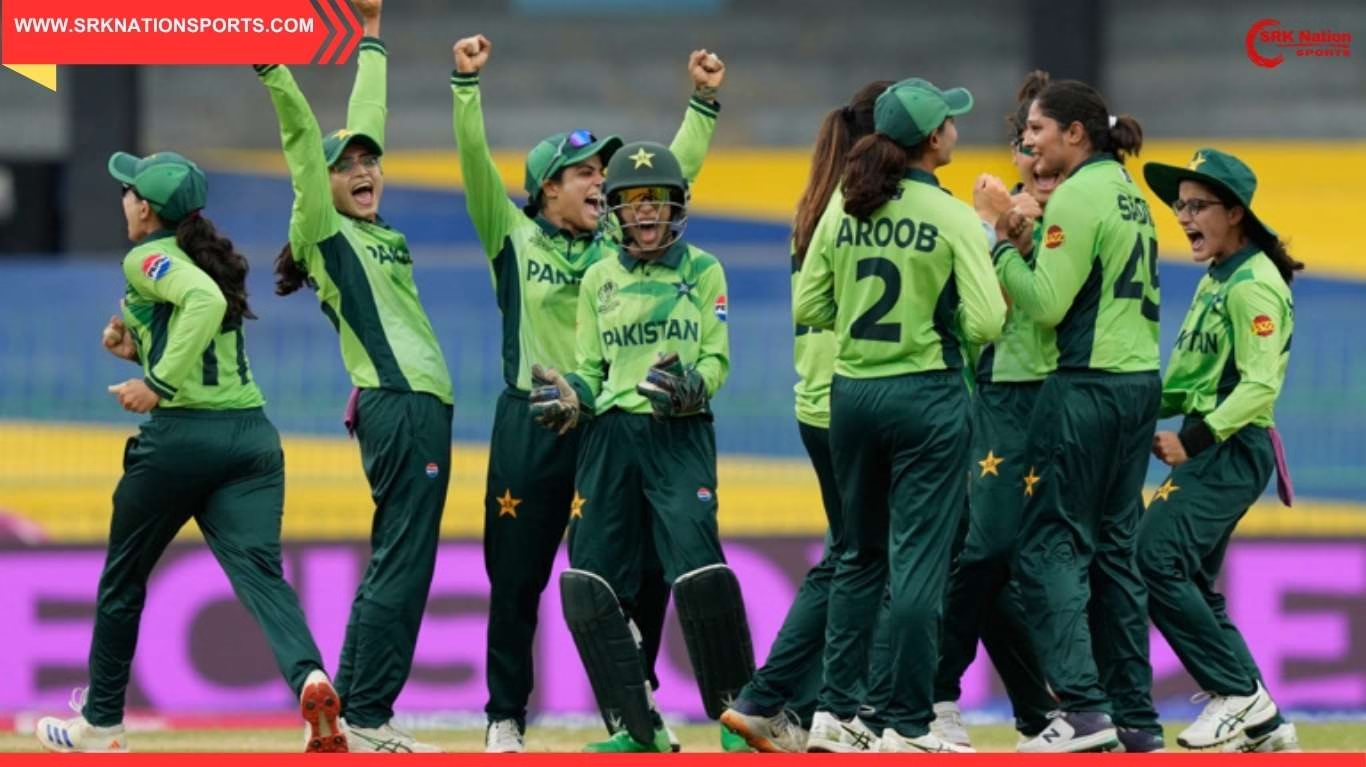
In a moment of raw emotion and unfiltered honesty, Pakistan women’s cricket team captain Fatima Sana voiced her frustration at the International Cricket Council (ICC) following her team’s winless run in the ICC Women’s World Cup 2025. Her statement, “We waited 4 years…”, delivered after Pakistan’s final group-stage match was abandoned due to rain, has sparked widespread debate about tournament planning, venue selection, and the broader treatment of women’s cricket on the global stage.
The match against Sri Lanka at the R. Premadasa Stadium in Colombo was called off after just 4.2 overs due to persistent rain, marking Pakistan’s third abandoned game of the tournament. With zero wins and only two points from seven matches, Pakistan finished at the bottom of the table. But for Sana, the issue went beyond performance—it was about fairness, preparation, and respect for the sport.
Fatima Sana’s Statement: A Call for Accountability
“We waited four years for this tournament,” Sana said in the post-match press conference. “And then we come here and play in conditions where five matches get washed out. How is that fair to any team? ICC must arrange good venues. This is not just about us—it’s about the sport.”
Her words resonated with fans and players alike. The Women’s World Cup, held once every four years, is the pinnacle of international competition. For many players, it’s a once-in-a-career opportunity. To have that chance compromised by poor scheduling and venue selection is, as Sana put it, “heartbreaking.”
Pakistan’s Tournament Journey
Pakistan’s campaign began with promise but quickly unraveled. Despite flashes of brilliance from individual players, the team struggled to find rhythm. Rain interruptions further disrupted momentum, leaving the squad with limited match time and little opportunity to recover from early setbacks.
| Match | Opponent | Result | Venue | Overs Played | Points |
|---|---|---|---|---|---|
| 1 | Australia | Lost | Colombo | Full Match | 0 |
| 2 | England | Lost | Colombo | Full Match | 0 |
| 3 | India | Lost | Colombo | Full Match | 0 |
| 4 | New Zealand | Lost | Colombo | Full Match | 0 |
| 5 | Bangladesh | Abandoned | Colombo | 3.1 Overs | 1 |
| 6 | South Africa | Abandoned | Colombo | 2.4 Overs | 1 |
| 7 | Sri Lanka | Abandoned | Colombo | 4.2 Overs | 0 |
Pakistan’s final tally: 0 wins, 3 no-results, 4 losses, and 2 points.
Weather Woes: A Tournament Undermined by Rain
The R. Premadasa Stadium hosted 11 matches during the tournament. Shockingly, five of those were abandoned due to rain. The timing of the tournament coincided with Sri Lanka’s Northeast monsoon season, raising serious questions about the ICC’s scheduling decisions.
| Venue | Matches Scheduled | Matches Abandoned | Abandonment Rate |
|---|---|---|---|
| R. Premadasa Stadium | 11 | 5 | 45.45% |
| Galle International | 8 | 1 | 12.5% |
| Pallekele Stadium | 6 | 0 | 0% |
The data paints a clear picture: Colombo was a high-risk venue, and the ICC’s failure to mitigate that risk has had tangible consequences.
Player Performance Overview
Despite the team’s overall struggles, several players stood out with individual performances.
| Player | Role | Matches | Runs | Wickets | Highlights |
|---|---|---|---|---|---|
| Fatima Sana | Captain/All-rounder | 4 | 78 | 5 | Leadership, key bowling spells |
| Nida Dar | Spinner | 5 | 65 | 7 | Economical spells, sharp fielding |
| Muneeba Ali | Wicketkeeper | 5 | 102 | 0 | Top scorer, consistent behind stumps |
| Diana Baig | Fast Bowler | 4 | 22 | 6 | Early breakthroughs |
| Aliya Riaz | Batter | 5 | 88 | 0 | Middle-order stability |
Fatima Sana’s leadership, despite the results, was praised for its resilience and clarity. Her willingness to speak out against institutional shortcomings has earned her respect across the cricketing world.
ICC Under Fire: Scheduling and Venue Selection Criticized
Sana’s comments have reignited long-standing concerns about how women’s cricket is treated by governing bodies. Critics argue that the ICC failed to prioritize player welfare and competitive integrity when selecting venues and scheduling matches.
Former cricketers and analysts have joined the chorus of criticism. “You can’t host a global tournament in the middle of monsoon season and act surprised when matches get washed out,” said one commentator. “This isn’t just poor planning—it’s negligence.”
Social Media Reaction
Fatima Sana’s statement has gone viral, with fans and players expressing solidarity and outrage. Hashtags like #WeWaited4Years and #RainRuinedWC have trended across platforms.
| Platform | Hashtag | Engagement | Sentiment |
|---|---|---|---|
| #WeWaited4Years | 50,000+ tweets | Mostly Supportive | |
| #RainRuinedWC | 120,000+ likes | Highly Critical | |
| #ICCFail | 30,000+ shares | Mixed |
The viral nature of the statement has amplified the issue, putting pressure on the ICC to respond and reassess its planning protocols.
Lessons for Future Tournaments
The 2025 Women’s World Cup has exposed critical flaws in tournament planning. Moving forward, the ICC must:
- Avoid Monsoon-Prone Regions: Schedule tournaments outside of known rainy seasons.
- Introduce Reserve Days: Especially for knockout and high-stakes matches.
- Diversify Venues: Spread matches across multiple cities to reduce weather risk.
- Prioritize Player Welfare: Ensure teams get fair opportunities to compete.
These changes are essential not just for women’s cricket but for the credibility of global tournaments.
Fatima Sana’s Legacy: More Than Just a Captain
While Pakistan’s campaign may be remembered for its lack of wins, Fatima Sana’s leadership and courage to speak out will define her legacy. In a sport where silence is often the norm, her voice has become a catalyst for change.
“I’m proud of my team,” she said. “We didn’t get the results, but we showed heart. And if speaking out helps future teams, then it’s worth it.”
Final Standings Snapshot
| Team | Matches Played | Wins | Losses | No Results | Points |
|---|---|---|---|---|---|
| Australia | 7 | 6 | 1 | 0 | 12 |
| India | 7 | 5 | 2 | 0 | 10 |
| England | 7 | 4 | 2 | 1 | 9 |
| South Africa | 7 | 3 | 3 | 1 | 7 |
| Sri Lanka | 7 | 2 | 3 | 2 | 6 |
| Bangladesh | 7 | 1 | 5 | 1 | 3 |
| Pakistan | 7 | 0 | 4 | 3 | 2 |
Pakistan’s position at the bottom of the table doesn’t reflect the full story. Their campaign was shaped as much by external factors as by on-field performance.
Conclusion
“We waited 4 years…” is more than a headline—it’s a rallying cry. Fatima Sana’s words have exposed systemic issues in tournament planning and sparked a global conversation about fairness in sport. As the ICC faces mounting pressure to reform, one thing is clear: the players deserve better. And thanks to leaders like Sana, their voices are finally being heard.
Disclaimer: This article is based on publicly available information and post-match statements. It does not intend to speculate or misrepresent any individual’s actions or intentions. All views expressed are for informational purposes only.