
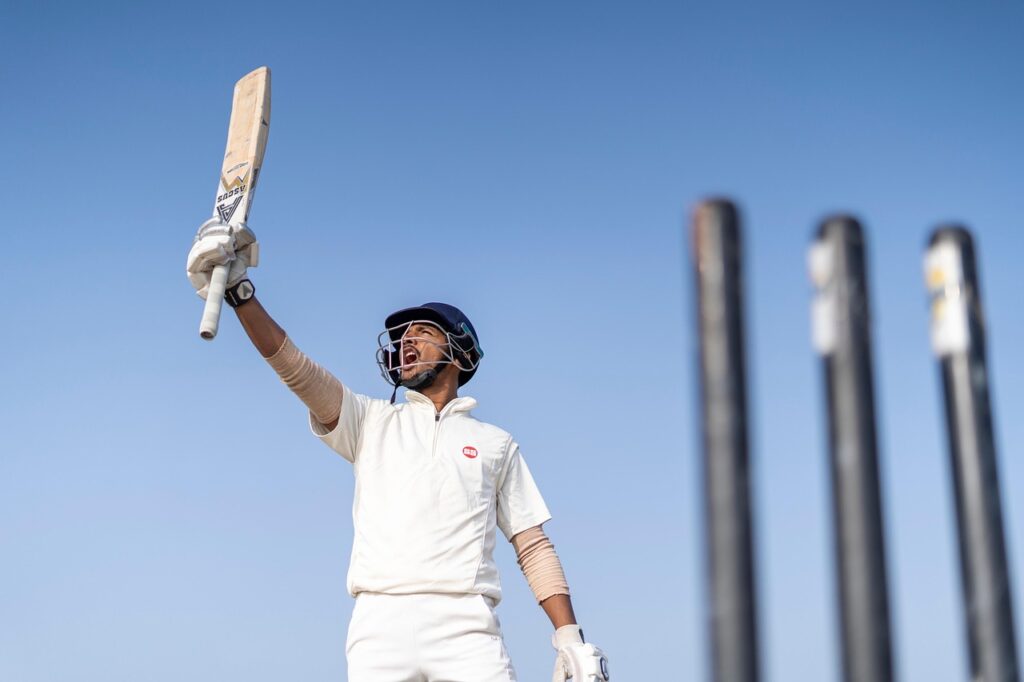

Former England captain Michael Vaughan has sparked a strategic debate ahead of the upcoming youth series between India and England by publicly highlighting a perceived weakness in Indian batting sensation Vaibhav Sooryavanshi. Speaking this week during a tactical preview, Vaughan urged Harry Brook and the England contingent to exploit the 13-year-old’s fielding stamina, suggesting that the youngster may struggle with the physical demands of long periods in the dirt. The critique centers on the notion that if Sooryavanshi is forced to field for extended durations, his primary skill—his record-breaking batting—could be compromised by fatigue when India chases or bats in the second innings.
The Meteoric Rise of a Teenage Phenomenon
Vaibhav Sooryavanshi has recently become one of the most talked-about names in global cricket, transcending the boundaries of age-group sports. At just 13 years old, the Bihar-born left-hander made history as the youngest player to debut in the Ranji Trophy, India’s premier first-class competition, in over several decades. His reputation reached a fever pitch during the recent Indian Premier League (IPL) auction, where he became the youngest player ever to be signed by a franchise, joining the Rajasthan Royals for a staggering sum that reflected his immense potential.
However, the transition from being a youth-level prodigy to facing international-caliber opposition brings a significant increase in physical intensity. While Sooryavanshi’s batting technique has been compared to seasoned veterans, the rigors of modern professional cricket demand elite athletic performance in all three facets of the game: batting, bowling, and fielding. Vaughan’s comments highlight a common hurdle for exceptionally young athletes who possess the skill but have yet to fully develop the physical frame required for the professional grind.
The Fatigue Factor: A Tactical Analysis
Michael Vaughan’s assessment focuses on the “cope with fielding” aspect, a term often used by analysts to describe a player’s ability to remain mentally sharp and physically explosive after hours of standing in the sun. Vaughan pointed out that if England manages to bat first and post a massive total, keeping Sooryavanshi on the field for 90 or more overs, the young opener might find his legs heavy and his concentration wavering when it is finally his turn to take the crease. “He might be tired if he bats second,” Vaughan noted, explicitly laying out a blueprint for Harry Brook’s side to follow.
This tactic is not new in the world of Test and first-class cricket. Teams often target specific fielders to run them ragged or place them in high-traffic positions like point or cover to drain their energy reserves. For a 13-year-old whose skeletal and muscular development is still ongoing, the metabolic cost of a full day’s play is significantly higher than that of a fully matured adult athlete. England appears poised to test whether the Indian coaching staff has adequately prepared their star pupil for these physiological challenges.
Expert Perspectives on Youth Development
Sports scientists and former cricketers have long debated the ethics and methods of fast-tracking pre-teenagers into the professional spotlight. Data from high-performance centers suggests that while hand-eye coordination often peaks early, aerobic capacity and muscular endurance continue to evolve well into the early twenties. “The challenge for someone like Sooryavanshi isn’t the first twenty overs; it’s the hundredth over of the day,” says one strength and conditioning expert. “Fielding is where the hidden fatigue of cricket lives, and it directly affects the central nervous system, which is vital for batting reaction times.”
In response to Vaughan’s comments, several Indian domestic coaches have defended the prodigy, noting his work ethic and the intensive training camps he has attended. However, they acknowledge that the step up to an international series against an aggressive England side is a different beast entirely. The spotlight on his fielding puts immense pressure on the Indian captain to hide him in “low-intensity” positions like fine leg or third man, a move that Vaughan suggests England should counteract by intentionally targeting those areas with the bat.
Implications for the Series and Player Longevity
The public nature of Vaughan’s critique serves as a psychological opening salvo in what promises to be a highly competitive series. For the Indian team management, this creates a conundrum: do they shield their young asset to preserve his batting, or do they push him to meet the standard, risking burnout or injury? If Sooryavanshi successfully navigates this challenge, it will silence critics and prove he belongs on the big stage. If he falters, it may lead to a more cautious approach regarding his future involvement in high-stakes matches until his physical conditioning catches up with his talent.
For the broader industry, this situation underscores the evolving nature of scouting. It is no longer enough to be a specialist; the modern game demands “3D players” who can contribute in every over of the match. As franchises and national teams continue to scout younger and younger talents, the focus on holistic physical literacy is becoming as important as the ability to hit a cover drive or bowl a googly.
Looking ahead, all eyes will be on the scorecard of the first match to see where Sooryavanshi is positioned in the field and how he reacts to long spells of defensive work. England’s coaching staff will likely be monitoring his movement efficiency and recovery times between overs. Whether the young star can turn this identified weakness into a point of strength will be the defining narrative of the series, potentially setting a new benchmark for how teenaged cricketers are integrated into the elite level.