




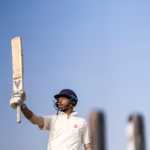
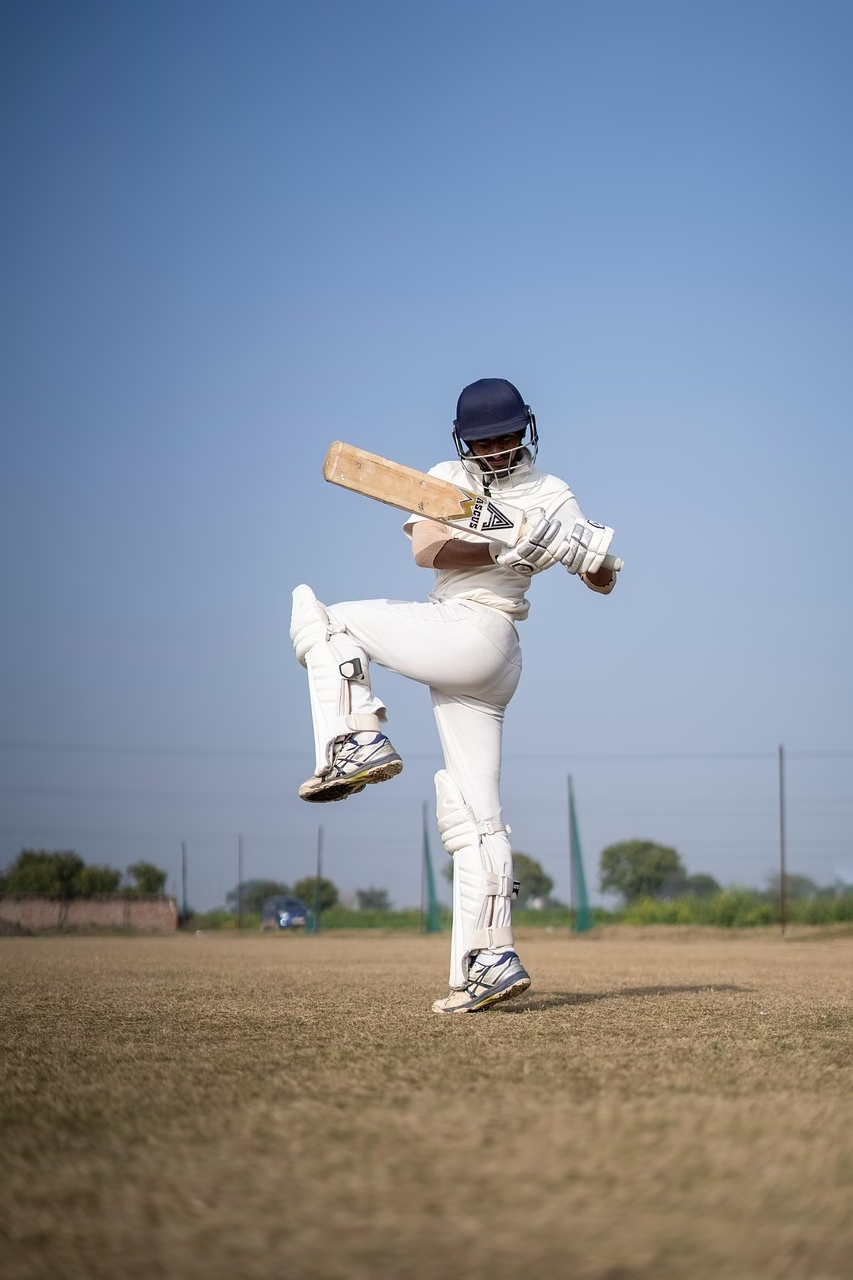
At just 15 years old, rising cricket prodigy Vaibhav Suryavanshi has captured the attention of the global sports community, drawing striking comparisons to a young Sachin Tendulkar after a series of record-breaking performances in domestic circuits. The Bihar-born batting sensation has rapidly ascended through the ranks of Indian youth cricket, signaling a potential shift in how the nation identifies and nurtures its future sporting icons.
The Context of Prodigy Culture
In the landscape of Indian cricket, the pressure to find the next “God of Cricket” has been a persistent theme since Tendulkar’s retirement in 2013. For decades, young players have struggled under the weight of expectations, often being labeled as the successor to legendary figures before their professional careers have fully matured.
Suryavanshi’s emergence arrives at a pivotal moment, as the Board of Control for Cricket in India (BCCI) continues to refine its talent scouting infrastructure. Analysts note that while the appetite for new stars remains insatiable, the modern support systems for teenage athletes are more robust, focusing on both technical skill development and psychological resilience.
Statistical Brilliance and Fan Energy
The numbers supporting Suryavanshi’s rapid rise are difficult to ignore. His aggressive batting style, combined with a maturity at the crease that defies his age, has drawn crowds to domestic matches typically reserved for senior-level fixtures.
Cricket statisticians have pointed to his strike rates and ability to convert starts into significant scores as indicators of elite potential. This high-octane performance mirrors the early trajectory of Tendulkar, who made his international debut at 16, yet Suryavanshi’s proponents argue his game is uniquely suited for the modern, fast-paced era of T20 and high-scoring domestic cricket.
Expert Perspectives on Development
Industry experts emphasize that the comparison to Tendulkar is both a blessing and a burden. Former coaches highlight that Suryavanshi’s greatest asset is his natural flair, which thrives in an environment that currently encourages bold, attacking stroke play.
However, sports psychologists warn that the social media age places unprecedented scrutiny on young talent. “The challenge for a 15-year-old is not just the physical game, but managing the identity crisis that comes with being a public figure before completing high school,” says sports analyst Ravi Kulkarni.
Industry Implications
For the cricket industry, Suryavanshi represents a shift in marketing and talent acquisition. Sponsors and scouts are increasingly looking for players who possess “marketable potential” early in their careers, potentially altering the traditional pathway from grassroots to international selection.
The BCCI’s focus on Under-19 programs has created a pipeline that allows players like Suryavanshi to gain high-level exposure much earlier than previous generations. This institutional support ensures that the transition to professional cricket is increasingly data-driven rather than purely anecdotal.
Looking Ahead
The immediate future for Suryavanshi will be defined by how he handles the transition from youth tournaments to senior domestic squads. Observers will be watching his performance in the upcoming Ranji Trophy cycles to see if his technique holds up against seasoned international bowlers.
The broader conversation now shifts to whether the cricket ecosystem can allow Suryavanshi to define his own legacy. As the sport evolves, the industry must decide if it will continue to look backward for comparisons or foster an environment where a new generation can establish its own distinct identity.