






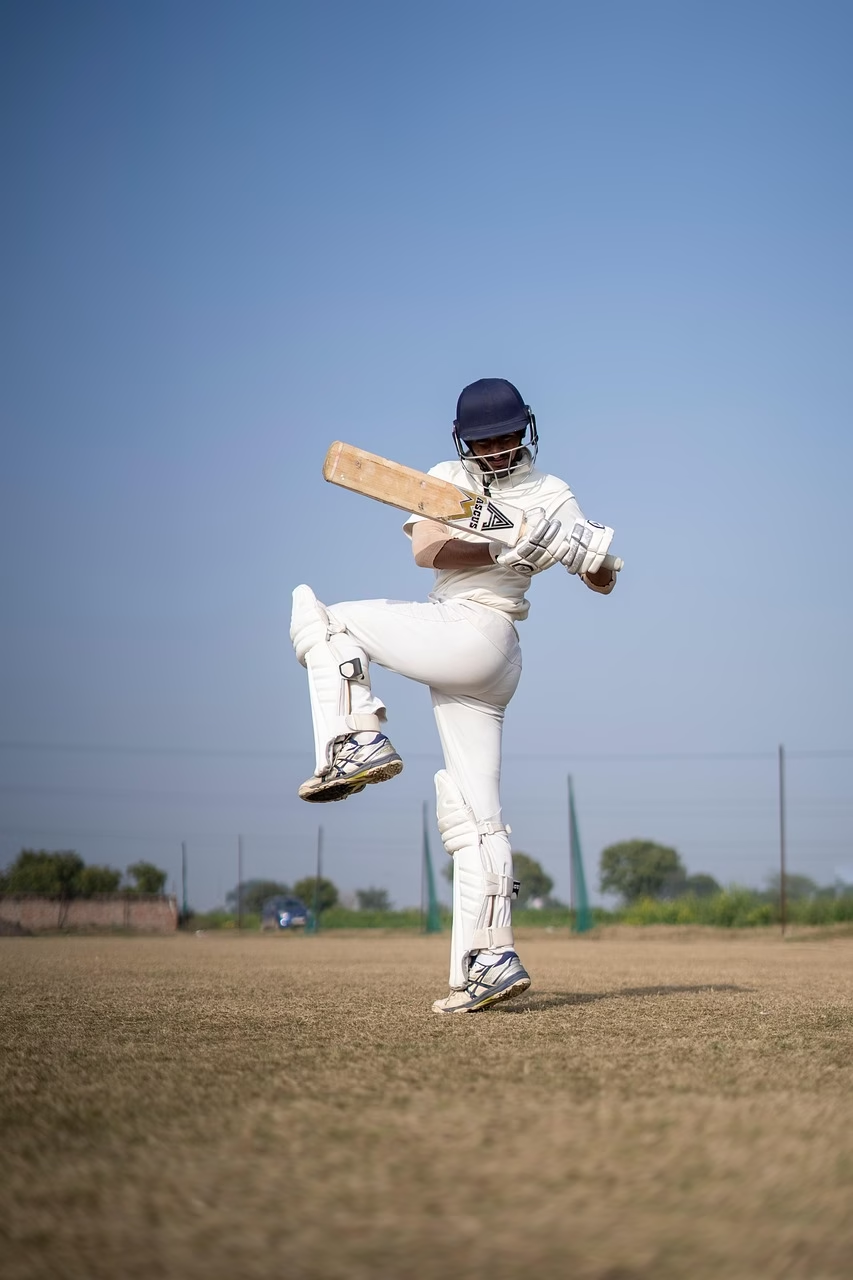
Former Indian international cricketer Vijay Shankar officially announced his retirement from all formats of the game this week, marking the end of a tumultuous yet storied career that spanned over a decade. In an exclusive interview following the announcement, the 33-year-old allrounder detailed his decision to step away, citing the persistent physical toll of injuries and a desire to transition toward new horizons in overseas T20 leagues.
The Weight of the 2019 World Cup
Shankar’s career remains indelibly linked to the 2019 ICC Cricket World Cup in England, where he was famously drafted into the squad as a ‘three-dimensional’ player. The label, coined by selectors to highlight his batting, bowling, and fielding capabilities, became a lightning rod for intense public scrutiny and online criticism.
Reflecting on the tournament, Shankar addressed the heartbreak of an injury that prematurely ended his campaign. He noted that while the pressure of the international stage was immense, the experience provided him with a profound sense of perspective that he carried throughout his domestic tenure.
Navigating Public Criticism and Expectations
The ‘3D player’ tag became a defining, albeit polarizing, aspect of his professional narrative. Shankar maintained that he viewed the label as a testament to his versatility rather than a burden, despite the frequent mockery he faced on social media platforms.
Sports psychologists often point to the mental fatigue associated with such high-profile public labeling. According to data from player support programs, athletes categorized by specific roles often face higher rates of scrutiny when performance fluctuates, a reality Shankar navigated with stoic professionalism.
A Commitment to Continued Competition
Despite hanging up his boots for India, Shankar confirmed he is not finished with cricket entirely. He expressed an active interest in participating in various overseas T20 leagues, where he hopes to contribute his experience to younger teams.
His transition reflects a broader trend among Indian cricketers who are increasingly looking toward global franchises to extend their careers. This shift allows veterans to maintain their fitness and competitive edge outside the rigid structure of the Board of Control for Cricket in India (BCCI) retirement policies.
Looking Ahead: The Future of All-rounders
The retirement of a player like Shankar highlights the ongoing challenge of developing multi-skilled cricketers in the modern era. Analysts suggest that the demand for players who can contribute in every facet of the game remains at an all-time high, yet the physical demands required to sustain that level of output often lead to shorter, more injury-prone careers.
Observers should watch how the BCCI and domestic coaching programs adapt to manage the workload of young allrounders to prevent similar burnout. For Shankar, the next chapter involves mentorship and specialized T20 play, signaling that while his international journey has concluded, his influence on the game’s tactical landscape may continue to evolve.


