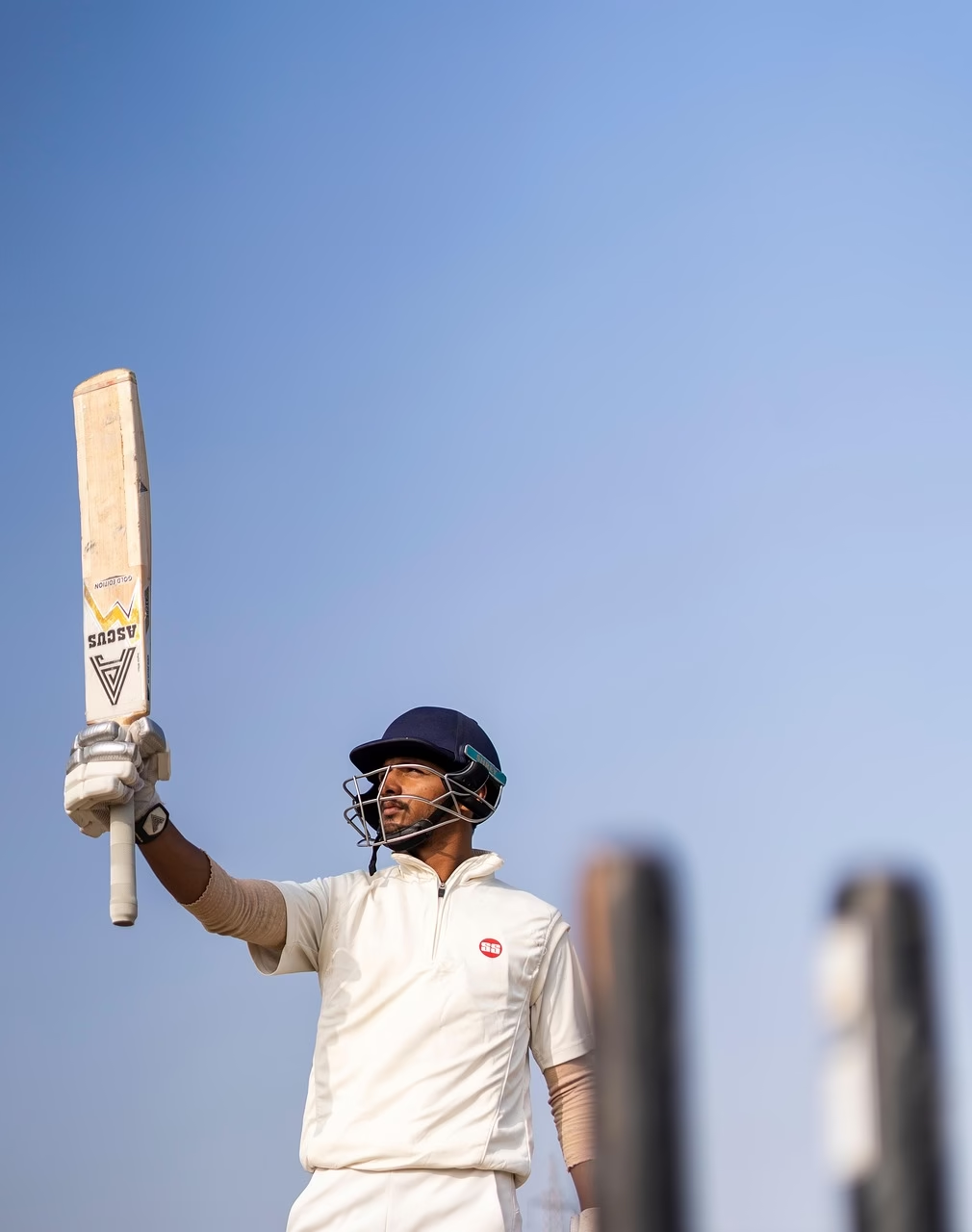










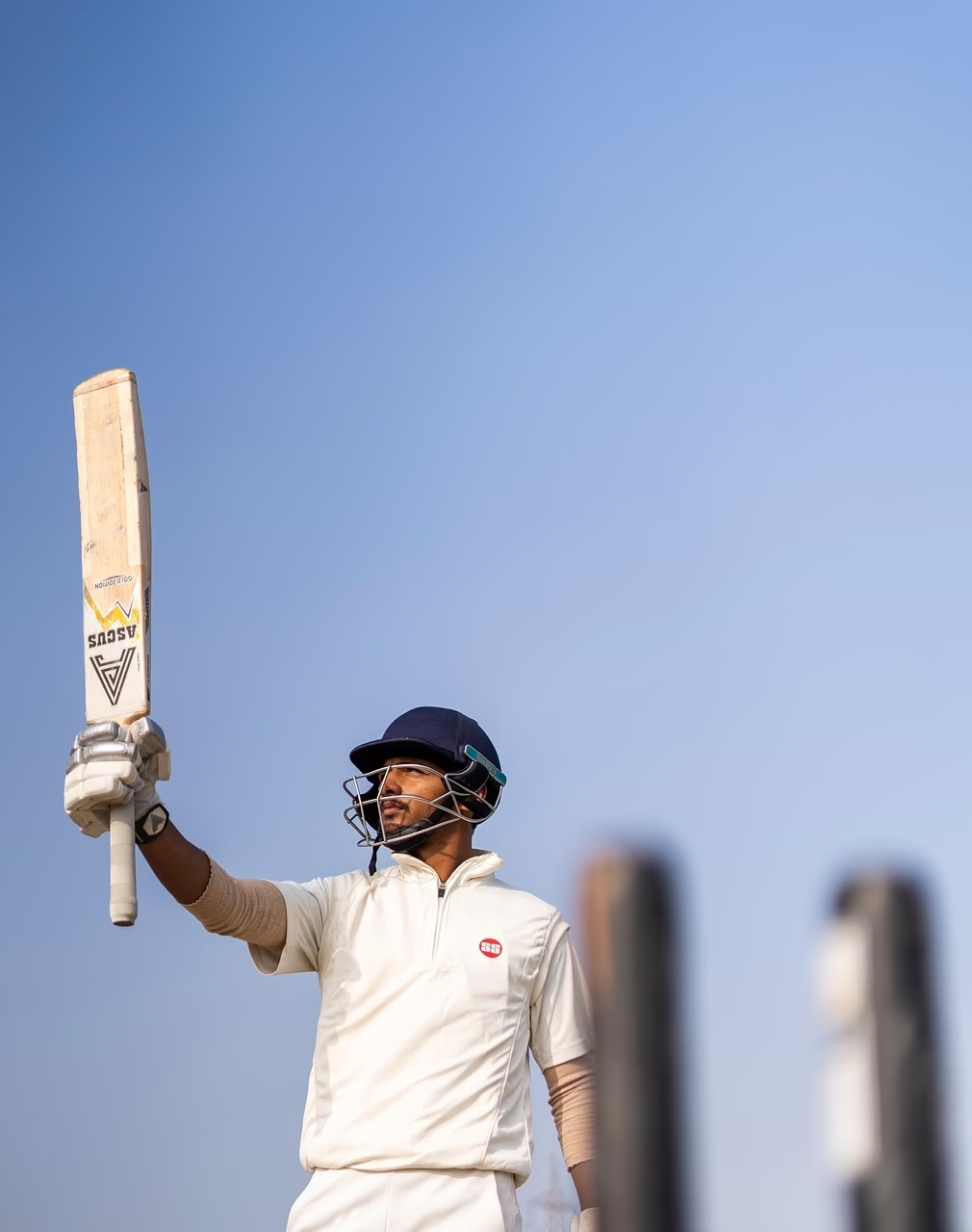
New Zealand batting icon Kane Williamson announced his retirement from international cricket this week, marking the end of a decorated 15-year tenure that established him as one of the sport’s greatest modern players. The 35-year-old, who served as a long-time captain for the Black Caps, departs as the nation’s all-time leading run-scorer across all formats, having amassed more than 19,000 international runs.
A Legacy of Consistency and Leadership
Williamson’s career is defined by extraordinary consistency and a technical proficiency that earned him a spot among the ‘Fab Four’ of world cricket. Since his debut in 2010, he has been the bedrock of the New Zealand batting lineup, anchoring the team through their most successful era in history.
His leadership was instrumental in New Zealand’s victory at the inaugural ICC World Test Championship in 2021. Under his guidance, the team consistently punched above its weight, reaching multiple white-ball World Cup finals and maintaining high rankings across all three formats.
The Decision to Step Away
In his official retirement address, Williamson cited the need to prioritize his young family after over a decade of high-pressure professional life. He described the decision as a natural progression, noting that the timing felt appropriate to move on from the rigors of international touring.
“The time was right to step away,” Williamson stated. He emphasized his ongoing commitment to New Zealand cricket, expressing his intention to support the team’s future endeavors from the sidelines as they transition into a new era.
Statistical Dominance and Global Impact
Statistically, Williamson’s impact is unparalleled in New Zealand’s history. With over 19,000 runs to his name, he holds the record for the most Test centuries by a New Zealander, a testament to his longevity and ability to perform in varying conditions globally.
Cricket analysts frequently point to his temperament as his greatest asset. Former players have noted that his calm demeanor under pressure allowed him to navigate difficult pitches and high-stakes match situations that often overwhelmed his contemporaries.
Industry Implications and Future Transitions
The retirement of a player of Williamson’s caliber leaves a significant void in the Black Caps’ middle order. For New Zealand Cricket, the immediate challenge lies in fostering the next generation of talent capable of filling the tactical and scoring gap left by his departure.
As the team looks ahead, the focus shifts to the upcoming ICC cycles and the development of emerging batters. Observers will be watching closely to see how the team’s leadership structure evolves without Williamson’s steady hand, particularly during challenging away series in the coming years.
The sport now awaits to see if Williamson will pursue opportunities in global T20 leagues or transition into coaching roles. Regardless of his next step, his influence on the tactical evolution of the game is expected to remain a subject of study for years to come.