
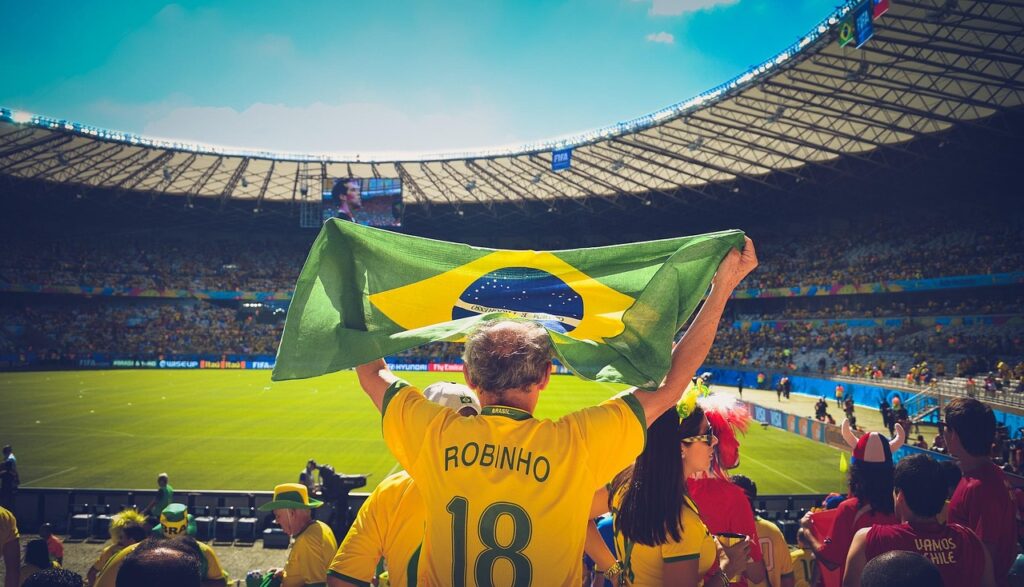

The 2026 FIFA World Cup will bring 48 national teams to 16 host cities across Canada, Mexico, and the United States from June 11 to July 19, 2026, marking the largest and most geographically expansive tournament in the history of international soccer. FOX Sports will serve as the exclusive English-language broadcast home in the United States, airing all 104 matches live as the tournament transitions to a massive new format. The event will culminate in a global final held at the New York New Jersey Stadium in East Rutherford, New Jersey, on July 19.
A Historic Expansion to 48 Teams
The 2026 iteration represents a significant departure from the traditional 32-team format that has defined the World Cup since 1998. By increasing the field to 48 nations, FIFA aims to provide greater representation for emerging soccer regions in Asia, Africa, and North America. This expansion necessitates a total of 104 matches, up from the 64 games played during the 2022 tournament in Qatar.
This “United” bid is the first time three nations have shared hosting duties for a single World Cup. While the United States will host the majority of the knockout stage matches, Mexico makes history as the first country to host or co-host the tournament three times. Canada enters the fold as a first-time host, leveraging major venues in Toronto and Vancouver to accommodate the influx of global fans.
Comprehensive Broadcast and Streaming Coverage
For fans in the United States, FOX Sports has secured the rights to deliver every minute of the action. The network plans to distribute the 104-match schedule across its primary FOX broadcast channel and FS1. This multi-platform approach ensures that even with overlapping kick-off times during the group stage, viewers will have access to every fixture.
Digital accessibility remains a priority for the 2026 cycle. Every match will stream live and be available on-demand through the FOX One and FOX Sports apps. This digital-first strategy caters to a growing demographic of cord-cutters and mobile viewers who expect high-definition access to live sports regardless of their location.
Industry analysts suggest that the broadcasting logistics for 2026 will be among the most complex in sports history. With three time zones and 16 different stadiums involved, the coordination of satellite feeds and remote production teams will require unprecedented technical infrastructure from FOX and its partners.
The Road to the Final: Key Dates and Venues
The tournament officially kicks off on June 11, 2026, with the opening match expected to feature the Mexican national team at the historic Estadio Azteca. The group stage will run through June 27, featuring a dense schedule of matches as 12 groups of four teams compete for advancement. This phase will be critical for determining the seeding in the newly introduced Round of 32.
The knockout stage begins on June 28, introducing an extra round of elimination compared to previous years. This high-stakes period will continue through the Round of 16 (July 4–7), the Quarterfinals (July 9–11), and the Semifinals (July 14–15). The increased number of knockout games is expected to drive record-breaking viewership and ticket sales across the North American continent.
The selection of the New York New Jersey Stadium for the final on July 19 underscores the significance of the New York metropolitan market. As one of the world’s most recognizable sports stages, the venue is undergoing preparations to meet FIFA’s stringent requirements for pitch quality and media facilities. The final is projected to reach a global audience of over one billion people.
Expert Perspectives on Logistics and Impact
Logistics experts point to the 16-city layout as both a challenge and an opportunity. The host cities include Vancouver and Toronto in Canada; Mexico City, Monterrey, and Guadalajara in Mexico; and 11 cities across the U.S., including Seattle, Los Angeles, Houston, and Miami. Travel management for teams and fans will be a primary focus for the FIFA Organizing Committee.
Data from previous tournaments suggests that the expanded format could generate upwards of $11 billion in revenue for FIFA. For the host nations, the economic impact is projected to be in the billions, driven by tourism, hospitality, and infrastructure investments. Cities like Atlanta and Dallas are already preparing for the massive influx of international visitors by upgrading public transit and fan zone areas.
From a sporting perspective, the 48-team field is expected to invite more “Cinderella stories.” With more spots available, nations that have historically struggled to qualify will have a realistic path to the world stage. This change is designed to spark domestic interest in soccer within those countries, further globalizing the sport’s reach.
Implications for the Sports Industry
The 2026 FIFA World Cup is set to be a watershed moment for soccer in North America. The sheer scale of the event will likely accelerate the growth of Major League Soccer (MLS) and the Canadian Premier League, as well as grassroots participation in the United States and Canada. For advertisers, the 104-match schedule provides a massive inventory of high-value airtime during the summer months.
As the tournament draws closer, fans should watch for the announcement of specific group assignments and the release of individual ticket sales phases. The integration of advanced broadcast technologies, such as 4K HDR and augmented reality stats, will also be key areas of development as FOX Sports prepares to showcase the beautiful game to a record-breaking audience.