
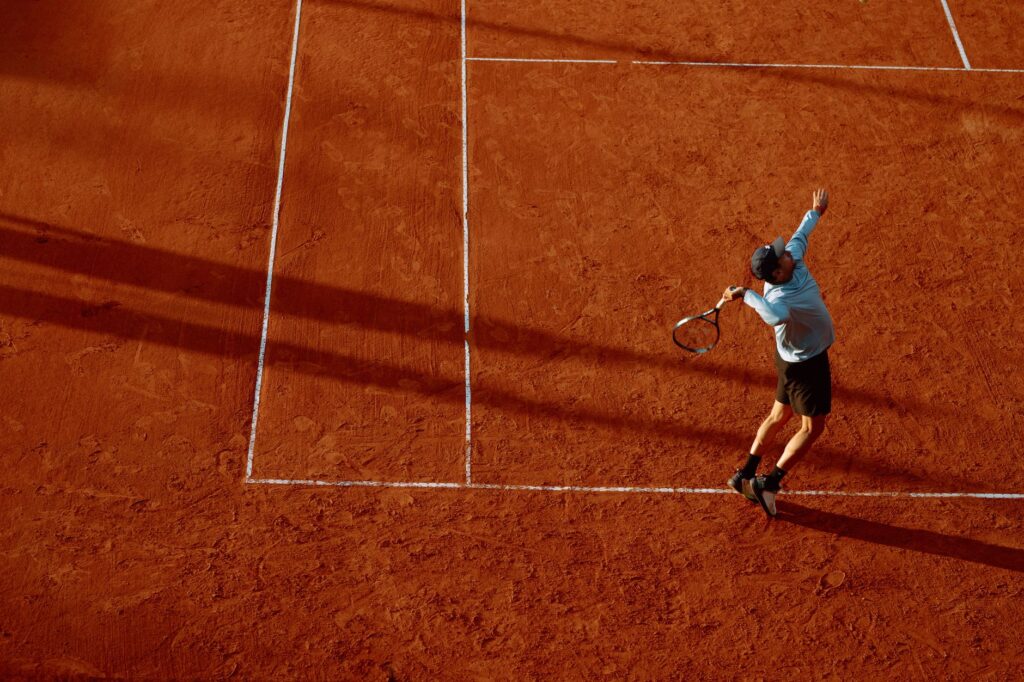

Australian tennis star Nick Kyrgios secured his first-ever Grand Slam semifinal berth at Wimbledon on Wednesday, defeating Chile’s Cristian Garin in straight sets. The victory set up a high-stakes showdown against Rafael Nadal, while simultaneously reigniting a fierce global debate over whether the polarizing player’s volatile behavior is a boon or a curse for the sport of tennis.
The Rise of a Polarizing Talent
At 27 years old, Kyrgios has long been recognized as one of the most naturally gifted players of his generation. He first captured global attention at just 19 years old when he defeated Rafael Nadal at Wimbledon in 2014. Despite this early promise, his career has been defined by inconsistency, a restricted playing schedule, and a current world ranking of No. 40.
Rather than conforming to the traditional etiquette of the sport, Kyrgios has carved out a reputation as a self-styled disruptor. He frequently plays a limited schedule, preferring to spend more time in his native Australia than traveling the global tour. This unorthodox approach to his professional career has kept fans and analysts divided for nearly a decade.
A Trail of Controversy in London
Kyrgios’s run to the final four of the tournament has been anything but quiet. During his first-round match, the Australian was fined $10,000 for spitting in the direction of a heckling spectator. Following a high-tension, fourth-round victory over Brandon Nakashima, Kyrgios dismissed critics of his behavior by asserting that “all publicity is good publicity.”
His antics on the court have targeted almost everyone within earshot. Line judges, chair umpires, ball kids, and even his own player’s box have faced his verbal outbursts. Opponents must also navigate a barrage of mind games, including underarm serves, theatrical bows to the crowd, and constant chatter.
Adding gravity to his on-court behavior, news emerged during the tournament that Kyrgios faces legal charges in Australia. The allegations involve an assault claim made by a former girlfriend, with a court date scheduled for next month. The revelation has added a somber layer of scrutiny to his performance on the court.
The Entertainment Value vs. Sportsmanship Debate
For a sport seeking to capture younger and more mainstream audiences, particularly in the United States, Kyrgios provides undeniable entertainment. His matches are highly theatrical, featuring electrifying drop shots, 140-mph serves, and unpredictable tactical shifts. During his third-round match, he successfully employed “rope-a-dope” tactics, feigning injury before surging back to defeat Nakashima in five sets.
This dramatic style contrasts sharply with the decorum of the modern men’s game. For the past two decades, men’s tennis has been dominated by Roger Federer, Rafael Nadal, and Novak Djokovic. While these champions are widely celebrated as perfect ambassadors for the sport, they rarely generate the raw, unpredictable emotional responses that Kyrgios coaxes from a crowd.
However, many tennis purists and former players argue that his behavior crosses the line into disrespect. Former Wimbledon champion Pat Cash expressed deep concern during a recent BBC broadcast. Cash accused Kyrgios of bringing the game to its “lowest level” through manipulation, abuse, and aggressive behavior toward officials, calling the spectacle an “absolute circus.”
Opponents have also voiced their frustration. After a heated second-round match, world No. 5 Stefanos Tsitsipas remarked that Kyrgios possesses an “evil side” on the court. Kyrgios has remained indifferent to the criticism, stating he is happy that his success frustrates his detractors.
What to Watch Next
The immediate focus shifts to Friday’s semifinal, where Kyrgios will face his ultimate test against Rafael Nadal. The match promises to be one of the most watched sporting events of the summer, showcasing a clash of styles, temperaments, and philosophies. Beyond the immediate results on the grass courts of London, tennis governing bodies face a looming decision on how to manage players who test the limits of sportsmanship.
If Kyrgios continues his winning streak, the ATP and Grand Slam administrators may have to re-evaluate their code of conduct policies. The sport must decide whether to crack down on behavioral infractions or embrace the high-ratings drama that Kyrgios brings to the screen. Observers will also be watching how his upcoming legal proceedings in Australia impact his standing on the international tour later this year.