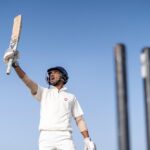


On Monday night at Citizens Bank Park in Philadelphia, St. Louis Cardinals outfielder Jordan Walker made franchise history by defeating hometown favorite Kyle Schwarber 12-11 in the final round of the 2026 MLB Home Run Derby. Walker overcame a hostile, booing crowd of 43,000 Phillies fans and a sluggish start to secure his first Derby title under Major League Baseball’s newly introduced swing-based format. The victory marked a historic milestone for the Cardinals organization, which had never previously produced a Home Run Derby champion.
A New Era for the Derby
This year’s event introduced a major structural overhaul, replacing the fast-paced timed format that had been in place since 2015. Under the new rules, MLB eliminated the countdown clock and the traditional bonus round in favor of a strictly swing-based system. Batters received 20 swings in the first round and 15 swings in both the semifinals and final rounds.
The new rules also featured a unique preservation clause: if a player hit a home run on their final swing of a round, they could keep swinging until they failed to clear the wall. This format shift drastically altered the pacing of the event. Players no longer rushed their swings, choosing instead to take pitches from their throwing partners until they found the perfect ball to drive.
Walker Spoils the Philadelphia Fairytale
The final round set up a classic David-versus-Goliath narrative as Walker faced off against Schwarber, one of the game’s most renowned power hitters. Schwarber, buoyed by the raucous home crowd and surrounded by cheering Phillies teammates like Bryce Harper and Brandon Marsh, put on a show by launching 11 home runs. At one point, Schwarber was so confident he began walking toward first base after his tenth blast before returning to finish his swings.
Walker started his final round slowly, but quickly found his rhythm to launch five consecutive home runs, tying Schwarber at 11. On his final swing, the 23-year-old Cardinals star drove a pitch deep into the left-field seats to secure his 12th home run and the title. He accomplished the feat despite relentless boos from the Philadelphia faithful, a challenge he embraced as preparation for future high-stakes environments.
“My goal is to win a World Series,” Walker said during his post-victory press conference, wearing a backwards Cardinals hat. “I feel like it’s going to happen then too. So I’m going to face it at some point in my life. I think I’d rather face it now.”
Hometown Heroes Clash in the First Round
The first round of the tournament provided immediate drama as Phillies teammates Schwarber and Harper battled for the final spot in the semifinals. With Boston’s Willson Contreras, Tampa Bay’s Junior Caminero, and Walker already securing three of the four advancing spots, the two local icons faced a direct elimination matchup. Schwarber struggled early, starting 0-for-5, before rallying to hit 10 home runs on his final 14 swings.
The pressure then shifted to Harper, who needed 11 home runs to surpass his teammate. Despite massive support from the home crowd, Harper fell short, finishing with eight home runs and exiting the tournament early. The outcome served as a friendly reversal of the 2018 Derby, where Harper had defeated Schwarber in the finals.
Meanwhile, New York Yankees rookie Ben Rice struggled to find his footing in his Derby debut. Rice managed only seven home runs, the lowest total of the night, though he expressed appreciation for the intense atmosphere and the loud boos he received from the rival Philadelphia crowd during player introductions.
Strategic Adjustments and Analytical Shifts
The removal of the pitch clock allowed players to be far more selective, introducing a new level of game theory to the event. Willson Contreras took full advantage of the rule change in the first round, taking four consecutive pitches before his final swing. While the crowd booed the delay, the strategic patience allowed Contreras to maximize his energy and finish the round with 13 home runs.
Walker also attributed his success to a highly controlled, relaxed approach rather than relying purely on maximum effort. “The homers that I hit, I’m more easy. I’m not forcing it,” Walker explained. “When I do, I start missing the ball. So in a Home Run Derby, it’s a different approach. I wanted to swing easy, and see what happens.”
Implications for the League
Moving forward, MLB executives will closely analyze fan engagement and television ratings to determine if the swing-based format will remain a permanent fixture. While the lack of a clock reduced the frantic energy of previous years, it successfully shifted the focus back to pure hitting mechanics and pitcher-batter chemistry. For Walker, this landmark victory establishes him as one of the premier young power hitters in the league, potentially serving as a catalyst for a dominant second half of the season with the Cardinals.