

The governing bodies of international association football frequently encounter intense scrutiny regarding officiating decisions, match integrity, and the consistent application of tournament rules. However, rare instances elevate ordinary sporting debates into profound institutional crises that capture the attention of leagues, clubs, and administrators worldwide. A recent high-profile occurrence during a major global tournament has reignited fierce discussions surrounding referee protocols, VAR intervention standards, and the overall governance of the sport at its highest competitive levels.
Introduction to the Controversy
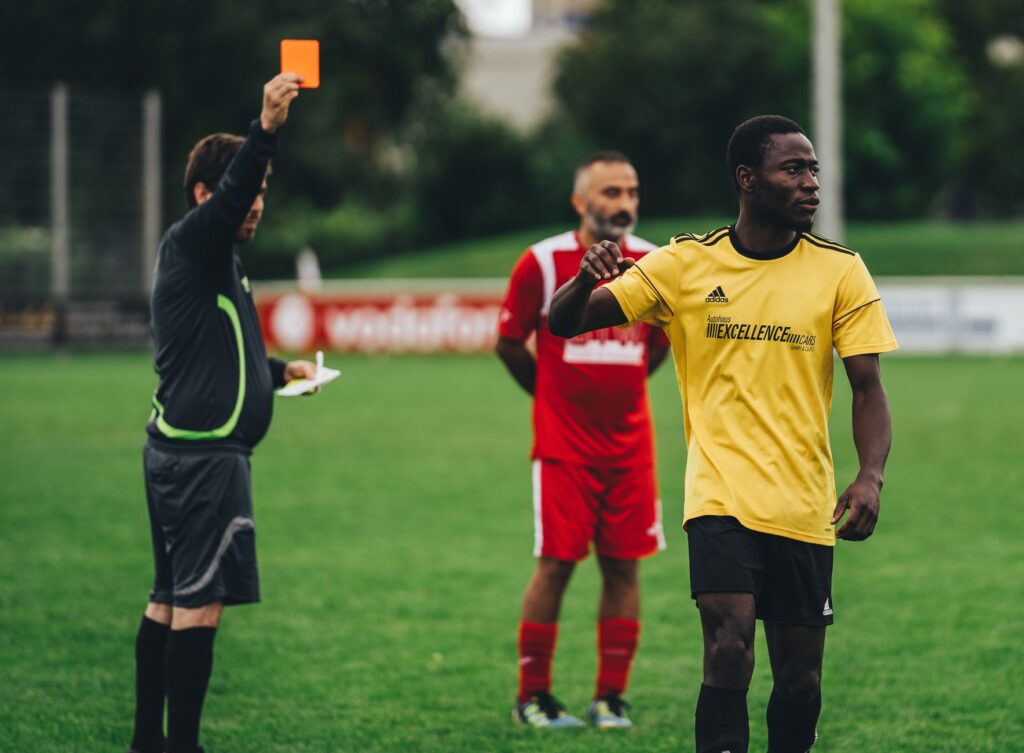
The central figure in this unfolding administrative dispute is professional forward Folarin Balogun, whose participation in a high-stakes World Cup fixture resulted in a disciplinary decision that quickly escalated beyond a routine match review. During the intense encounter, an initial disciplinary ruling by the on-field match officials was subsequently overturned following intervention. This dramatic reversal altered the dynamic of the tournament and triggered a cascade of reactions from prominent football executives who closely monitor the regulatory health of the game.
While matches routinely feature contentious moments, yellow cards, and direct dismissals that draw post-match analysis, the manner in which this specific ruling was handled proved deeply troubling to veteran administrators. The core of the frustration stems not merely from the individual player’s involvement or the specific tactical consequences for the competing national team, but rather from the perceived breakdown in standard refereeing protocols. Observers within elite European club competitions have expressed profound anxiety that procedural inconsistencies on the global stage undermine the credibility of officiating across all domestic leagues.
Perspective from Spanish Football Leadership
The most forceful critique of the incident emerged from the leadership of the Spanish top-tier league. In a striking assessment that immediately reverberated across international sports media, the president of LaLiga characterized the overturned red card involving Folarin Balogun as the single most serious incident in the entire history of football. Such hyperbolic yet deliberate language underscores the depth of institutional dissatisfaction with how major tournament decisions are managed, communicated, and adjudicated under modern pressure.
According to the leadership perspective voiced within Spanish football administration, the integrity of competitive matches relies entirely on absolute transparency and adherence to established regulatory frameworks. When high-profile decisions are modified under circumstances that lack clear public justification or standard procedural consistency, the foundation of trust between governing bodies, participating teams, and global audiences is severely damaged. The stark assessment delivered by the LaLiga executive highlights a growing sentiment among domestic league leaders who feel alienated by the decision-making processes of international tournament organizers.
Broader Implications for Video Assistant Referee Protocols
At the heart of the debate lies the ongoing evolution and utilization of video assistant referee technology in international football. Introduced to eliminate clear and obvious errors, the system has increasingly become a focal point of intense controversy when applied inconsistently during marquee fixtures. The Folarin Balogun red card review has served as a powerful catalyst for renewed demands to reform how video reviews are requested, conducted, and finalized.
Critics argue that the line between rightful intervention and unwarranted interference has become blurred, leading to confusion among players, managers, and supporters alike. When a major disciplinary action is reversed after lengthy deliberation, questions inevitably arise regarding the pressure exerted on match officials and the independence of their judgment. Industry experts suggest that unless international governing bodies establish clearer, more rigorous guidelines for technology usage, similar controversies will continue to threaten the stability of major sporting events.
Reactions from the Global Football Community
The fallout from the incident extends far beyond the immediate participants of the World Cup match, prompting widespread debate among pundits, former players, and legal experts in sports governance. Many former referees have weighed in on the procedural aspects of the review, noting that while the technology exists to correct mistakes, the human element of interpretation must remain protected against external influence.
Moreover, national federations are increasingly voicing concerns over the long-term impact of such high-profile controversies on the sport’s global brand. Football relies heavily on the universal acceptance of its rules to maintain fair competition across diverse cultures and competitive tiers. When a decision involving a prominent talent like Folarin Balogun is labeled a historic crisis by top-tier executives, it signals an urgent need for constructive dialogue between league operators and international administrators.
Path Forward for Tournament Governance
As the dust settles on the immediate aftermath of the tournament, attention has shifted toward potential reforms designed to prevent future institutional friction. Stakeholders across the sport are calling for greater accountability, improved communication channels between match officials and regulatory boards, and comprehensive reviews of the protocols governing disciplinary reversals.
The challenge facing international football authorities is balancing the rapid pace of modern competition with the meticulous care required to maintain fair play. Whether the stark warnings issued by figures such as the LaLiga president will result in meaningful structural change remains to be seen. However, the intense scrutiny surrounding the Folarin Balogun red card incident has permanently altered the conversation regarding transparency, accountability, and the future governance of the beautiful game.