
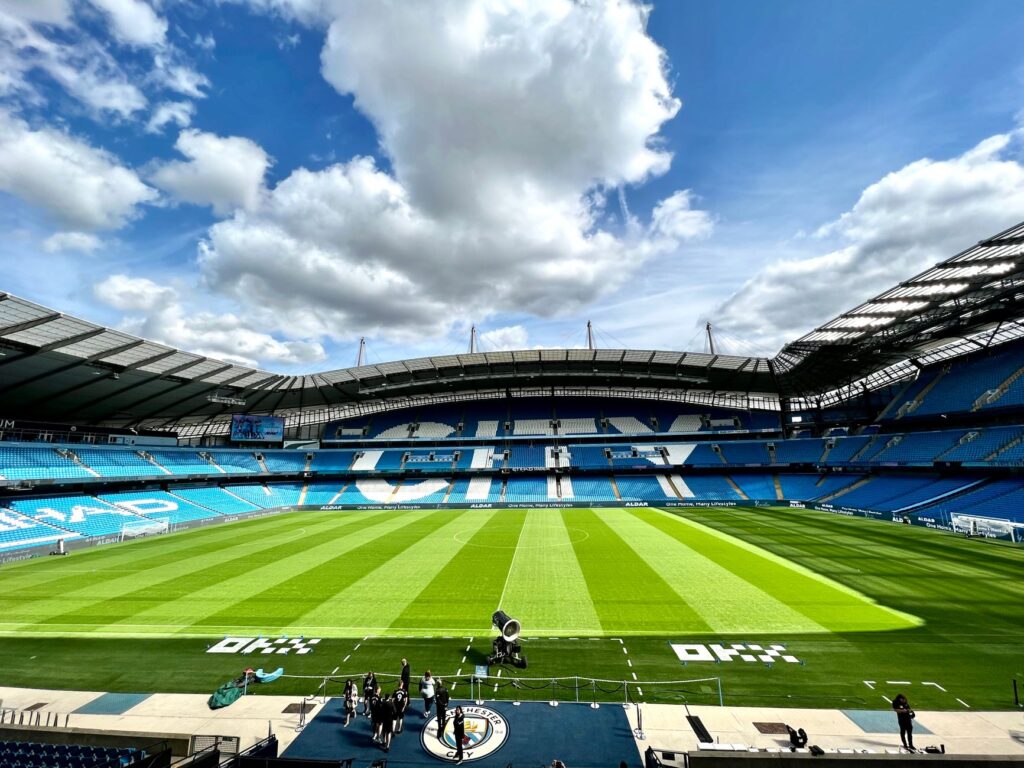

The football world continually monitors disciplinary proceedings involving elite clubs, yet few scenarios carry the sheer disruptive weight of potential sanctions facing reigning English champions Manchester City. Should regulatory bodies impose a penalty as severe as relegation from the Premier League, the shockwaves would immediately alter the global sports economy. Financial analysts and sports economists project that more than $1.3 billion worth of world-class talent could suddenly flood the transfer market, fundamentally shifting the balance of power across European football.
Understanding the Financial Scale
To comprehend the magnitude of such an event, one must evaluate the extraordinary market valuation locked inside the current Manchester City squad. The cumulative worth of these athletes exceeds $1.3 billion, representing years of strategic investment, elite scouting, and managerial development. A compulsory drop down the football pyramid would create an unprecedented contractual and financial crisis. Elite professionals compete at the highest level to contest major continental honors and secure domestic glory. Consequently, relegation clauses would inevitably trigger, allowing numerous star players to seek immediate departures to safeguard their international careers and competitive ambitions.
Immediate Consequences for Elite Clubs
The sudden availability of premier global talent would trigger an unprecedented feeding frenzy among elite European competitors. Wealthy continental giants and rival domestic clubs that usually navigate strict financial regulations would suddenly find themselves presented with generational acquisition opportunities. Players who are ordinarily untouchable due to exorbitant valuations and long-term contracts would become attainable. However, this sudden influx would not benefit everyone equally. Only a select group of clubs possess the necessary wage capacity and financial liquidity to absorb these massive salaries on short notice, potentially widening the competitive gap rather than closing it.
Distortion of Global Transfer Valuations
Standard economic principles of supply and demand suggest that a sudden surplus of elite talent should drive market prices downward. Yet, the reality of a Manchester City exodus would likely warp valuations in unpredictable ways. Because buying clubs would recognize the desperate circumstances surrounding the selling club, they might attempt to depress transfer fees. Conversely, intense bidding wars between multiple wealthy suitors could drive wages to historic highs. The cascading effect would be felt globally, as mid-tier clubs seeking replacements for players signed by the newly empowered elite would scramble to adjust their own recruitment strategies.
Contractual Complexities and Legal Hurdles
Managing an exodus of this scale involves intricate legal and regulatory challenges. Player contracts frequently contain bespoke clauses tied to divisional status, international qualification, and performance metrics. Resolving these disputes through sports arbitration bodies would consume months, creating prolonged uncertainty for both the club and prospective buyers. The sheer volume of high-profile negotiations would overwhelm sports legal professionals and administrative departments alike.
Broader Economic Aftermath
Beyond immediate player acquisitions, the wider football ecosystem would experience collateral economic effects. Broadcasters, commercial sponsors, and ticket holders would re-evaluate their financial commitments to the club following a demotion. Meanwhile, smaller clubs that traditionally rely on selling players to the domestic middle class would face altered market dynamics. The entire financial hierarchy of European football stands to be recalibrated if the reigning champions are forced to liquidate their multimillion-dollar roster.
Conclusion
Ultimately, the prospect of a mass player exodus from Manchester City serves as a stark reminder of the fragile financial interdependence within modern sports. While regulatory enforcement remains necessary to maintain sporting integrity, the secondary market consequences of penalizing a financial superpower are vast and unpredictable. Should the unthinkable happen, the global transfer market will experience a seismic shift unlike anything witnessed in football history.