




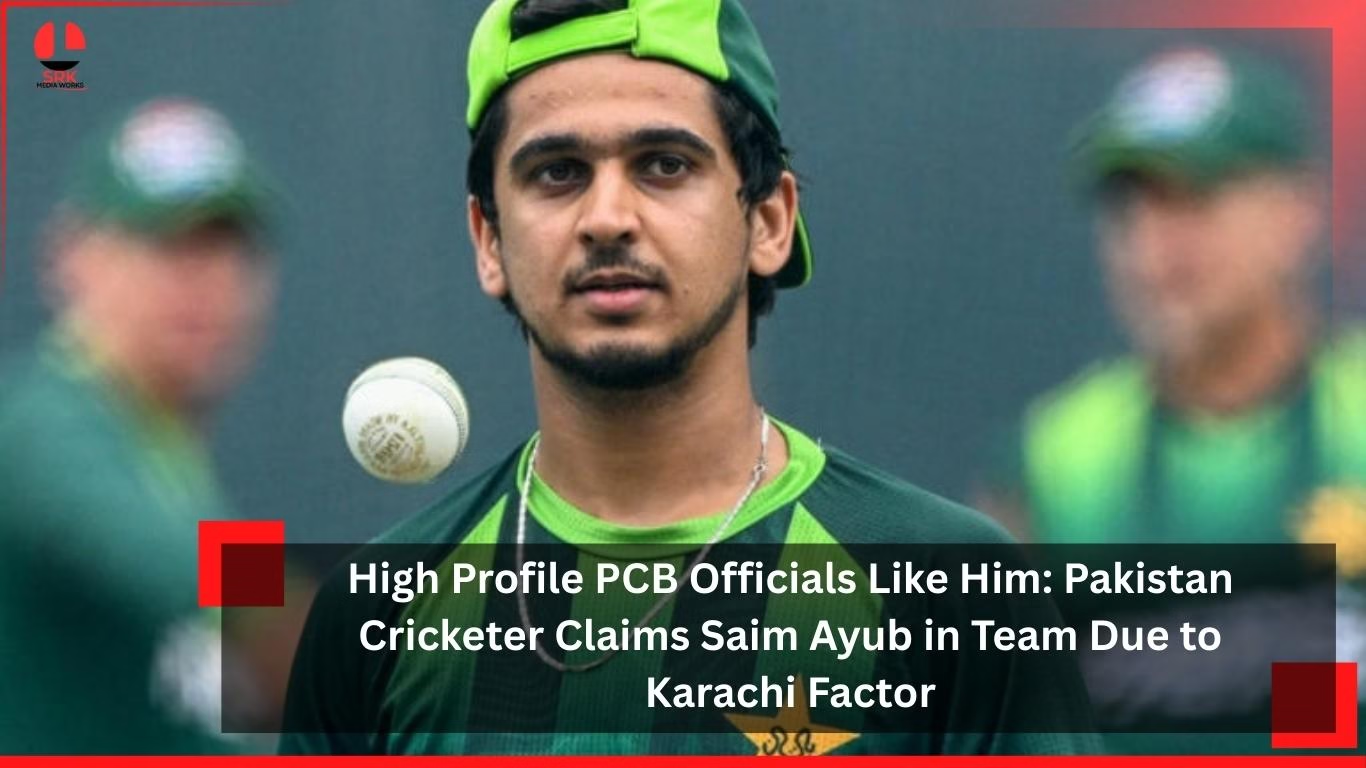
A fresh controversy has emerged in Pakistan cricket after a former player claimed that young batting talent Saim Ayub’s inclusion in the national team was influenced by the “Karachi factor” and the support of high-profile officials within the Pakistan Cricket Board (PCB). The remarks have sparked debate about regional favoritism, merit-based selection, and the politics surrounding cricket in Pakistan.
The Claim
According to the cricketer’s statement, Saim Ayub’s rise in the national squad was not solely based on performance but also on backing from influential PCB officials who favored him due to his Karachi roots. While Saim has shown flashes of brilliance in domestic and international cricket, the allegation has reignited discussions about whether regional affiliations play a role in team selection.
Background: Saim Ayub’s Career
Saim Ayub, a stylish left-handed batter, has been touted as one of Pakistan’s brightest young prospects. His aggressive stroke play and ability to adapt across formats have earned him recognition. However, like many young players, his consistency has been questioned.
Key Highlights:
- Domestic Success: Strong performances in Pakistan Super League (PSL).
- International Exposure: Selected for T20Is and ODIs.
- Playing Style: Aggressive batting, often compared to modern-day power hitters.
- Controversy: Allegations of favoritism due to Karachi connections.
Comparative Analysis of Regional Representation in Pakistan Cricket
| Region | Notable Players | Influence in PCB | Perception |
|---|---|---|---|
| Karachi | Saim Ayub, Sarfaraz Ahmed | Strong backing | Seen as favored |
| Lahore | Babar Azam, Shaheen Afridi | Central influence | Considered merit-based |
| Peshawar | Fakhar Zaman, Yasir Shah | Moderate | Often underrepresented |
| Multan | Shan Masood, Sohaib Maqsood | Limited | Struggle for recognition |
This comparison shows how regional dynamics often shape perceptions of favoritism in Pakistan cricket.
Pivot Analysis: Impact of the Allegation
| Stakeholder | Immediate Impact | Long-Term Outcome |
|---|---|---|
| Saim Ayub | Increased scrutiny | Pressure to prove merit |
| PCB Officials | Public criticism | Calls for transparency |
| Fans | Divided opinions | Demand for merit-based selection |
| Team Management | Distraction | Need to reinforce credibility |
| Pakistan Cricket | Negative publicity | Push for reforms in selection process |
Political Significance in Cricket
Cricket in Pakistan has often been intertwined with regional politics. Allegations of favoritism are not new, with players from Karachi, Lahore, and other regions frequently claiming bias in selection. The latest controversy adds to this narrative, highlighting the need for transparent and performance-driven policies.
Economic and Social Dimensions
Controversies around favoritism affect not just the sport but also its commercial and social aspects.
Broader Impacts:
- Fan Engagement: Divisions among fans based on regional loyalties.
- Sponsorships: Negative publicity can impact brand partnerships.
- Player Morale: Allegations create pressure on young talents.
- Public Trust: Reduced confidence in PCB’s governance.
Public Sentiment
Fans have expressed mixed reactions. Supporters of Saim Ayub argue that his talent justifies his place, while critics insist that favoritism undermines meritocracy. Social media debates reflect the polarized views, with hashtags trending around fairness and transparency in selection.
Historical Context
Pakistan cricket has a long history of regional favoritism allegations. From Karachi vs Lahore debates to claims of bias against smaller regions, selection controversies have often overshadowed the sport. The current situation with Saim Ayub fits into this broader historical pattern.
Global Context
Favoritism and politics in team selection are not unique to Pakistan. Similar issues have been reported in cricket boards worldwide, though stronger governance mechanisms often minimize their impact.
Global Comparisons of Selection Controversies
| Country | Example | Outcome |
|---|---|---|
| India | Regional bias claims in Ranji selections | Reforms in BCCI processes |
| Australia | Allegations of favoritism in Sheffield Shield | Transparent performance metrics |
| South Africa | Quota system debates | Policy-driven inclusion |
| Pakistan | Karachi factor allegations | Ongoing controversies |
Conclusion
The claim that Saim Ayub’s inclusion in Pakistan’s team was influenced by the Karachi factor and high-profile PCB officials has reignited debates about favoritism in cricket. While Saim remains a promising talent, the controversy underscores the need for transparent, merit-based selection policies to restore public trust and ensure fairness in Pakistan cricket.
Disclaimer
This article is based on publicly available reports and expert analysis. It is intended for informational purposes only and does not represent official statements from Saim Ayub, PCB officials, or other stakeholders. Readers should note that allegations of favoritism are subject to interpretation and ongoing debate.