



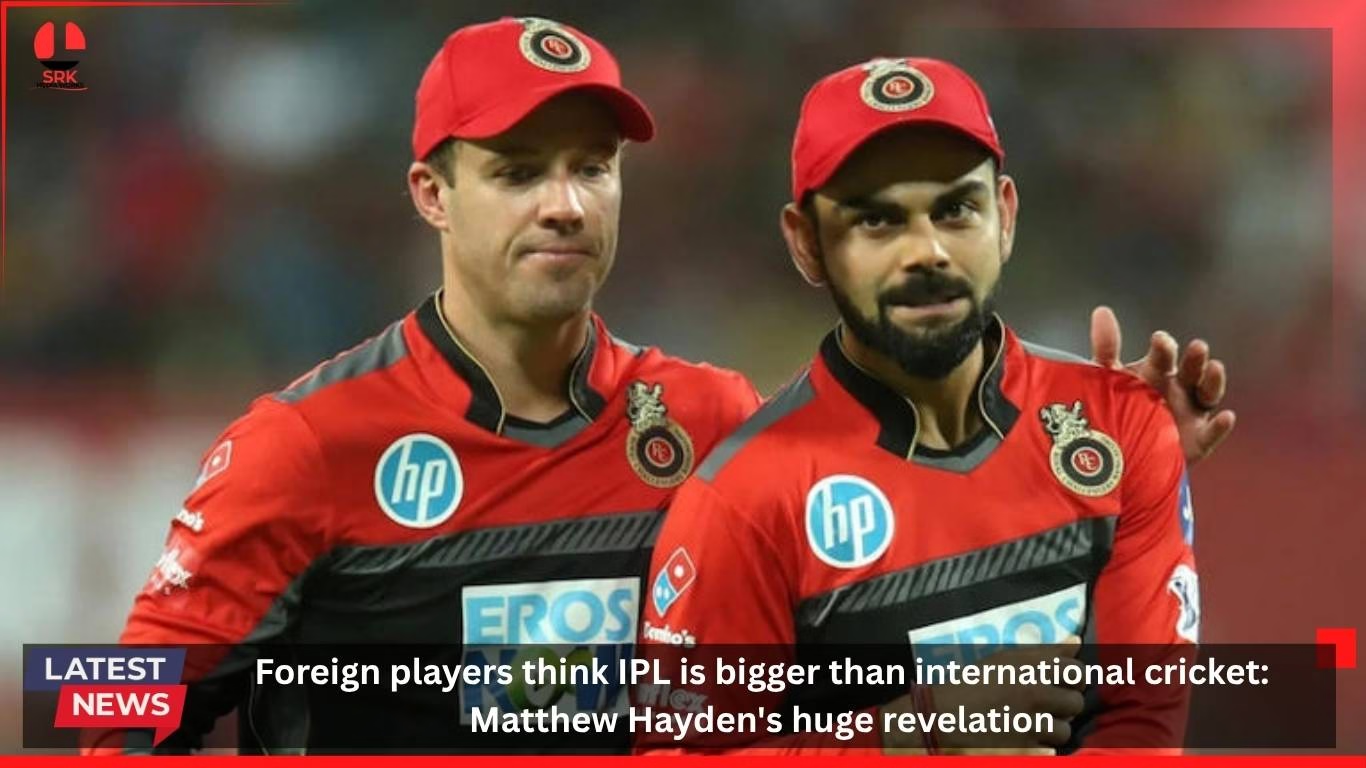
Former Australian opener Matthew Hayden has made a striking revelation about the Indian Premier League (IPL), claiming that many foreign players now consider the tournament bigger than international cricket. Hayden’s statement has reignited debates about the growing influence of franchise cricket and its impact on the traditional format of the game.
Hayden’s Revelation
Hayden explained that the IPL’s global reach, financial rewards, and competitive environment have elevated its status among overseas cricketers. He noted that for many foreign players, performing in the IPL carries more weight than representing their national teams, especially given the exposure and opportunities it provides.
Key Highlights:
- Hayden says foreign players view IPL as bigger than international cricket.
- IPL’s financial rewards and global exposure drive this perception.
- Raises questions about the future of bilateral series and Test cricket.
Why IPL is Seen as Bigger
The IPL has become a global spectacle, attracting top talent from across the world. Its combination of high salaries, massive fan following, and intense competition makes it a unique platform.
Comparative Analysis
| Aspect | International Cricket | IPL |
|---|---|---|
| Financial Rewards | Limited, based on central contracts | Massive, with multi-crore deals |
| Global Exposure | Regional, depending on series | Worldwide, with millions of viewers |
| Competition | Traditional rivalries | High-intensity franchise battles |
| Career Opportunities | Limited to national selection | Broad, with franchise contracts |
Pivot Analysis: Tradition vs. Franchise
| Factor | International Cricket | IPL |
|---|---|---|
| Prestige | Historic, tied to national pride | Modern, tied to financial and global fame |
| Player Motivation | Representing country | Securing contracts and global recognition |
| Fan Engagement | Regional loyalty | Global fan base across franchises |
| Sustainability | Dependent on boards and ICC | Driven by sponsors and franchise owners |
Reactions from Cricketing Circles
Hayden’s comments have sparked mixed reactions.
- Traditionalists: Fear that international cricket could lose relevance.
- Players: Many acknowledge IPL’s financial and career benefits.
- Fans: Divided between national pride and franchise loyalty.
Reactions Overview
| Group/Community | Reaction to Hayden’s Statement | Potential Impact |
|---|---|---|
| Traditionalists | Concerned about decline of Tests/ODIs | Push for reforms in international cricket |
| Players | Mixed, some agree with Hayden | More focus on franchise leagues |
| Fans | Divided between national and franchise pride | Shifts in viewing preferences |
| Analysts | See it as inevitable shift | Debate on cricket’s future structure |
Historical Context
Since its inception in 2008, the IPL has grown into the world’s most lucrative cricket league. While international cricket has traditionally been the pinnacle, the rise of franchise cricket has altered perceptions. Hayden’s remarks reflect this ongoing transformation in the sport’s ecosystem.
Future Outlook
Hayden’s revelation raises important questions about the future of cricket:
- Will bilateral series lose relevance compared to franchise leagues?
- Can Test cricket survive in an era dominated by T20?
- Will boards adapt to balance international and franchise commitments?
Conclusion
Matthew Hayden’s claim that foreign players view the IPL as bigger than international cricket underscores the seismic shift in modern cricket. While the IPL offers unmatched financial rewards and global exposure, it also challenges the traditional prestige of representing one’s country. The debate highlights the evolving dynamics of the sport, where franchise cricket increasingly shapes careers, fan engagement, and the future of the game.
Disclaimer
This article is based on publicly available sports commentary and analysis. It does not represent endorsement or criticism of any player, team, or organization. The content is intended for informational purposes only, highlighting the dynamics of cricket, franchise leagues, and international formats. Readers are encouraged to explore diverse perspectives before forming conclusions.