
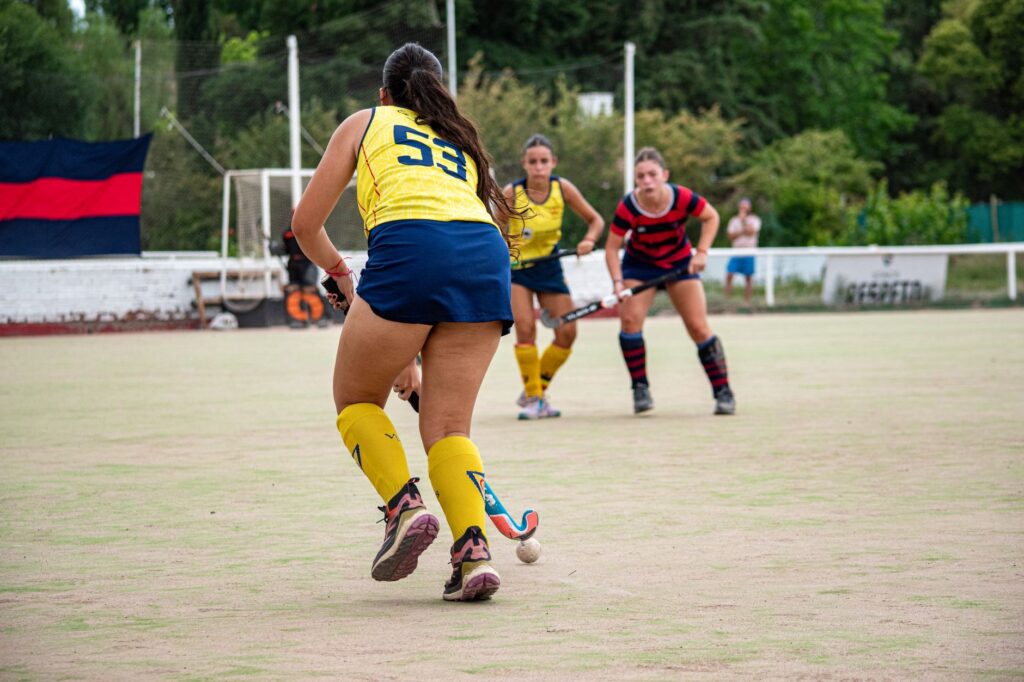

Newly appointed captain Salima Tete will lead the Indian women’s national hockey team into the upcoming FIH Hockey Women’s World Cup, aiming for a historic podium finish as they prepare to face Asian rivals China in their opening match in Terrassa, Spain. Stepping into her first major global tournament as captain, the 22-year-old midfielder carries the expectations of a nation eager to build on recent international successes. The tournament, co-hosted by Spain and the Netherlands, represents a critical litmus test for India’s revamped squad under Tete’s leadership.
A New Era for Indian Women’s Hockey
India’s hockey trajectory has risen steadily since their historic fourth-place finish at the Tokyo 2020 Olympics. However, the squad has undergone a significant transition phase over the last year, integrating fresh talent from the junior ranks to replace departing veterans. Tete, a native of Jharkhand who debuted for the senior team in 2016, represents the vanguard of this new generation.
The Indian team enters the tournament ranked ninth in the world, while their opening opponents, China, sit closely behind at number ten. This narrow margin highlights the high stakes of the opening match, which historically dictates momentum in the pool stages. In their last five head-to-head encounters, India holds a slight edge with three victories, though China’s recent tactical restructuring makes them a highly unpredictable opponent.
Navigating the Opening Clash Against China
The opening match against China is widely regarded by analysts as the pivotal fixture of Pool B. Under the guidance of former Dutch star and current head coach Alyson Annan, the Chinese team has adopted a highly disciplined, European style of play characterized by rapid counter-attacks. Tete emphasized that containing China’s midfield transition will be the key to securing three points.
“Playing China is always a tactical battle because they do not give away easy possession,” Tete stated during a pre-tournament press briefing. “Our focus is on maintaining our defensive structure and executing our penalty corner routines with high precision.”
India’s coaching staff has reportedly spent weeks analyzing China’s defensive patterns during the FIH Pro League. The strategy will rely heavily on India’s speed on the flanks, a department where Tete herself excels as one of the fastest midfielders in international hockey.
Guiding a Youthful Squad
One of Tete’s primary responsibilities in this campaign is mentoring the younger players who have recently transitioned to the senior level. The 18-member squad features five players making their World Cup debuts, including promising forwards who will be tested under intense international pressure. Tete’s leadership style focuses on open communication and building on-field confidence.
“We have a lot of young talent in the team who bring immense energy and fearlessness,” Tete noted. “My role is to ensure they stay calm under pressure and stick to our pre-decided structures rather than getting overwhelmed by the occasion.”
Veterans like goalkeeper Savita Punia and defender Nikki Pradhan will support Tete in managing the team’s on-field discipline. This blend of youthful exuberance and veteran composure is designed to make India highly resilient during high-pressure knockout scenarios.
Tactical Evolution Under New Leadership
Beyond player transitions, the Indian team has also adapted to a more aggressive pressing style of play over the past six months. Under the tactical blueprint laid out by the coaching staff, India has shifted from a traditional counter-attacking setup to a high-press system designed to force turnovers in the opponent’s half. This system relies heavily on the work rate of the midfield line led by Tete and Neha Goyal.
According to tactical data from recent international matches, India’s circle entries increased by 15% when employing this high-press strategy. However, sports analysts warn that this style requires immense physical conditioning, as any lapse in recovery runs can leave the defensive line exposed to quick counter-attacks from elite teams like Germany and Belgium.
Tactical Preparation and Analytical Backing
Data from training camps in Bengaluru indicates a heavy emphasis on improving India’s penalty corner conversion rate, which hovered around 22% during their last international outings. The coaching staff has worked intensively on diversifying India’s set-piece routines to bypass sophisticated European defensive lines.
Sports scientists working with the team have also focused on heat acclimation and high-intensity interval training to match the physical demands of European summer conditions. The team’s physical metrics show a 10% improvement in aerobic capacity compared to the previous season, which could prove decisive in the final quarters of close matches.
Road to the Podium and Future Outlook
The outcome of this World Cup will have far-reaching implications for the sport’s growth and funding in India. A deep run into the semi-finals would solidify India’s status as a global hockey powerhouse and boost grassroots participation across the country, particularly in rural hockey hubs like Odisha and Jharkhand.
Looking ahead, the team’s performance in the group stages will determine their crossover path, where potential matchups against heavyweights like the Netherlands or Argentina await. Fans and analysts will watch closely to see if Tete can translate her individual brilliance into collective triumph on the world’s biggest stage.