

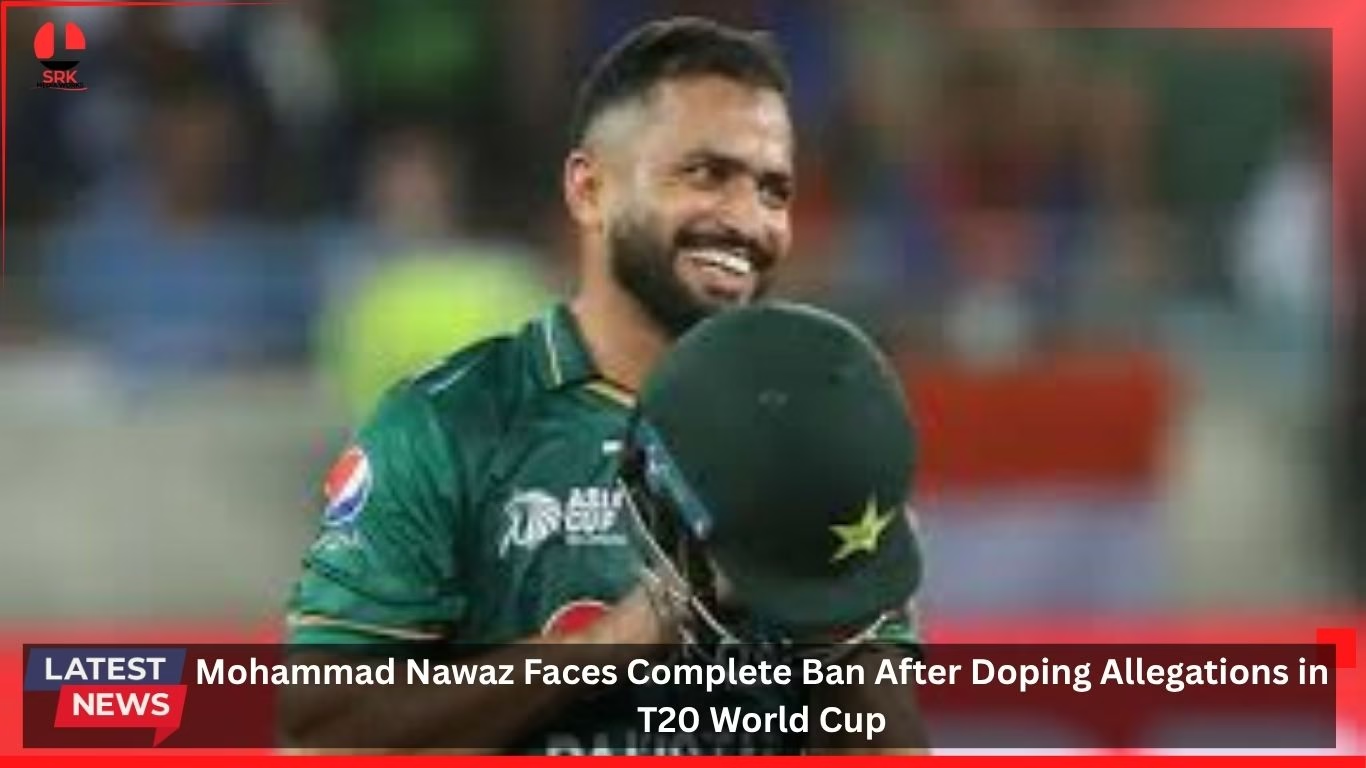
Pakistan’s cricket fraternity has been shaken by shocking revelations surrounding star all-rounder Mohammad Nawaz, who now faces the possibility of a complete ban from international cricket following doping allegations. The International Cricket Council (ICC) has confirmed that Nawaz tested positive for a banned substance during routine checks conducted at the ICC Men’s T20 World Cup.
The news has sent ripples across the cricketing world, especially in Pakistan, where Nawaz has been a key figure in the team’s recent campaigns. His performances with both bat and ball have often been crucial in Pakistan’s victories, making this development a major setback for the national side.
Nawaz’s Statement to ICC
In his official response to the ICC, Nawaz admitted that he had consumed certain supplements but denied any intention of cheating or gaining unfair advantage. He emphasized that the substance entered his system inadvertently and pleaded for leniency. Nawaz stated:
“I have always played the game with honesty and integrity. This incident is a mistake, not a deliberate attempt to break the rules. I request the ICC to consider my clean record and the fact that I did not knowingly consume any banned substance.”
Despite his plea, the ICC’s anti-doping regulations are strict, and the governing body has made it clear that ignorance is not an excuse.
Impact on Pakistan Cricket
The potential ban on Nawaz could have far-reaching consequences for Pakistan cricket:
- Team Balance: Nawaz’s role as a left-arm spinner and lower-order batsman provides Pakistan with flexibility. Losing him disrupts the team’s balance.
- Upcoming Series: Pakistan is scheduled to play several high-profile series in the coming months, including the Asia Cup and bilateral tours. Nawaz’s absence will force selectors to rethink strategies.
- Public Sentiment: Fans in Pakistan are deeply disappointed, with many expressing frustration over repeated doping controversies in cricket.
ICC’s Anti-Doping Regulations
The ICC follows the World Anti-Doping Agency (WADA) guidelines strictly. Players are regularly tested during tournaments, and any violation can lead to severe consequences.
Possible Punishments Under ICC Rules
| Offense Type | Punishment Range | Notes |
|---|---|---|
| First-time offense | 2–4 years ban | Depending on intent and cooperation |
| Second offense | 4–8 years ban | Stricter penalties |
| Refusal to cooperate | Maximum ban | Lifetime ban possible |
If Nawaz is found guilty, he could face a ban ranging from two to four years, effectively sidelining him from the prime of his career.
Historical Context: Doping in Cricket
While doping scandals are more common in athletics, cricket has also witnessed its share of controversies.
| Player | Country | Year | Substance | Outcome |
|---|---|---|---|---|
| Shoaib Akhtar | Pakistan | 2006 | Nandrolone | 2-year ban |
| Mohammad Asif | Pakistan | 2006 | Nandrolone | 1-year ban |
| Andre Russell | West Indies | 2017 | Whereabouts violation | 1-year ban |
| Mohammad Nawaz | Pakistan | 2026 | Under investigation | Pending verdict |
This table highlights that Pakistan has faced multiple doping controversies in the past, raising questions about awareness and education among players.
Reactions from Cricket Experts
Former cricketers and analysts have weighed in on the issue:
- Ramiz Raja (Ex-PCB Chairman): “This is a wake-up call for Pakistan cricket. Players must be educated about what they consume. Nawaz’s case is unfortunate, but rules are rules.”
- Wasim Akram (Legendary Bowler): “I feel for Nawaz, but professionalism demands discipline. Supplements should always be checked with team doctors.”
- International Analysts: Many believe that ICC will set a strong example to deter future violations.
Pakistan Cricket Board’s Position
The Pakistan Cricket Board (PCB) has expressed disappointment but assured full cooperation with ICC. PCB officials stated that they will provide Nawaz with legal assistance but will not interfere with ICC’s disciplinary process.
PCB has also announced plans to strengthen its anti-doping awareness programs, ensuring players are better informed about banned substances.
Fan Reactions
Social media has been flooded with reactions:
- Some fans are sympathetic, believing Nawaz made an honest mistake.
- Others are furious, demanding stricter punishments to protect the integrity of the game.
- Hashtags like #SupportNawaz and #BanForIntegrity have trended simultaneously, reflecting divided opinions.
Statistical Analysis of Nawaz’s Career
To understand the impact of his absence, let’s look at his career numbers:
| Format | Matches | Runs | Batting Avg | Wickets | Bowling Avg |
|---|---|---|---|---|---|
| T20I | 66 | 650 | 18.5 | 65 | 25.2 |
| ODI | 37 | 700 | 22.6 | 45 | 30.1 |
| Test | 6 | 150 | 15.0 | 12 | 40.0 |
These figures show Nawaz’s importance as a utility player who contributes in multiple departments.
Future of Nawaz
If banned, Nawaz’s career trajectory could change drastically:
- Short-term: Misses Asia Cup, bilateral series, and possibly next ICC events.
- Long-term: A four-year ban could end his international career.
- Rehabilitation: Nawaz may focus on domestic cricket or leagues after serving his ban.
Broader Implications for Cricket
This incident raises larger questions:
- Are players adequately educated about banned substances?
- Should cricket boards invest more in medical guidance?
- How can ICC balance punishment with rehabilitation?
Conclusion
Mohammad Nawaz’s doping allegations have cast a shadow over Pakistan’s cricketing future. While his plea for leniency highlights the human side of the story, the ICC’s strict rules mean that a complete ban is a real possibility. The final verdict will not only decide Nawaz’s fate but also serve as a precedent for future cases.
Disclaimer
This article is based on publicly available information and ongoing reports regarding Mohammad Nawaz’s doping allegations. The content is intended for informational purposes only and does not represent official ICC or PCB statements. Readers are advised to follow official announcements for verified updates.