

As FIFA prepares for the expanded 48-team World Cup in 2026 across the United States, Canada, and Mexico, global football is undergoing a profound cultural and structural shift. Rather than the United States adapting to the traditional norms of the global game, football is being systematically re-engineered to fit the lucrative American entertainment and media landscape. This transformation marks a critical turning point where the world’s most popular sport bends to the demands of the world’s richest media market.
The Shift from Sport to Spectacle
Historically, association football resisted the hyper-commercialized presentation typical of American sports, maintaining its continuous 45-minute halves and minimal interruptions. However, the influx of American capital through private equity, celebrity club ownerships, and Major League Soccer’s Apple TV partnership has steadily eroded these traditional boundaries. The 2026 tournament represents the culmination of this trend, transforming the sport from a traditional athletic competition into a premium entertainment product.
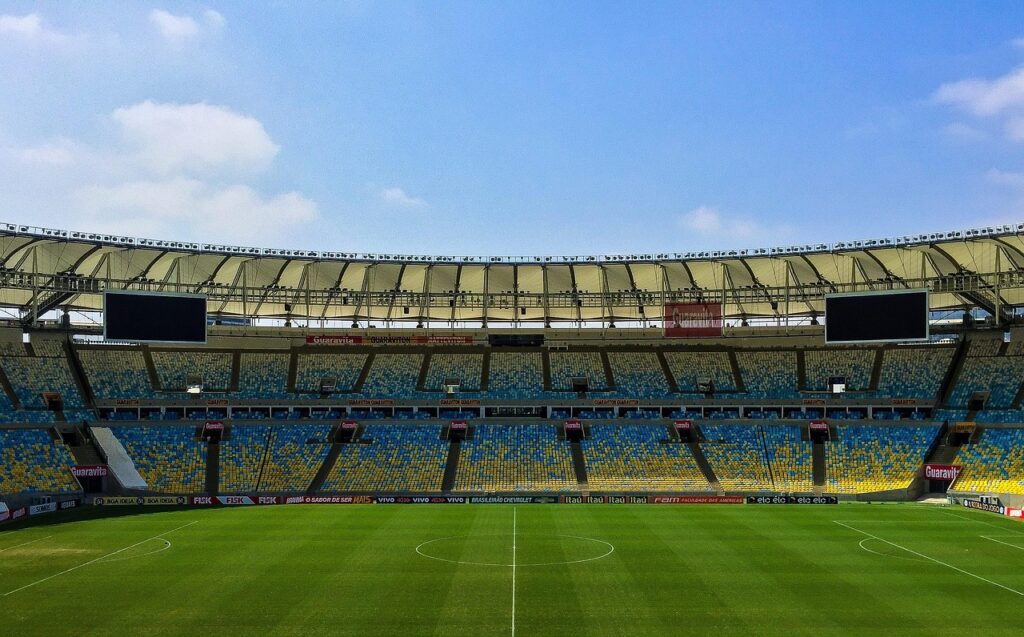
The physical spaces hosting the tournament reflect this cultural shift. Ultra-modern NFL stadiums, designed for high-end hospitality and multi-sensory entertainment, will replace traditional soccer-specific venues. These arenas are optimized for maximum consumer spending, featuring luxury suites, interactive fan zones, and advanced digital displays designed to capture the attention of a younger, tech-savvy demographic.
Broadcasting and Rule Tweaks
Broadcasters are also influencing how the game is played and consumed. Media rights holders in the United States are pushing for innovations that accommodate more advertising inventory. While FIFA has not officially altered the rules of the game, subtle changes in match presentation, prolonged VAR reviews, and extended halftime shows are increasingly used to insert commercial breaks.
The influence of Hollywood and political branding has further accelerated this “Americanisation.” From Ryan Reynolds and Rob McElhenney’s high-profile takeover of Wrexham AFC to political figures leveraging matches for diplomatic posturing, football has become a prime vehicle for cultural soft power. The commercial ecosystem surrounding Lionel Messi’s tenure at Inter Miami demonstrates that star power and lifestyle branding now rival on-field performance in driving global engagement.
Grassroots Integration and Cultural Synthesis
At the grassroots level, the youth soccer landscape in the United States has evolved from a suburban pastime into a highly monetized, elite development pipeline. This pay-to-play model, unique to the American market, contrasts sharply with the community-driven, working-class academy systems of Europe and South America. As American investors export this commercialized youth sports model abroad, traditional clubs are grappling with the balance between community identity and corporate efficiency.
Data and Expert Insights
Industry data highlights the massive scale of this economic transition. A report by sports consultancy firm Two Circles projects that the 2026 World Cup will generate a record-breaking $11 billion in revenue for FIFA, driven largely by North American sponsorships and ticket sales. Sports business analysts note that the integration of American sports-entertainment models is essential for FIFA to sustain its long-term financial growth targets in an increasingly competitive media market.
What to Watch Next
In the coming years, the global football community will closely monitor how these commercial experiments alter the sport’s regulatory framework. Observers should watch for potential discussions around splitting matches into quarters, the introduction of American-style drafts or salary caps in global leagues, and the staging of competitive European domestic league matches in U.S. cities. The 2026 World Cup will likely cement a new era where the business of football is permanently redefined by American media standards.