
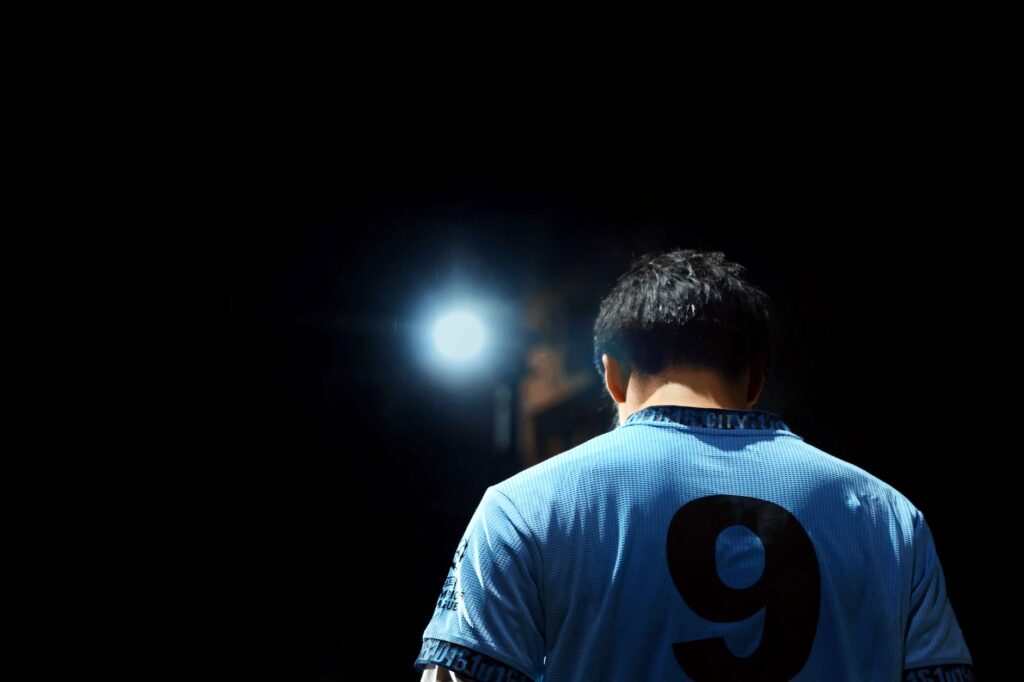

Following the conclusion of the 2026 FIFA World Cup, the historic era of Lionel Messi and Cristiano Ronaldo has reached a critical turning point as both icons face uncertain futures with their respective national teams. FOX Sports soccer analyst Alexi Lalas recently highlighted on his “State of the Union Podcast” how this intense, decades-long rivalry ultimately forged Messi into the greatest player in soccer history. Lalas argues that without Ronaldo’s relentless pursuit of excellence, Messi would not have reached the historic heights that culminated in his career-defining achievements.
The Architecture of a Modern Rivalry
For nearly two decades, Messi and Ronaldo dominated global soccer, sharing 13 Ballon d’Or awards between them and rewriting the record books of European club football. While Ronaldo established himself as a prolific, athletic goal-scoring machine at Manchester United, Real Madrid, and Juventus, Messi became the creative heartbeat and magician of Barcelona’s golden generation. This constant push-and-pull created an unprecedented era of sustained excellence in sports history.
The rivalry peaked during their overlapping tenures in Spain’s La Liga, where El Clu00e1sico matches between Real Madrid and Barcelona became global media spectacles. Every weekend, an extraordinary performance by one player was almost invariably answered by the other, leaving little room for error. This high-stakes environment forced both athletes to maintain peak physical and mental conditioning for over fifteen years.
How Ronaldo Fueled Messi’s Fire
According to Lalas, the relationship between the two players, though largely conducted from a distance, was the primary catalyst for Messiu2019s evolution. “Ronaldou2019s existence, as much as some might not like it, has made Messi better and made him what he is,” Lalas stated on his podcast. The analyst emphasized that the constant back-and-forth volley of achievements forced both athletes to constantly refine their games.
This competitive pressure manifested in different ways for both players, driven by contrasting personalities and public personas. Ronaldo’s overt, highly-publicized drive to be the best contrasted sharply with Messi’s quieter, more introverted demeanor. Yet, Lalas notes that both possessed an identical underlying hunger, fueled by the presence of a peer who refused to back down.
“I truly believe that the Messi we have is shaped and formed by not just the experiences that he has, but the relationships he has,” Lalas added. He argued that public criticism of Ronaldo often overlooks this vital contribution to the sport, noting that the Portuguese star’s relentless challenge directly elevated his Argentine counterpart.
Statistical Synergy and the World Cup Pinnacle
The numbers behind their rivalry underscore the relentless pace they set for one another. Ronaldo currently holds the record for the most official goals in football history, surpassing the 900-goal milestone for club and country. Meanwhile, Messi holds the record for the most Ballon d’Or trophies, with eight individual titles compared to Ronaldo’s five.
However, the ultimate differentiator in their parallel legacies occurred at the 2022 FIFA World Cup in Qatar. Messi led Argentina to victory, capturing the one major trophy that had eluded both players throughout their illustrious careers. Analysts suggest that the drive to secure this final, legacy-defining milestone was heavily intensified by the knowledge that Ronaldo was chasing the same crowning achievement.
Even without ever facing each other in a World Cup knockout match, their parallel journeys in the tournament captivated global audiences. Every tournament appearance was analyzed through the lens of their ongoing debate, adding immense pressure to their international campaigns.
The Dawn of a New Era in Global Football
The projected departure of both Messi and Ronaldo from the international stage marks a massive paradigm shift for the sports world and the global soccer industry. For nearly twenty years, broadcasters, sponsors, and clubs built their marketing strategies around this dual narrative, driving unprecedented commercial growth in Major League Soccer (MLS) and the Saudi Pro League. The end of this era leaves a vacuum that the sport’s governing bodies are eager to fill.
As the focus shifts to a new generation of talent, including superstars like Erling Haaland, Kylian Mbappu00e9, and Jude Bellingham, the sporting world must adapt to a landscape without a singular, defining rivalry. The immediate future will reveal whether these younger players can replicate the sustained, year-over-year consistency that defined the Messi-Ronaldo epoch.
Industry experts are now watching closely to see if a similar, mutually beneficial rivalry emerges to push the next generation to comparable heights. The legacy of the Messi-Ronaldo era suggests that true greatness is rarely achieved in a vacuum, but rather forged in the heat of relentless competition. Whether the next generation can find their own foils to drive them to such historic heights remains the defining question for the future of global soccer.