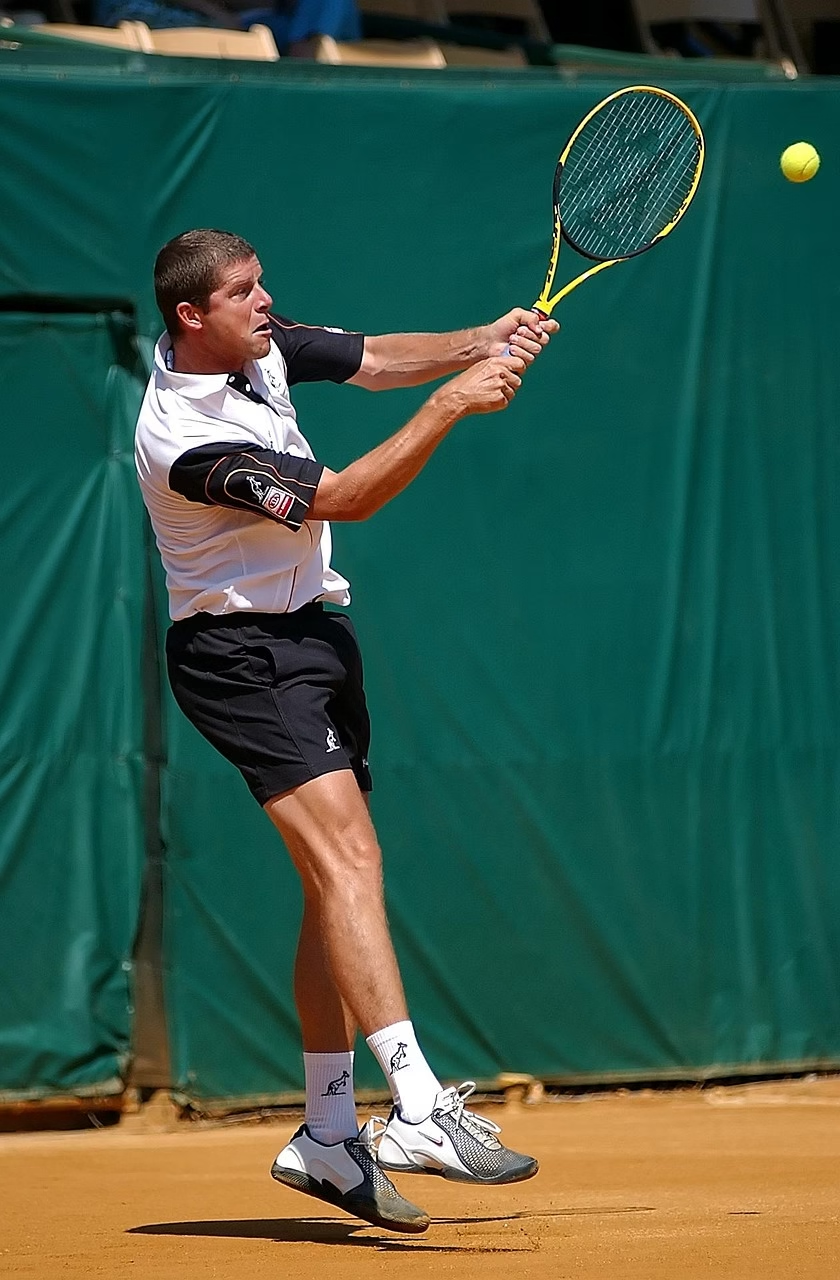






Alexander Zverev secured his first career Grand Slam title on Sunday at the French Open, defeating Italy’s Flavio Cobolli in a high-stakes final that tested the German’s mental fortitude and tactical precision. The victory in Paris marks a significant milestone for the 27-year-old, who has long been considered one of the sport’s most talented players yet remained without a major trophy until this breakthrough performance on the clay courts of Roland Garros.
The Road to the Podium
Zverev’s path to the championship was defined by a series of grueling matches, culminating in a final that required him to overcome both the aggressive baseline play of Cobolli and his own internal history of near-misses in major tournaments. After years of reaching deep into draws only to fall short in the semifinal or final stages, Zverev displayed a newfound stability in his serve and a more patient approach to rallies.
Flavio Cobolli, the rising Italian star making his presence known on the world stage, challenged the German throughout the match. Cobolli’s ability to neutralize Zverev’s power with quick movement kept the contest competitive, though Zverev’s experience in pressure situations ultimately proved the deciding factor in the closing sets.
Context of the Achievement
For years, the tennis world has scrutinized Zverev’s inability to close out Grand Slam tournaments. Having reached the final of the U.S. Open in 2020, where he squandered a two-set lead against Dominic Thiem, the pressure to secure a major win had mounted with every passing season. This victory serves as a definitive answer to critics who questioned his ability to perform under the bright lights of a final.
The French Open remains one of the most physically demanding tournaments in the sport, requiring exceptional endurance to excel on the crushed brick surface. Zverev’s success this year mirrors the career trajectories of other modern greats who required significant time to master the nuances of the clay court before claiming the title.
Expert Analysis and Statistical Impact
Tennis analysts note that Zverev’s serve statistics throughout the tournament were among the most consistent of his career. According to tournament data, he maintained a first-serve percentage of over 75% during the final, a critical metric that denied Cobolli opportunities to break serve during the most pivotal moments of the second and third sets.
Sports psychologists often point to the ‘mental block’ that affects top-tier athletes when approaching their first major victory. By conquering his nerves in front of the Parisian crowd, Zverev has likely removed a significant psychological barrier that will influence his performance in future tournaments, including the upcoming grass-court season at Wimbledon.
Industry Implications
This win reshapes the hierarchy of the men’s tour as the sport moves into the second half of the calendar year. As the dominance of the ‘Big Three’ continues to wane due to injury and aging, the emergence of a new Grand Slam champion provides the ATP Tour with a fresh narrative and increased competitive parity.
For the industry, Zverev’s rise to the top of the rankings represents the maturation of the ‘Next Gen’ cohort. Sponsors and tournament organizers will likely look to capitalize on his status as a major champion, potentially increasing his marketability as a face of the sport. Fans and observers should watch how Zverev transitions his playstyle to the faster grass surfaces of London, where his serve-heavy game could provide him with a distinct advantage in the coming weeks.