




The Shift in English Football Power
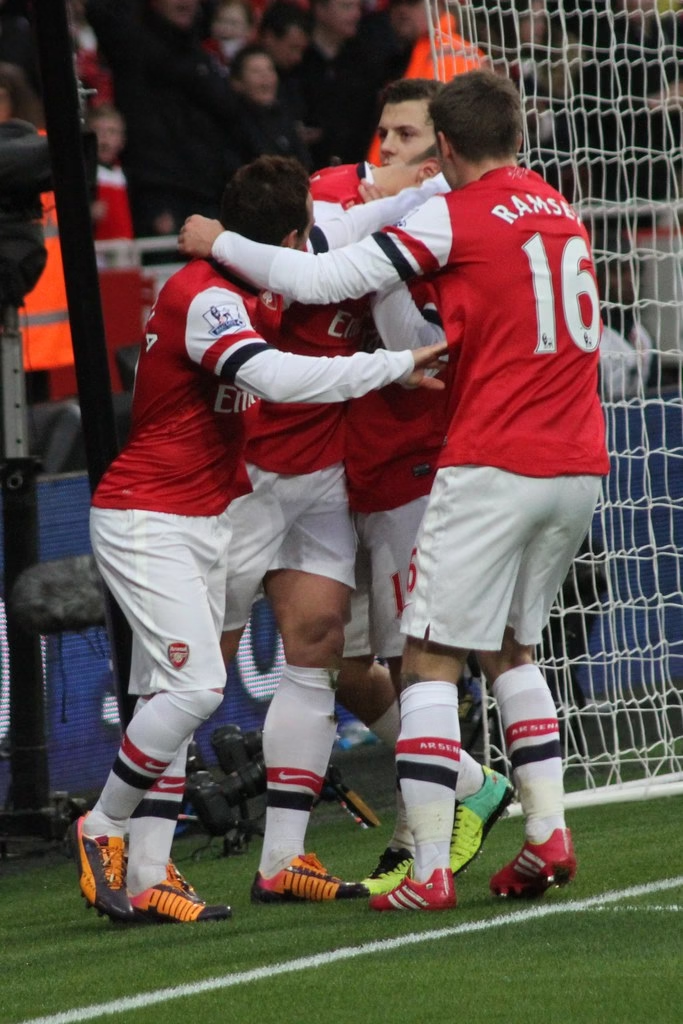
Arsenal Football Club solidified their return to the pinnacle of English football this week, overcoming a multi-year dominance by Manchester City to claim the Premier League title. The victory marks a significant turning point in the league’s competitive landscape, ending a period where City had become synonymous with domestic inevitability. For the North London club, the achievement represents the culmination of a long-term rebuilding project initiated under manager Mikel Arteta.
Understanding the Competitive Context
For the past several seasons, Manchester City has utilized a high-possession, tactical machine-like approach that rendered the Premier League title race a formality. Arsenal’s strategy this year relied on a blend of defensive resilience and rapid transition play, allowing them to remain consistent throughout the grueling 38-game schedule. Analysts note that while City focused on maintaining their core squad, Arsenal’s aggressive recruitment strategy addressed specific gaps in midfield depth and defensive stability.
Tactical Evolution and On-Field Success
The success of the Gunners is largely attributed to a refined tactical system that emphasized fluidity between the attacking and defensive lines. By shifting away from a rigid formation, Arteta allowed key players to exploit spaces that traditional defenses struggled to track. Statistics from Opta show that Arsenal’s goals from set-pieces increased by 22% compared to the previous season, providing a critical edge in tight matches against lower-table opponents.
Beyond the tactical adjustments, the psychological growth of the squad proved decisive. Players who had previously faltered under the pressure of a title race demonstrated newfound composure during the closing months of the campaign. This mental shift was mirrored in the team’s ability to secure points in injury time, a hallmark of championship-winning sides.
Expert Analysis of the Shift
Sports data analysts point to the decline in Manchester City’s defensive efficiency, specifically in transition moments, as the catalyst for the change. “The league has finally caught up to the technical requirements set by Guardiola’s system,” remarked one industry consultant. “Arsenal’s ability to force turnovers in the final third turned matches that should have been draws into crucial victories.”
Furthermore, the emergence of unexpected stars across sports—ranging from the PGA Championship’s unconventional winner to breakout performances in Major League Baseball—suggests a broader trend of parity. In an era of advanced analytics, teams that prioritize specific, high-value recruitment over broad-spectrum spending are finding greater success in achieving long-term goals.
Implications for the Future
For the Premier League, Arsenal’s victory signals a return to a more competitive, multi-club race for the top spot. Rival clubs are already looking to replicate the North London model, focusing on youth development paired with high-impact veteran signings. As the summer transfer window approaches, the pressure will be on Manchester City to retool their aging defensive line to maintain their status as the league’s gold standard.
Observers should watch for how the upcoming European competition schedule impacts squad rotation for these top-tier teams. The ability to manage player fatigue while maintaining a high-intensity style will likely determine which club can sustain this level of dominance into the next season.